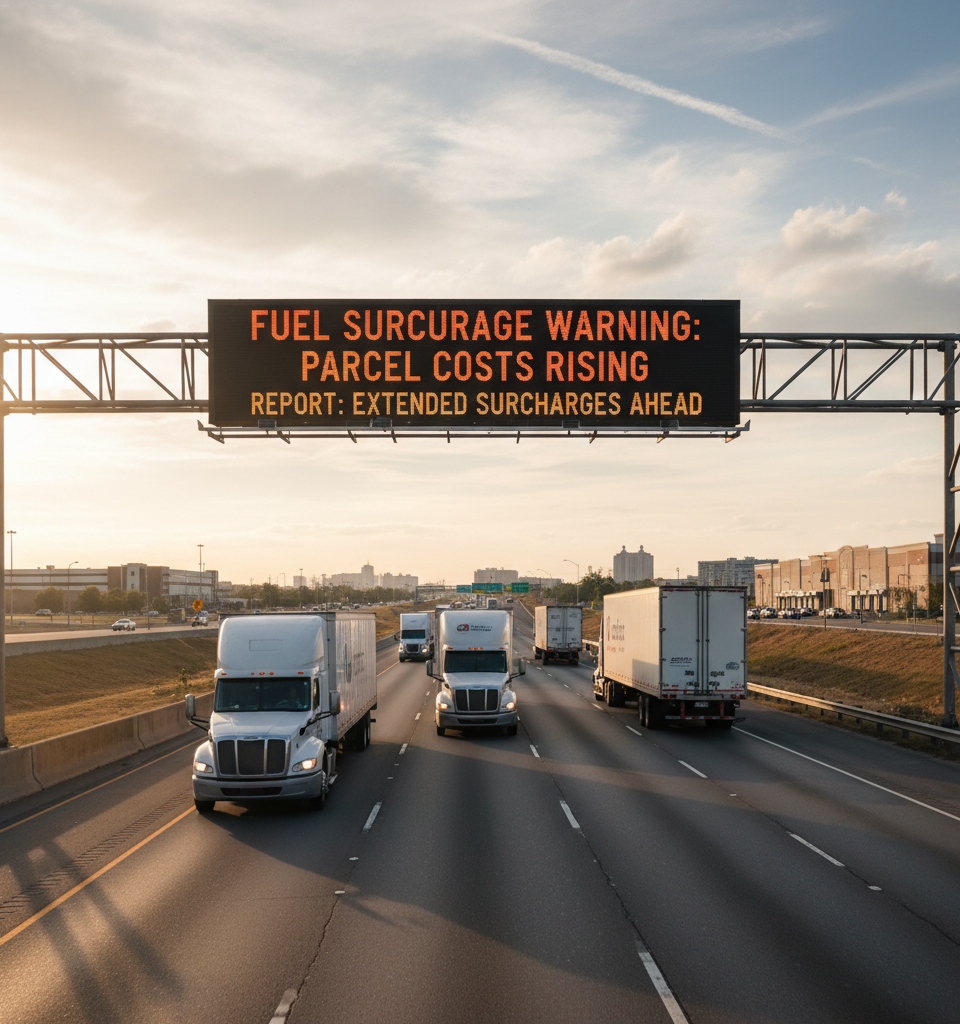
NEW YORK, NY – [Date] – Parcel shipping costs are set to remain significantly inflated by persistent fuel surcharges, a new report warns, signaling a challenging period ahead for businesses reliant on logistics. This upward pressure on expenses is projected to endure even if geopolitical tensions, particularly those in the Middle East, ease and bring greater stability to global oil markets. The analysis suggests that shippers must prepare for a 'new normal' of elevated transportation expenditures, fundamentally altering supply chain budgeting and consumer pricing strategies.
The Lingering Impact of Geopolitical Instability
The current crisis in the Middle East has undeniably fueled the immediate surge in oil prices and, consequently, fuel surcharges. However, the report highlights that the long-term impact extends beyond immediate market reactions. The volatility introduced by these conflicts, alongside broader macroeconomic factors, has cemented higher baseline operational costs for parcel carriers. Historically, fuel surcharges have been a dynamic component, fluctuating with crude oil benchmarks. This new assessment posits a structural shift, where surcharges may stabilize at a higher equilibrium rather than reverting to pre-crisis levels, even with a decline in raw material costs.
Key Drivers Beyond Crude Oil Volatility
Several factors are contributing to this sustained upward trend. While crude oil prices remain a primary determinant, the report points to increasing operational inefficiencies, higher labor costs for delivery personnel, and investments in decarbonization technologies as additional drivers. Major carriers, including FedEx and UPS, implement complex fuel surcharge indices that often lag behind real-time oil price movements and include other cost components. For instance, diesel prices, which are critical for over-the-road freight, have shown stubborn resistance to significant declines even when crude oil experiences downturns. Analysts estimate that current fuel surcharges can add anywhere from 15% to 30% to base shipping rates, translating into billions of dollars in additional costs for the industry annually.
Widespread Industry and Market Repercussions
The implications of these sustained high surcharges are far-reaching. E-commerce businesses, already navigating tight margins, will likely pass these increased costs onto consumers, potentially contributing to inflationary pressures on goods. Small and medium-sized enterprises (SMEs) may be particularly vulnerable, lacking the volume discounts or logistical sophistication of larger corporations to mitigate these expenses. The report anticipates a potential re-evaluation of supply chain networks, with companies exploring more localized distribution to reduce transport distances or investing in fleet efficiency improvements to counteract rising costs. The competitive landscape among carriers could also intensify as they vie for market share while managing their own escalating operational overheads.
Expert Perspectives: A Structural Shift in Logistics Costs
Logistics experts and economists largely corroborate the report's findings, emphasizing a fundamental recalibration of transport costs. Dr. Eleanor Vance, a supply chain economist at [Fictional University], commented, "We're witnessing less of a temporary spike and more of a permanent upwards creep in the cost of moving goods. Carriers are not just responding to fuel prices; they're also building resilience and future investment into their pricing models. Shippers need to view these surcharges as an embedded cost of doing business, rather than a cyclical anomaly." This sentiment suggests that the industry is adapting to a higher cost environment, and these adaptations are reflected in pricing structures.
Navigating the New Cost Landscape: Strategies for Shippers
In response to this challenging outlook, shippers are advised to adopt proactive strategies. This includes regular auditing of carrier invoices for surcharge accuracy, exploring diversified carrier portfolios to leverage competitive pricing, and optimizing packaging to reduce overall shipment weight and dimension. Furthermore, investing in demand forecasting technologies and warehouse optimization can help mitigate unnecessary expedited shipping, which often incurs the highest surcharges. Long-term strategies might involve exploring alternative transportation modes where feasible or negotiating more favorable contractual terms with carriers that include caps or structured discounts on fuel surcharges.
What Lies Ahead: Continued Volatility and Innovation
The immediate future points to continued volatility in energy markets, exacerbated by geopolitical uncertainties and a global push towards decarbonization, which itself entails significant investment costs for carriers. While the report doesn't foresee an imminent return to pre-crisis fuel surcharge levels, it does suggest that innovation in fuel efficiency, alternative fuels, and route optimization technologies could offer some relief in the medium to long term. However, the onus remains on shippers to adapt to a landscape where parcel delivery is inherently more expensive, requiring strategic adjustments to maintain profitability and competitiveness in an evolving global economy.