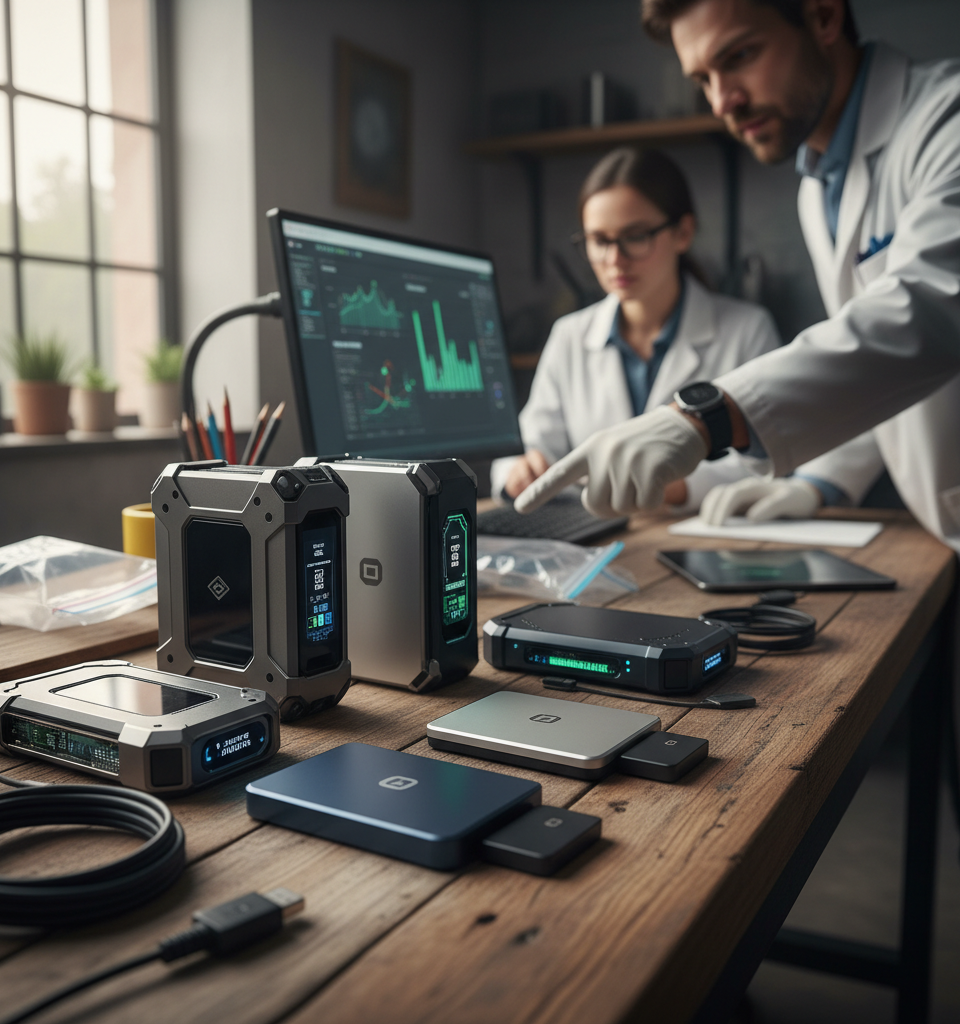
In a digital landscape increasingly defined by vast data generation and a burgeoning creator economy, consumers and professionals alike are constantly seeking superior solutions for data storage and backup. A comprehensive, hands-on evaluation conducted recently has pinpointed the top external hard drives available in 2026, highlighting significant strides in capacity, transfer speeds, and crucially, data security. This assessment comes at a critical juncture, as an estimated 180 zettabytes of data are projected to be generated globally by 2025, underscoring the urgent need for efficient and reliable storage infrastructure.
The Evolving Storage Landscape
The evaluation underscored a fundamental shift in the external storage market. Historically, the focus was primarily on raw capacity and cost-per-gigabyte. While these metrics remain vital, the 2026 market prominently features drives that integrate advanced security features, such as hardware encryption, alongside superior durability ratings designed to withstand environmental stressors. This evolution reflects a broader industry trend where data integrity and accessibility are paramount, driven by both personal reliance on digital assets and stringent regulatory compliance in professional spheres. The average citizen now stores terabytes of personal photos, videos, and documents, making reliable external storage a necessity, not a luxury.
Performance and Security Benchmarks
The top-tier drives identified in the review demonstrated remarkable performance enhancements. Several leading Portable Solid State Drives (SSDs), for instance, offered sustained read/write speeds exceeding 2,000 MB/s via USB 4.0 interfaces, a substantial leap from the 1,000 MB/s common just a few years prior. Traditional Hard Disk Drives (HDDs) also saw improvements, with flagship models reaching capacities of up to 28TB at a more accessible price point of approximately $350, providing unparalleled bulk storage. Crucially, integrated 256-bit AES hardware encryption, often paired with biometric authentication, emerged as a standard feature across many recommended models, offering robust protection against unauthorized access. This focus on security is a direct response to the escalating threat of cybercrime and data breaches, which cost businesses trillions of dollars annually.
Industry Impact and Market Dynamics
The innovations highlighted in the 2026 review are poised to significantly influence the broader tech industry. The enhanced speeds of portable SSDs are fueling faster workflows for content creators, streamlining video editing, and graphic design processes. For enterprise users, higher capacity HDDs offer more efficient archival solutions, reducing the physical footprint and energy consumption associated with large data centers. The competitive landscape among manufacturers like Western Digital, Seagate, Samsung, and Crucial remains fierce, driving continuous innovation. Market analysis suggests that the global external storage market, valued at approximately $10.5 billion in 2023, is projected to grow at a Compound Annual Growth Rate (CAGR) of 13.2% through 2030, underscoring the sustained demand for these critical devices.
Expert Outlook on Future Trends
Industry analysts and storage experts anticipate several key trends shaping the external storage market in the coming years. "The convergence of cloud services with local storage will become even more seamless," commented Dr. Lena Chen, a leading futurist in data architecture. "We'll see more hybrid solutions that automatically synchronize data between physical drives and remote servers, offering redundancy and accessibility from anywhere." Furthermore, advancements in NAND flash technology promise even greater SSD capacities and lower manufacturing costs, potentially pushing the 60TB mark for portable SSDs within a few years. The development of new interface standards beyond current USB 4.0 and Thunderbolt 4 could also unlock unprecedented transfer speeds.
The Road Ahead for Data Storage
Looking forward, the external hard drive market is expected to remain a dynamic sector, adapting to the ever-increasing demands of digital life. The emphasis will continue to be on balancing raw performance with robust data protection and ease of use. As Artificial Intelligence (AI) applications generate even more data and high-resolution media becomes commonplace, the need for efficient, secure, and high-capacity external storage solutions will only intensify. Consumers can anticipate further price reductions per gigabyte for both SSDs and HDDs, alongside increasingly sophisticated software suites for backup, recovery, and data management. The next generation of external drives will likely integrate more AI-driven features for smart data organization and predictive failure warnings, transforming how individuals and businesses interact with their invaluable digital assets.