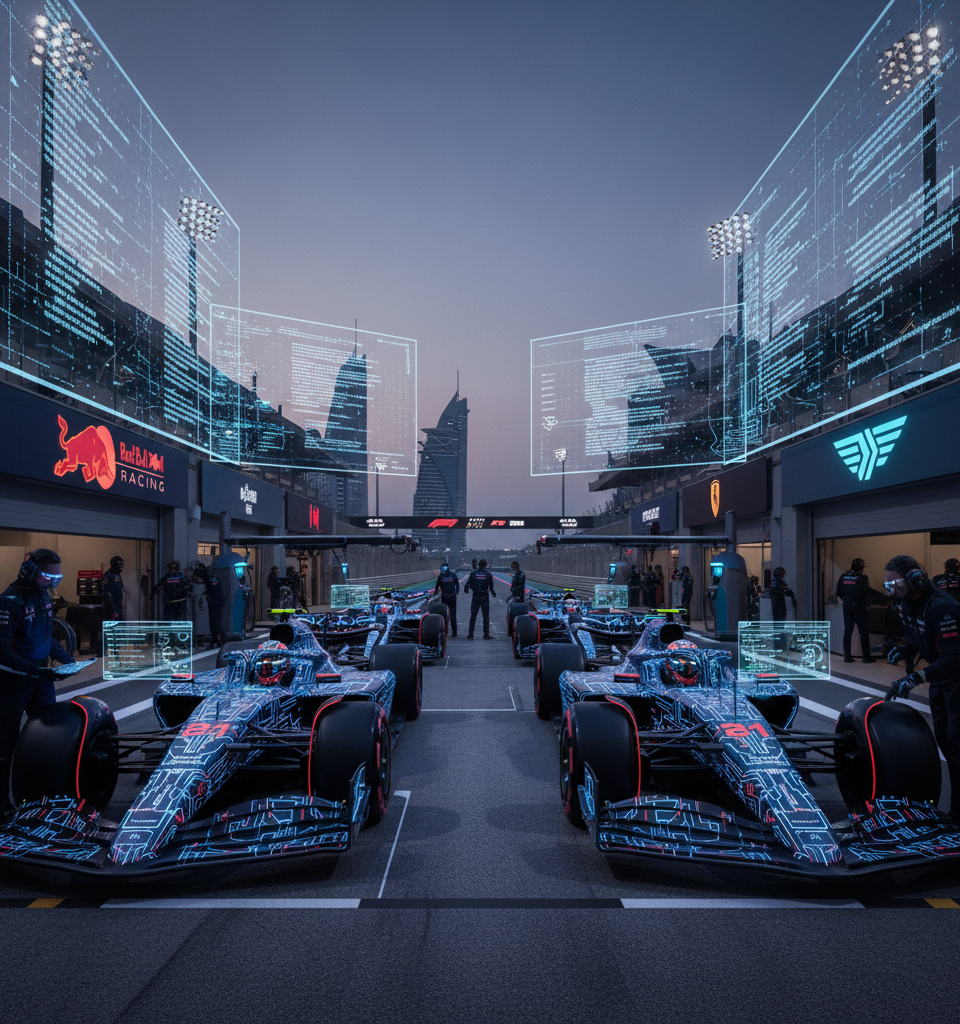
Formula 1 teams are spearheading a quiet revolution in high-stakes sports analytics, with artificial intelligence transitioning from a background tool to a central pillar of competition. The paddock has witnessed an extraordinary proliferation of AI integrations, signing no fewer than eight significant partnerships in just the past six months. This rapid adoption, driven in part by the looming 2026 regulatory overhaul, positions F1 as one of the largest and most dynamic live commercial AI deployments globally, transforming everything from strategic decisions during races to the design of next-generation car components.
The Unseen Engine: AI's Integral Role in F1
While F1 has always been a data-intensive sport, relying heavily on telemetry and simulations, the current wave of AI integration marks a profound shifttowards autonomous analysis and predictive capabilities. Historically, engineers and strategists would pore over post-race data, but today's AI systems are making real-time recommendations, influencing critical decisions like pit stop timings, tire management, and even aerodynamic adjustments. The sheer volume of data generated by a single F1 car during a race weekend – estimated in terabytes – makes human-only analysis increasingly inefficient. AI acts as an augmented intelligence layer, processing vast datasets at speeds unimaginable to human strategists, surfacing patterns and probabilities that can mean the difference between winning and losing.
Leading the Charge: Key Partnerships and Technologies
The strategic alliances reflect a diverse landscape of AI applications. Williams Racing, for instance, has embraced Anthropic's Claude to enhance its data analysis and potentially streamline engineering workflows. McLaren, a historically innovative team, is leveraging Google's Gemini AI to optimize performance and inform race strategy.
Red Bull Racing, known for its data-driven approach, has deepened its long-standing partnership with Oracle, deploying its cloud infrastructure and AI services across various functions. These aren't mere branding exercises; AI is being embedded deeply into the operational fabric of these teams, from simulating millions of race scenarios to refining component designs, and even managing complex supply chains. The 2026 regulations, which anticipate significant changes to power unit and aerodynamic rules, are a major catalyst, pushing teams to find new computational advantages.
Broader Industry and Commercial Implications
This aggressive integration of AI extends beyond the track, impacting the broader sports technology and enterprise AI sectors. F1's high-pressure, performance-driven environment serves as an ideal stress test for advanced AI systems. Successful deployments in F1 can validate AI technologies for use in other high-consequence industries, from aerospace to finance. Commercially, AI companies gain a powerful global platform for showcasing their capabilities, attracting talent, and securing further enterprise clients. The visibility of these partnerships also introduces the general public to the practical applications of AI, demystifying a technology often regarded with skepticism or misunderstanding. The synergy creates a potent feedback loop: F1's demands push AI development, and advanced AI enhances F1's competitive edge and commercial appeal.
Expert Insights and Strategic Advantage
Industry analysts and technological experts view F1's AI embrace as a logical, albeit aggressive, evolution. Dr. Mark Gallagher, a seasoned F1 executive and commentator, has remarked on the inevitability of AI becoming a core differentiator, stating, "Those who master AI first will gain an insurmountable advantage." The financial investment is substantial; top teams are reportedly allocating millions of dollars annually to AI infrastructure and talent. This isn't just about speed on the track; it's about gaining a strategic edge in areas like predictive maintenance, fan engagement analytics, and even driver performance optimization. The ability of AI to model complex interactions and forecast outcomes with increasing accuracy is proving invaluable in a sport where milliseconds dictate success.
The Future of F1: AI as a Constant Companion
The trajectory of AI in Formula 1 points towards an even deeper integration. Future developments are likely to include sophisticated generative AI for design automation, potentially allowing more rapid iteration of car parts and aerodynamic surfaces. Real-time, in-car AI assistants could provide critical feedback to drivers, while advanced predictive models will continue to refine race strategies, making decisions so nuanced they would be imperceptible to human observation.
The emphasis on sustainability within F1 also offers a promising avenue for AI to optimize fuel efficiency and energy recovery systems. The paddock is transforming from a high-tech engineering hub into a live AI laboratory, with each race weekend providing new data and challenges for these intelligent systems to conquer. This evolution not only promises to redefine competitive advantage but also positions F1 as a frontrunner in applying cutting-edge AI to real-world, high-stakes environments, shaping the future of sport and technology alike.