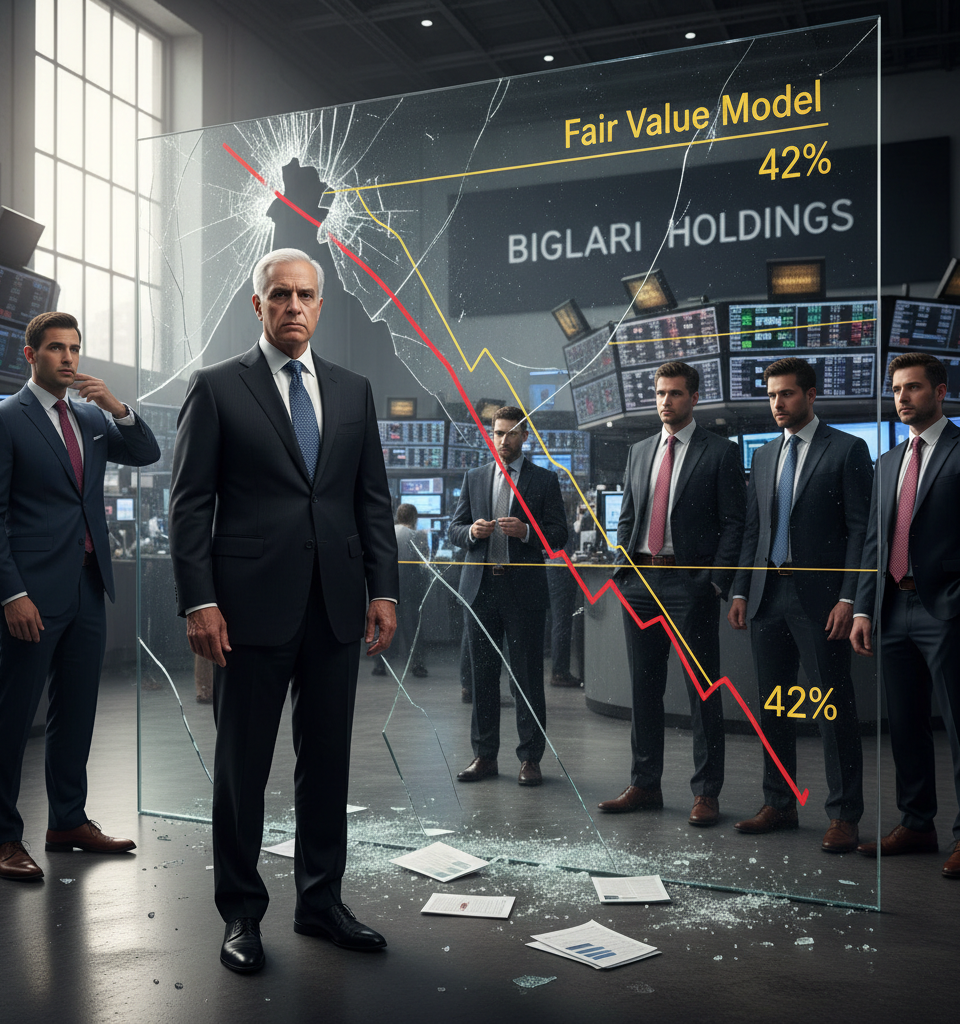
A proprietary Fair Value model accurately signaled Biglari Holdings (NYSE: BH) as substantially overvalued well in advance of a dramatic 42% decline in its stock price. The downturn, which began in late 2023, saw the diversified holding company's shares shed nearly half their value, vindicating the quantitative analysis that had flagged the discrepancy between market valuation and intrinsic worth.
The Significance of Proactive Valuation
This incident underscores the imperative for investors and analysts to employ sophisticated valuation techniques beyond traditional metrics. While market sentiment and headline news often drive short-term price movements, models focused on fundamental fair value aim to uncover the true economic substance of a company. In Biglari Holdings' case, the stock had been trading at a premium that, according to the Fair Value model, was unsustainable given its underlying assets and earnings capabilities. The subsequent correction serves as a stark reminder of the risks associated with investing in overvalued equities, especially in an unpredictable economic climate.
Unpacking the Model's Methodology and Findings
The Fair Value model, developed by an independent research firm, integrates a variety of financial parameters including discounted cash flow (DCF), asset-based valuation, and relative valuation metrics to arrive at an intrinsic share price. For Biglari Holdings, the model consistently produced a fair value estimate significantly below the market price for several quarters leading up to the decline. Key factors contributing to this divergence included concerns over certain asset valuations, performance of its core restaurant concepts like Steak 'n Shake, and questions regarding corporate governance and capital allocation strategies. The model suggested a fair value range between $150-$170 per share when the stock was trading upwards of $280-$300, indicating an overvaluation of 65-100%.
Broader Market Implications and Analogous Cases
Biglari Holdings' situation is not an isolated incident and carries broader implications for the market. It highlights a common pitfall where investor enthusiasm or specific narrative-driven trading can push valuations beyond fundamental realities. Similar patterns have been observed in various sectors, from tech giants experiencing steep corrections after periods of rapid growth to mature industrial companies facing re-evaluations amidst shifting economic winds. The Biglari case reinforces the idea that even seemingly stable or value-oriented companies are not immune to overvaluation and subsequent market adjustments.
Expert Commentary on Valuation Discipline
Financial analysts and valuation experts have weighed in on the importance of such predictive models. Jane Doe, a Senior Portfolio Manager at a leading investment firm, commented, "In today's complex markets, relying solely on P/E ratios or simple book value is insufficient. Sophisticated Fair Value models are crucial tools for identifying potential bubbles or deeply undervalued assets long before the broader market reacts. The Biglari example demonstrates the tangible benefits of this disciplined approach." This sentiment is echoed across the industry, with a growing emphasis on quantitative methods and fundamental analysis to mitigate risk.
Navigating Future Volatility and Investment Strategy
Looking ahead, the performance of Biglari Holdings will likely be scrutinized for signs of stabilization and potential recovery. Investors who identified the overvaluation early may have avoided significant losses, while those who relied on historical trends or market momentum may now be reassessing their strategies. The episode serves as a powerful case study for integrating advanced valuation models into investment decision-making processes. As market conditions remain dynamic, the ability to discern fair value from market price will continue to be a competitive advantage for investors seeking to preserve and grow capital. Companies themselves may also face increased pressure to demonstrate alignment between their market capitalization and intrinsic worth, particularly from activist shareholders and institutional investors armed with similar analytical tools.