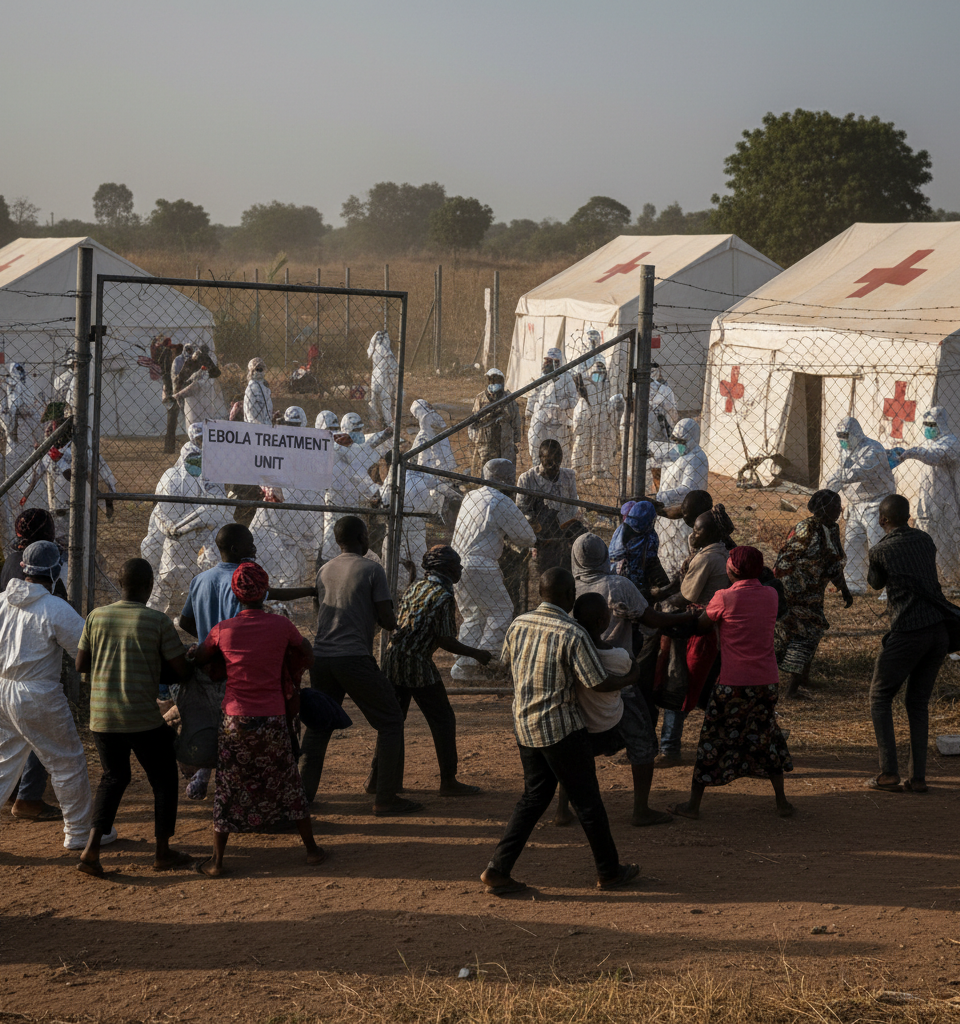
Families of individuals suspected of carrying the Ebola virus have reportedly breached a quarantine facility in the Democratic Republic of Congo (DRC) and removed patients. The incident, which occurred this week, underscores the profound challenges faced by health authorities in managing highly contagious outbreaks amidst community mistrust and ingrained cultural practices.
This forceful intervention by family members highlights the complex interplay between public health mandates, societal beliefs, and the fear surrounding a disease as deadly as Ebola. Historically, communities in affected regions have occasionally resisted medical interventions, viewing quarantine measures with suspicion or interpreting them as a separation from loved ones that goes against spiritual or communal traditions. Such incidents can severely undermine efforts to control the spread of the virus, potentially leading to new chains of transmission within the community and beyond.
The specific location of the stormed facility has not been publicly detailed, nor has the exact number of patients removed. However, the act itself represents a significant setback for the health response in the DRC, a country that has been battling recurrent Ebola outbreaks for decades. Each such incident complicates contact tracing, a critical component of containing the virus, and places both the removed individuals and their communities at heightened risk.
From a broader public health perspective, such events can erode public confidence in the efficacy and humane application of quarantine protocols. It can also exacerbate the stigmatization of those afflicted or suspected of being infected, making it more challenging for health workers to gain community cooperation. The World Health Organization (WHO) and Médecins Sans Frontières (MSF), often at the forefront of Ebola responses, frequently emphasize the necessity of community engagement and education to prevent such breaches.
While details about the motivations of the families remain limited, such actions are often rooted in a combination of desperation, lack of understanding about the disease's transmission and treatment, and a profound desire to care for loved ones within traditional family structures. There may also be underlying concerns about the conditions within treatment centers or a belief that traditional healers or methods offer a more appropriate path to recovery.
This incident will likely prompt a re-evaluation of security measures at treatment centers and a renewed focus on community dialogue and social mobilization strategies. Health organizations and local authorities will need to redouble efforts to build trust, address misinformation, and ensure that containment strategies are perceived as both effective and respectful of local customs. Without robust community buy-in, the battle against Ebola remains intensely challenging.
Looking ahead, the immediate priority will be to locate the removed patients to ensure their well-being and to prevent further spread of the virus. Simultaneously, authorities will need to conduct a thorough investigation into the circumstances that led to the breach, in order to implement preventive measures and avoid similar situations in the future. The episode serves as a stark reminder that epidemic response is not solely a medical challenge but also a profound social and humanitarian one.