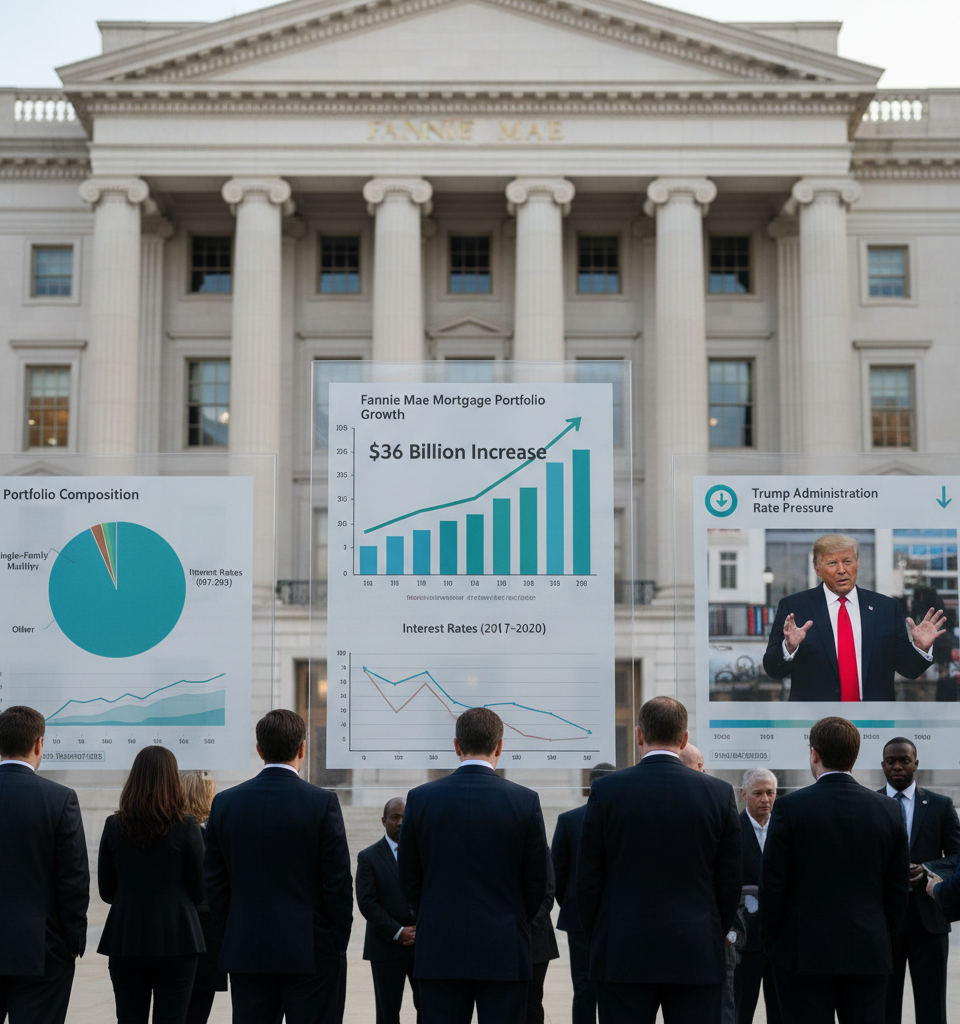
Fannie Mae, the government-sponsored enterprise (GSE) critical to the U.S. housing finance system, significantly increased its retained mortgage portfolio by an astonishing $36 billion during the first three months of this year. This substantial expansion, detailed in the GSE's recent financial disclosures, has drawn considerable attention from market observers, who suggest it aligns with the Trump administration's publicly stated ambition to drive down interest rates and stimulate economic activity, particularly within the housing sector.
Context and Background
The growth in Fannie Mae's portfolio comes at a time of heightened scrutiny over the GSEs' role and future. For years following the 2008 financial crisis, Fannie Mae and Freddie Mac operated under conservatorship, with strict limits on their retained portfolios – essentially, the mortgages they hold on their balance sheets rather than securitizing and selling to investors. The stated purpose of these limits was to reduce taxpayer exposure and stabilize their financial health. However, the recent administration has been vocal about its desire for lower interest rates to fuel economic growth, leading to speculation that subtle or direct pressures could be influencing the GSEs' operational decisions. Expanding their portfolio allows Fannie Mae to absorb more mortgage-backed securities, providing liquidity to the market and, potentially, contributing to downward pressure on mortgage rates.
Key Details and Figures
According to Fannie Mae's Q1 financial report, the retained portfolio surged from $265 billion at the end of last year to $301 billion by March 31. This $36 billion jump represents an increase of approximately 13.6% in a single quarter, a pace not seen in over a decade. The portfolio primarily consists of mortgage-backed securities (MBS) and mortgage loans. While Fannie Mae's official statements emphasize its role in providing liquidity and stability to the housing market, the timing and scale of this increase have raised questions among financial analysts. There have been no explicit directives issued publicly compelling Fannie Mae to expand its holdings, yet the administration's broader economic rhetoric has been unmistakable.
Industry and Market Impact
The expanded holdings by Fannie Mae inject additional liquidity into the mortgage market, a development generally welcomed by lenders as it facilitates easier and potentially cheaper loan origination. For homebuyers, this could translate into slightly lower mortgage rates, making homeownership more accessible or affordable. However, it also raises concerns about the potential for increased systemic risk, especially if the GSEs become significantly larger players in holding credit risk on their balance sheets. The housing market, already navigating fluctuating demand and inventory challenges, could see further shifts in dynamics as a result of such large-scale interventions.
Expert Perspective
Financial analysts are dissecting Fannie Mae's Q1 activities. "This significant portfolio growth by Fannie Mae is undoubtedly influenced by the administration's desire for lower rates," commented Mark Zandi, chief economist at Moody's Analytics. "While within Fannie Mae's mandate to support the housing market, it marks a notable departure from the post-crisis strategy of shrinking their portfolios." Other experts suggest that while direct political pressure is hard to prove, the GSEs are acutely aware of administration priorities. "Fannie Mae operates under the Housing and Urban Development Department and the Federal Housing Finance Agency. They understand the signals coming from Washington," noted a senior housing finance strategist, who preferred not to be named due to client relations.
What's Next?
The trajectory of Fannie Mae's retained portfolio will be a key indicator for both the housing market and broader economic policy in the coming quarters. Should the portfolio continue to grow at this accelerated pace, it could signal a sustained effort to depress mortgage rates, potentially influencing Federal Reserve policy and the yield curve. It also brings the ongoing debate about GSE reform back into sharper focus. Policymakers will need to weigh the benefits of market liquidity and lower rates against the potential for increased government exposure to credit risk. Future financial reports from both Fannie Mae and Freddie Mac will be closely scrutinized for further clues on this evolving strategy and its long-term implications for the housing finance ecosystem.