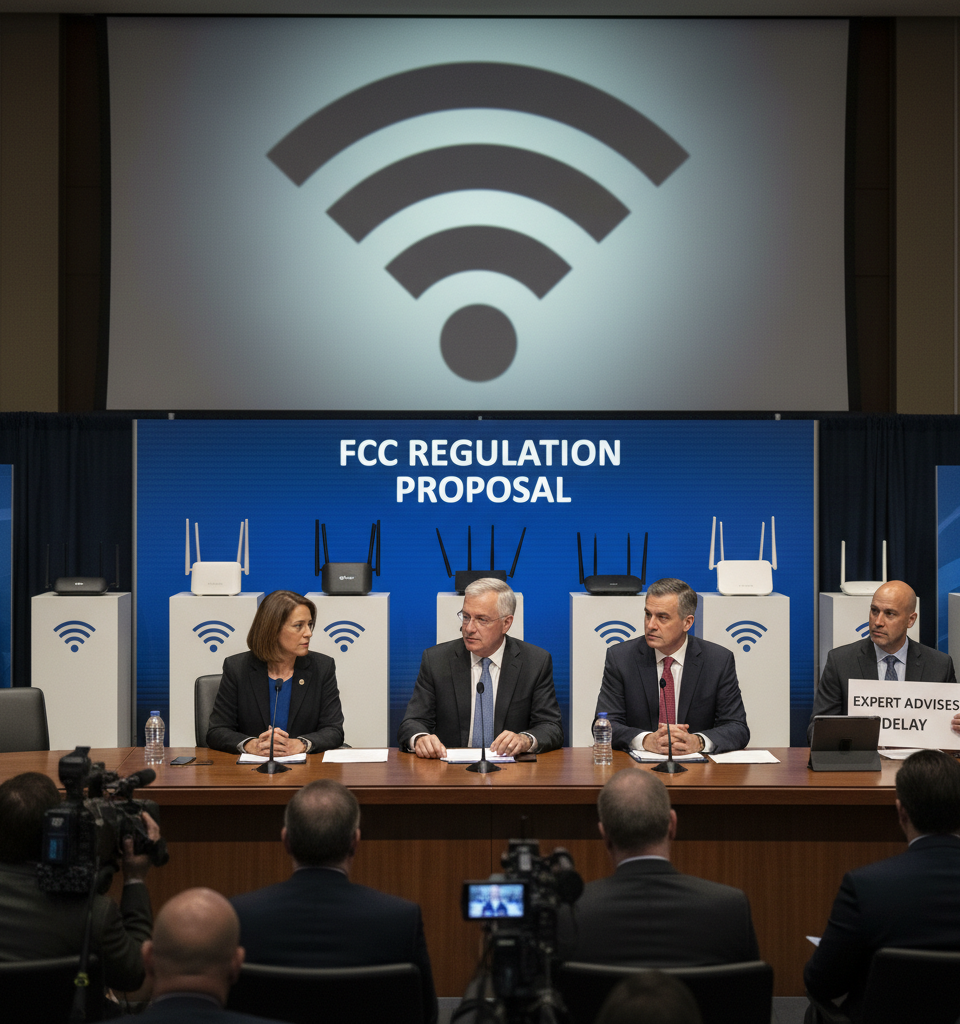
**Washington D.C., ** – The Federal Communications Commission (FCC) has initiated a monumental policy shift, enacting a comprehensive ban that significantly curtails the sale of new Wi-Fi routers in the United States. This unprecedented move, stemming from concerns over cybersecurity and device longevity, has prompted leading technology experts to advise consumers against immediate router purchases until the full scope and long-term implications are thoroughly understood. The core apprehension revolves around the industry's ability to provide sustained software updates, without which devices purchased today could effectively become obsolete or insecure 'pumpkins' by as early as 2027.
The Mandate's Genesis: Security and Device Longevity
The FCC's directive is rooted in a growing concern over the proliferation of insecure or unmaintained internet-connected devices, particularly those forming the backbone of home and business networks. Historically, consumer-grade routers have been notorious for infrequent security updates, leaving millions of networks vulnerable to increasingly sophisticated cyber threats. The Commission's proactive stance aims to force manufacturers to adopt more robust, long-term software support policies. This initiative also seeks to address environmental concerns by extending the lifespan of devices, thereby reducing electronic waste, though paradoxically, the lack of updates could accelerate obsolescence for newly purhased, non-compliant equipment.
Unpacking the Ban: Scope and Compliance Challenges
The ban's reach is extensive, encompassing nearly every new Wi-Fi router model entering the U.S. market. While specific technical details of the mandate are still being fully elucidated, preliminary interpretations suggest strict requirements for update guarantees, potentially spanning several years. Manufacturers are now grappling with the operational and financial complexities of ensuring such long-term support for their diverse product portfolios. The challenge is particularly acute for smaller manufacturers or those operating on tight margins, who may find it economically unfeasible to provide ongoing security patches and firmware upgrades for older models. Industry estimates suggest compliance could add an average of 15% to 25% to manufacturing costs, depending on the device's complexity and anticipated support window.
Industry Repercussions and Market Uncertainty
The immediate impact on the Wi-Fi router market is one of significant uncertainty and potential disruption. Major manufacturers like TP-Link, Netgear, and D-Link are reassessing their product development pipelines and support strategies. Retailers, including Amazon, Best Buy, and Walmart, face potential inventory challenges as existing stock of non-compliant routers may either be unsellable or come with a caveat of limited future support. This has led to a noticeable slowdown in new product launches and a hesitancy among consumers, many of whom are now adopting a 'wait and see' approach. The long-term outlook could see market consolidation, with smaller players unable to meet the stringent new requirements potentially exiting the market.
Expert Perspectives: Navigating the Regulatory Landscape
Cybersecurity experts and telecom analysts are largely commending the FCC's intent but caution against potential unintended consequences. Dr. Anya Sharma, a leading cybersecurity policy analyst, stated in a recent interview, "While the FCC's goal of enhancing network security is laudable, the implementation details are critical. Without clear guidelines and a feasible framework for manufacturers, this could lead to market stagnation or even a black market for unsupported devices. The key is finding a balance that ensures security without stifling innovation or causing undue burden on consumers." Others point out the historic reluctance of manufacturers to provide long-term software support for consumer electronics, highlighting the arduous task ahead for industry players.
What Lies Ahead: From Clarity to Compliance
The coming months will be crucial for the industry as manufacturers work to understand and comply with the FCC's new regulations. Consumers can anticipate a period of reduced new product availability and potentially higher prices for compliant devices. The FCC is expected to issue further clarifications and potentially a roadmap for manufacturers to transition existing product lines. Furthermore, an ongoing dialogue between regulators and industry stakeholders will be essential to ensure that the ban achieves its intended security objectives without inadvertently harming consumers or innovation. The long-term success of this policy hinges on robust compliance mechanisms and transparent communication, shaping the future of home networking for years to come. Consumers are advised to monitor official FCC announcements and reputable tech news outlets closely before making significant router investments.