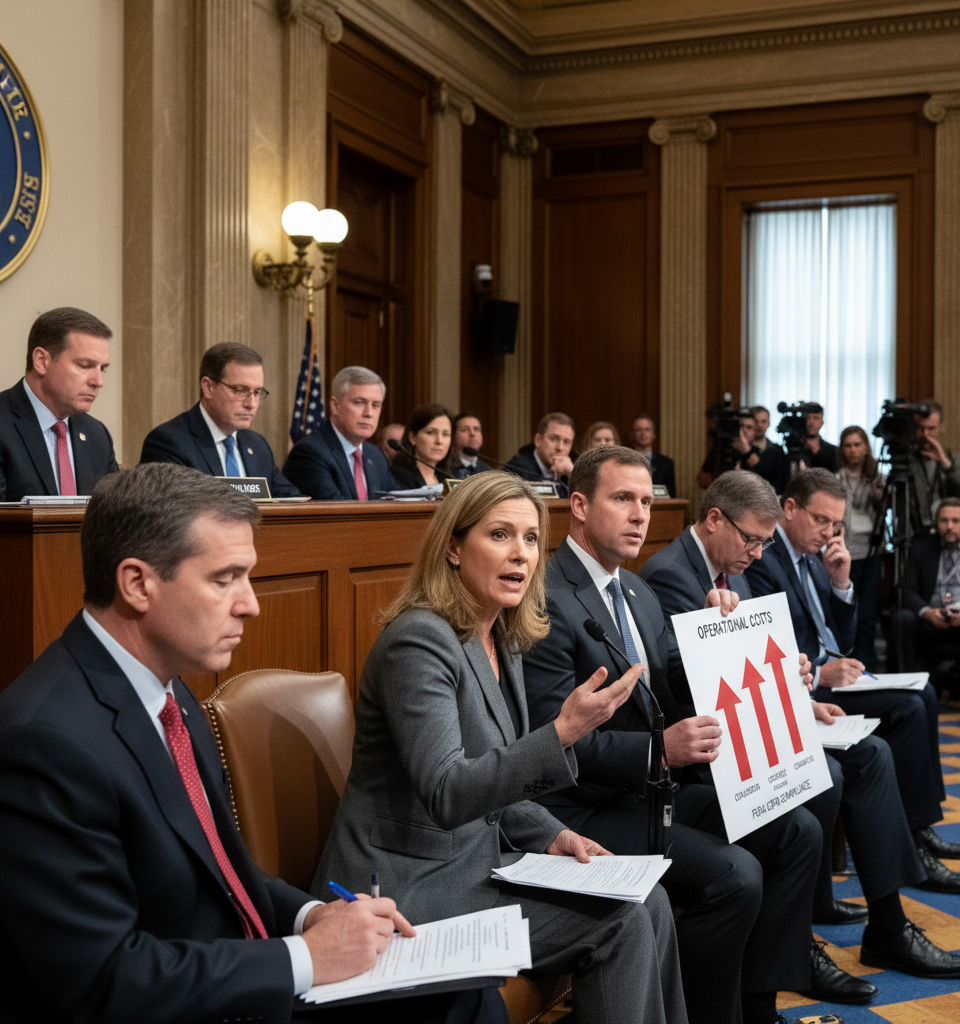
WASHINGTON D.C. – A contentious session before a House subcommittee last week cast a harsh spotlight on the confluence of proposed reforms to the Fair Credit Reporting Act (FCRA) and the operational limits of the Consumer Financial Protection Bureau (CFPB) regarding consumer complaints. The hearing served as a critical platform for industry stakeholders, particularly the mortgage sector, to voice profound concerns over escalating regulatory burdens. The Mortgage Bankers Association (MBA) delivered stark testimony, citing an unprecedented 350% increase in compliance-related expenditures, with grim forecasts predicting an additional 40% to 50% surge by 2026 if current trends and potential changes persist.
This congressional scrutiny arrives amidst a broader reevaluation of financial consumer protection mechanisms and the practical implications of their enforcement. The FCRA, enacted in 1970, stands as a cornerstone of consumer rights, governing the collection, dissemination, and use of consumer credit information. However, its expansive scope and the CFPB's enforcement latitude have become points of contention for regulated entities. The debate centers on balancing robust consumer safeguards with the operational realities and financial health of industries vital to the American economy, such as housing finance.
During the hearing, specific grievances were aired regarding the volume and nature of CFPB complaints, with some industry representatives arguing that a significant portion are duplicative, frivolous, or could be resolved more efficiently without formal regulatory intervention. The MBA's alarming cost figures underscore the tangible financial impact of navigating this regulatory landscape. These expenses are not merely administrative; they represent direct investments in personnel, technology, and legal counsel required to interpret and comply with evolving mandates, diverting resources that could otherwise be deployed for innovation or market expansion.
The implications for the broader financial services landscape, especially the housing market, are substantial. Increased compliance costs invariably translate into higher operational expenses for lenders, which can ultimately be passed on to consumers in the form of higher interest rates, fees, or reduced product offerings. For first-time homebuyers or those with limited financial flexibility, even marginal increases in borrowing costs can severely impact affordability and access to credit. This ripple effect could exacerbate existing housing supply and affordability challenges, particularly in a market already grappling with high interest rates and tight inventory.
Industry experts and analysts are closely monitoring these developments, recognizing the delicate balance between consumer protection and market fluidity. Many acknowledge the necessity of robust oversight to prevent predatory practices and ensure transparency. However, there is a growing consensus that the efficacy and efficiency of current regulatory frameworks, particularly in how complaints are processed and resolved, warrant a comprehensive review. Pundits suggest that an overly burdensome or inefficient regulatory environment could stifle innovation and competitiveness within the financial sector, potentially disadvantaging both businesses and consumers in the long run.
Looking ahead, the congressional discussions signal a potential inflection point for FCRA enforcement and the CFPB's operational strategies. The subcommittee's deliberations could pave the way for legislative proposals aimed at refining FCRA provisions, clarifying enforcement guidelines, or establishing more streamlined complaint resolution mechanisms. Such reforms would likely involve a multi-stakeholder approach, bringing together consumer advocates, industry leaders, and policymakers. The outcome will undoubtedly shape the future regulatory environment for credit reporting and consumer finance, dictating compliance costs, market dynamics, and ultimately, the accessibility of credit for millions of Americans into the latter half of the decade and beyond.