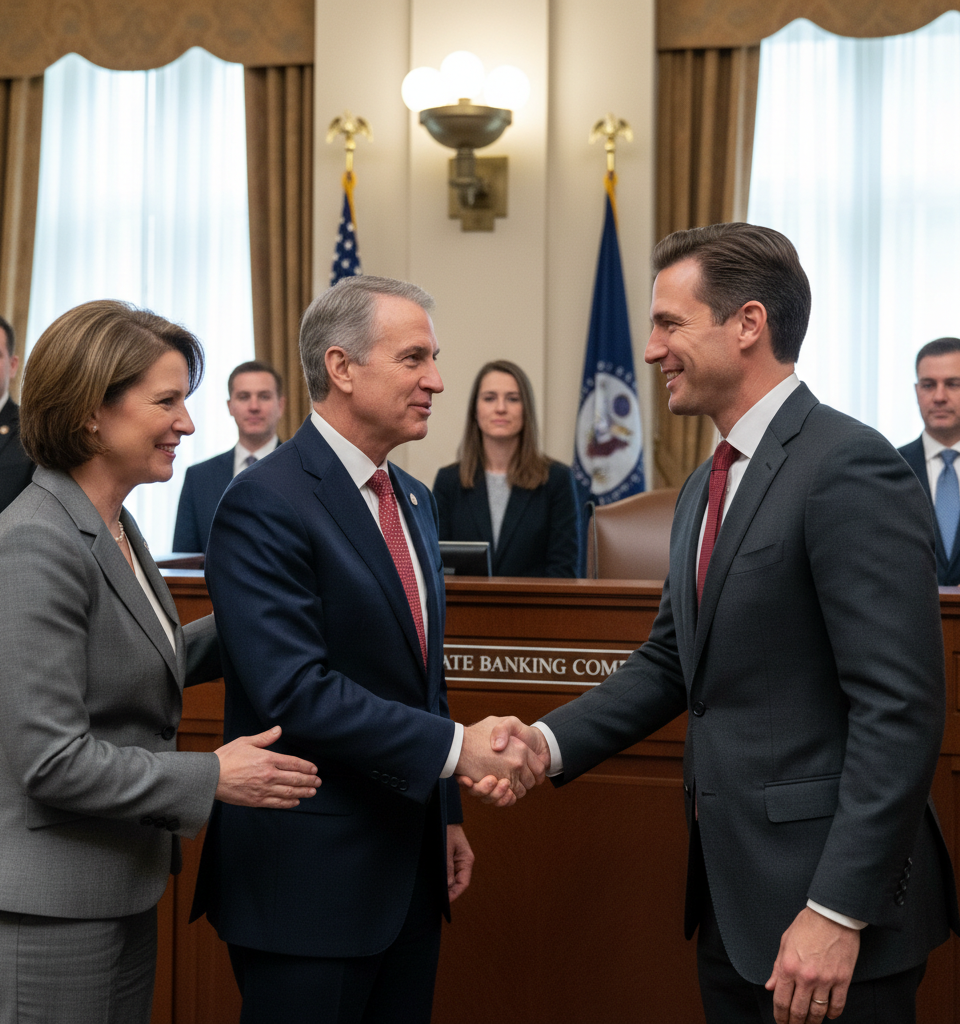
Kevin Warsh, the former Federal Reserve governor and widely discussed candidate for a principal role within the central bank, has officially submitted his comprehensive ethics paperwork to the Senate. This procedural milestone, completed on Monday, represents a crucial step in the often-arduous confirmation process for high-level presidential appointees, effectively clearing a significant hurdle en route to a Senate hearing.
Warsh's potential nomination and subsequent confirmation to the Federal Reserve have garnered considerable attention across financial markets and political circles. His background as a former Fed governor during the 2008 financial crisis, coupled with his more recent critiques of accommodative monetary policy, positions him as a figure whose influence on central bank strategy could be substantial. The submission of ethics documentation is a mandatory prerequisite designed to ensure transparency and prevent conflicts of interest, a standard practice for all nominees awaiting congressional review.
The Confirmation Process and Its Significance
The ethics review process handled by the Senate is meticulous, involving a detailed examination of a nominee's financial holdings, past business dealings, and any potential entanglements that could compromise their independence or impartiality once in office. For a nominee to the Federal Reserve, an institution central to the nation's economic stability, this scrutiny is particularly intense. Clearing this initial ethical review is not merely a formality but an indication that Warsh's background has, at least to this point, met the initial standards required for Senators to proceed with public questioning.
Warsh's prospective appointment comes at a time of evolving economic challenges and debates over the future direction of monetary policy. His past association with a more hawkish stance on inflation control, contrasted with some current dovish tendencies within the central bank, suggests that his confirmation could introduce new dynamics to Federal Reserve deliberations. Market participants are closely watching the process, anticipating how his potential influence might alter the trajectory of interest rates, quantitative easing, or other critical policy tools.
Market Anticipation and Policy Implications
The financial sector is keenly observing Warsh’s progression through the Senate. His potential seating on the Federal Reserve Board or as its Chair would likely signal a shift in the central bank's philosophical approach, potentially favoring tighter monetary conditions or a more rules-based framework for policy setting. Such a shift could have wide-ranging implications for bond yields, equity markets, and the overall macroeconomic outlook. Therefore, the successful navigation of procedural steps, such as the ethics paperwork submission, is interpreted as a positive signal for those anticipating his eventual confirmation.
His past experience offers a unique perspective on navigating economic crises. As a governor during a period of unprecedented financial turmoil, Warsh was involved in critical decisions that shaped the U.S. economy's recovery. His insights and policy preferences are therefore considered valuable data points for investors, analysts, and policymakers attempting to forecast the future course of Fed policy under his potential tenure.
What Lies Ahead: Senate Hearings and Beyond
With the ethics paperwork now filed, the next significant stage will be the scheduling and execution of a Senate confirmation hearing. During these public sessions, Warsh will face questioning from senators on a range of issues, including his economic philosophy, views on inflation, employment, financial regulation, and his independence from political pressures. These hearings often become platforms for broader debates on economic policy and the role of the Federal Reserve.
The successful completion of the ethics review does not guarantee confirmation, but it does remove a major potential impediment. The upcoming Senate hearings will be critical in shaping senatorial opinions and determining whether Warsh can garner sufficient support for his appointment. The timelines for such hearings can vary, but their commencement will mark the beginning of the decisive phase in his journey toward a potential seat at the Federal Reserve. Observers expect these hearings to be robust, given the significance of the role and the divergent views currently held on monetary policy.