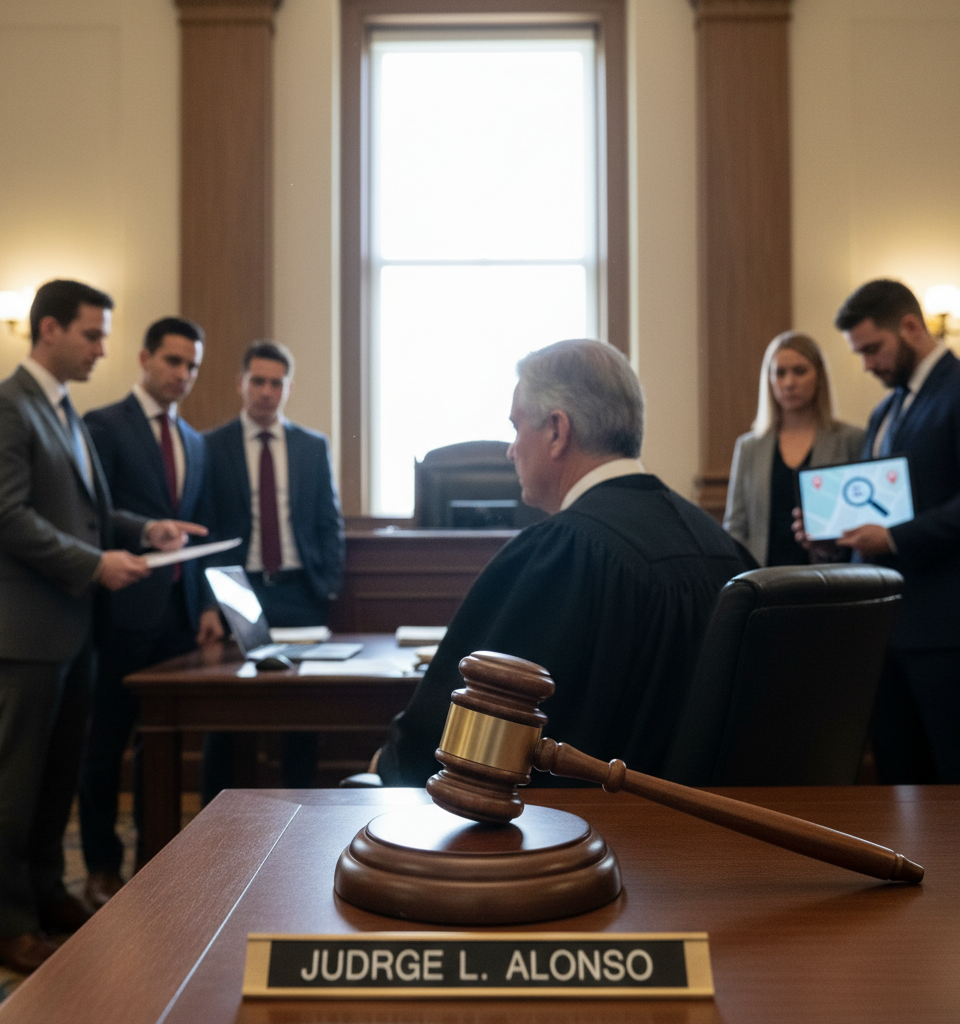
**Chicago, IL – ** – A significant ruling by a federal judge in Illinois has temporarily halted efforts by the Trump administration to suppress online platforms designed to track the activities of U.S. Immigration and Customs Enforcement (ICE). Judge Jorge L. Alonso of the United States District Court for the Northern District of Illinois granted a preliminary injunction to Kassandra Rosado and Kreisau Group, creators of the "ICE Sightings - Chicagoland" Facebook group and the "Eyes Up" app, respectively. The decision suggests a strong likelihood that the plaintiffs will succeed in their lawsuit, which alleges that the Department of Homeland Security (DHS) and the Department of Justice (DOJ) engaged in unconstitutional coercion of social media companies to remove their content, thereby violating their First Amendment rights to free speech.
A Battle Over Free Speech and Government Oversight
This case emerges against a backdrop of increasing public scrutiny over immigration enforcement and the delicate balance between government operations and citizen oversight. The "ICE Sightings - Chicagoland" Facebook group and the "Eyes Up" app were developed to provide real-time updates on ICE raids and activities within communities, enabling individuals to be aware of potential enforcement actions. The government's alleged pressure on platforms to remove these tools sparked a heated debate over whether such actions constitute legitimate law enforcement concerns or an unconstitutional suppression of protected speech. This ruling underscores the judiciary's role in safeguarding civil liberties, particularly when technological advancements enable new forms of public discourse and information sharing.
Key Details Emerge in Court Filings and Testimony
During proceedings, evidence was presented suggesting that government officials, including those from DHS and DOJ, contacted major social media companies and app stores, urging them to take down or restrict access to the ICE tracking platforms. While the exact language and nature of these communications remain under wraps due to ongoing litigation, Judge Alonso's ruling indicates that the "pressure" exerted by the government was sufficient to raise serious First Amendment concerns. The plaintiffs successfully argued that their platforms serve a crucial public interest by disseminating information that empowers communities and fosters transparency regarding government actions. Legal experts note that the standard for a preliminary injunction is high, requiring plaintiffs to demonstrate a strong probability of success on the merits, indicating the judge found the evidence of government overreach compelling.
Broader Implications for Tech Platforms and Public Discourse
The injunction has significant ramifications for the technology industry and the landscape of online speech. It sends a clear message to social media companies and app developers that they may face legal challenges if they succumb to government pressure to remove content without a clear legal mandate. This case highlights the precarious position platforms find themselves in, caught between government demands, user free speech rights, and their own terms of service. For civil liberties advocates, the ruling is a victory, reinforcing the idea that digital spaces are extensions of public forums where freedom of expression must be protected, even when that speech is critical of or inconvenient for the government.
Expert Perspectives on Constitutional Boundaries
First Amendment scholars and legal analysts widely view this decision as a critical affirmation of free speech principles in the digital age. "This injunction is a powerful reminder that the government cannot use its power to silence dissenting voices or suppress information, simply because it finds that information inconvenient or disruptive," commented [Hypothetical Legal Analyst Name], a constitutional law professor at [Hypothetical University]. "The court correctly recognized that real-time information about government activities, however sensitive, often falls within the purview of protected speech, especially when it serves to inform and protect communities." The consensus among experts is that the government must pursue lawful and transparent channels if it genuinely believes certain online activities threaten national security or public safety, rather than resorting to informal pressure tactics.
What's Next: An Ongoing Legal Battle
While the preliminary injunction is a significant win for the plaintiffs, the legal battle is far from over. The case will now proceed to discovery, where both sides will gather more evidence, potentially uncovering additional details about the government's communications with tech companies. The DHS and DOJ are expected to vigorously defend their actions, likely arguing that their interventions were necessary for public safety or law enforcement integrity. The final outcome of this lawsuit could set a crucial precedent for how the government interacts with online platforms and defines the boundaries of free speech in the context of government activity tracking. A potential appeal of the preliminary injunction is also possible, which could elevate this constitutional dispute to a higher court, drawing even more national attention.
The Evolving Landscape of Digital Activism
This case also underscores the evolving role of digital tools in activism and community organization. From tracking police movements to monitoring environmental hazards, online platforms have become indispensable for civic engagement. The legal precedent set here could embolden other groups seeking to leverage technology for transparency and accountability, potentially leading to a proliferation of similar monitoring apps across various sectors. Conversely, it could also prompt government agencies to re-evaluate their strategies for addressing online content that they perceive as problematic, forcing them to operate within stricter constitutional guardrails. The long-term impact on the relationship between citizens, technology, and government oversight will be closely watched.
Economic Impact on Tech and Privacy
The ruling also carries subtle economic implications for tech companies. While the immediate financial impact is minimal, the precedent could influence how platforms manage content moderation policies and interact with government requests. Companies may invest more in legal counsel to evaluate such requests, potentially increasing operational costs. Furthermore, it reinforces the value proposition of platforms that champion user privacy and freedom of expression, potentially influencing user adoption and market competition. For firms like Kreisau Group, which develops such apps, the ruling provides a degree of legal certainty and encourages continued innovation in the civic tech space.
The preliminary injunction is a pivotal moment, affirming the First Amendment in the digital realm and setting the stage for a comprehensive legal examination of government overreach in policing online content related to its own activities.