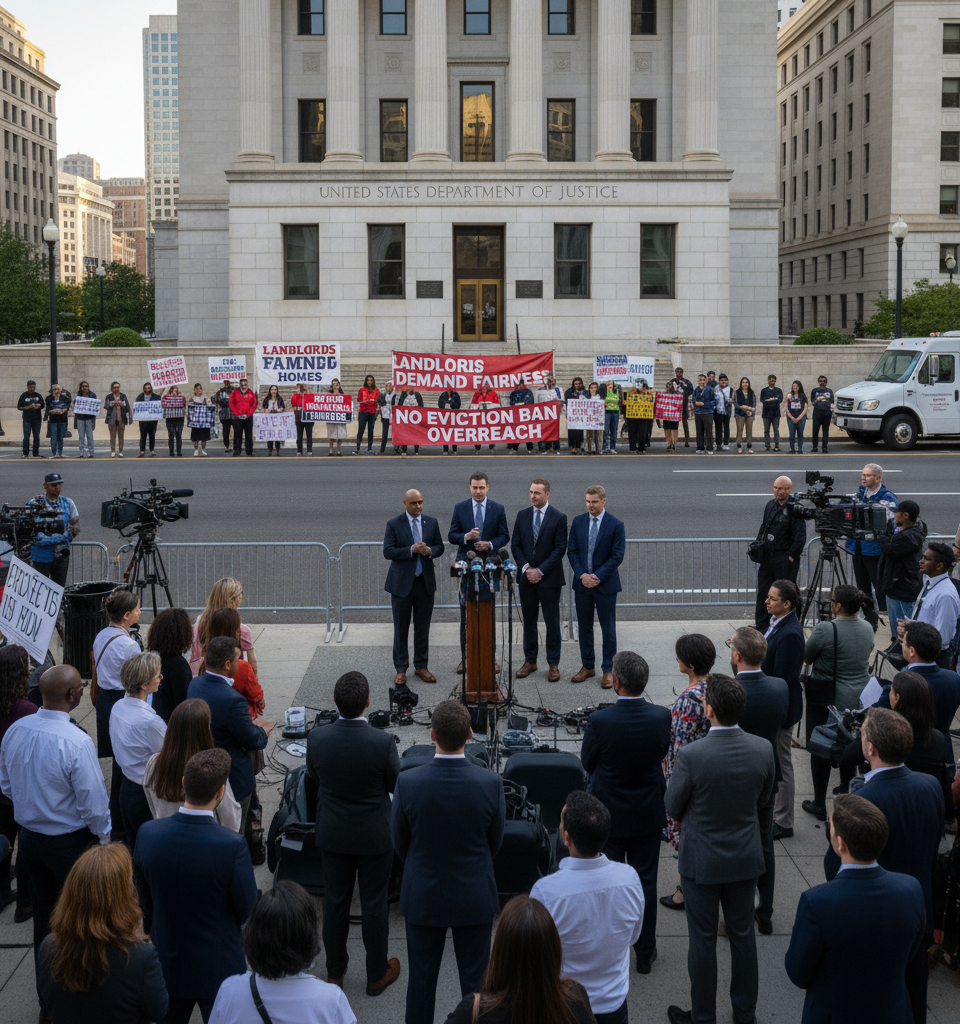
The U.S. Department of Justice (DOJ) is actively pursuing settlement negotiations with a substantial group of 1,500 landlords who have filed a federal lawsuit alleging significant financial damages stemming from a pandemic-era eviction moratorium. This critical development comes after the landlords successfully appealed an earlier dismissal, allowing their case to proceed and placing renewed pressure on the federal government to resolve claims that could amount to millions of dollars in compensation.
The Roots of the Dispute
The dispute originates from the nationwide eviction moratorium implemented by the Centers for Disease Control and Prevention (CDC) in September 2020, as a measure to curb the spread of COVID-19 by preventing mass displacement. While lauded by public health advocates as a vital intervention, the moratorium faced immediate and sustained legal challenges from property owners who argued it unconstitutionally infringed upon their property rights and imposed substantial financial burdens. Landlords, many of whom are small business owners, contended that they were left without recourse to collect rent, cover expenses, and maintain their properties, despite their own obligations to mortgage lenders and utility providers.
The legality of the CDC's authority to issue such a sweeping order was a central point of contention, eventually leading to the Supreme Court curtailing the moratorium in August 2021.
Key Legal and Financial Dimensions
At the heart of the current negotiations are the financial repercussions experienced by the aggrieved landlords. Sources close to the legal proceedings indicate that the plaintiffs are seeking compensation for unpaid rent and property maintenance costs incurred during the moratorium period, with aggregate claims potentially reaching into the tens of millions of dollars. The initial lawsuit, filed shortly after the moratorium's inception, argued that the government's order constituted an unconstitutional taking of private property without just compensation, violating the Fifth Amendment.
The successful appeal, which overturned an earlier district court ruling that had dismissed the case, underscores the judiciary's recognition of the serious legal questions at play and empowers the landlords' negotiating position. The Department of Justice, representing the federal government, now faces the task of mitigating potential liabilities and avoiding a protracted and costly litigation process.
Broader Market and Industry Impact
Beyond the immediate parties, the outcome of these negotiations carries significant implications for the broader real estate market and future governmental responses to crises. Should the landlords secure a substantial settlement, it could set a precedent for compensation claims in similar situations where governmental mandates impact private property rights. The National Multifamily Housing Council (NMHC) previously estimated that rental debt accumulated during the moratorium reached over $20 billion, highlighting the vast scale of the financial pressure on landlords, particularly smaller operators.
Property management firms and real estate investment trusts (REITs) are closely watching the proceedings, as they could influence risk assessments and operational strategies during future public health emergencies or economic downturns. The case also sparks debate about the balance between public welfare and private property rights, a foundational tension in legal jurisprudence.
Expert Commentary on the Process
Legal scholars and real estate analysts are offering varied perspectives on the ongoing settlement talks. "The federal government is likely aiming to avoid a lengthy and potentially embarrassing trial that could further expose the legal fragility of the CDC's initial mandate," explained Dr. Emily Carter, a professor of constitutional law at a prominent university. "A settlement would allow them to control the narrative and minimize the financial payout, even if it means acknowledging some level of culpability." Real estate economist Mark Davison added, "For landlords, securing any settlement, even if less than the full claimed amount, would be a critical validation of their losses and could help many recover from what was a financially devastating period." He noted the complexity of calculating damages, given the varying local markets and individual property circumstances.
What Lies Ahead
While the specifics of the settlement discussions remain confidential, informed sources suggest that both sides are motivated to find common ground. The landlords aim to recoup their losses, while the DOJ seeks to avoid establishing a precedent for larger, broader claims and to minimize taxpayer-funded payouts. If a settlement is reached, it could involve direct financial compensation, potentially structured in tranches, or other forms of relief. In the absence of a successful settlement, the case would revert to federal court, likely leading to extensive discovery, expert testimony, and a trial that could span several months or even years. The resolution of this case will undoubtedly shape future policy discussions regarding emergency powers, property rights, and the financial burden distribution during national crises for years to come.