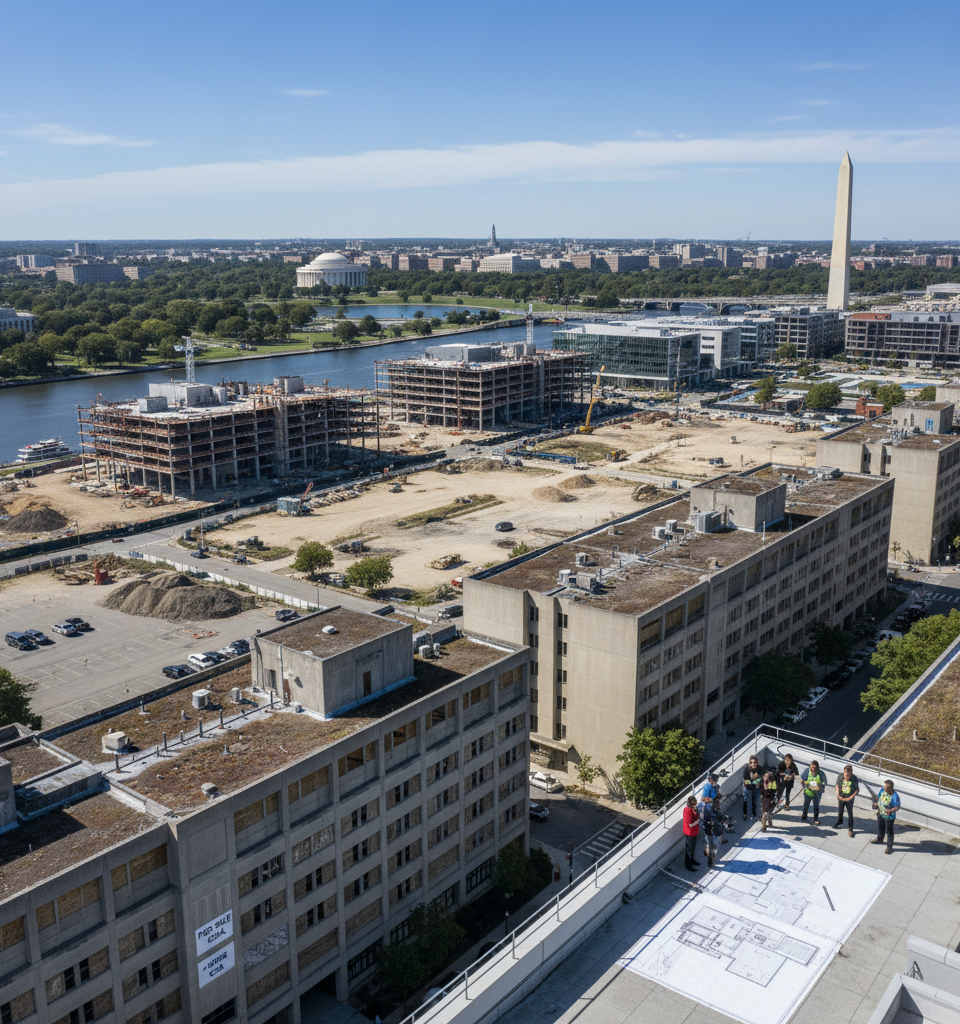
Washington D.C. is bracing for one of its most significant redevelopment efforts in recent history as federal agencies proceed with the sale of substantial real estate holdings in the coveted 250-acre corridor stretching from the National Mall to the southwest waterfront. This initiative, which commenced this year, involves offloading government buildings and land parcels without a publicly articulated, overarching development strategy, prompting a chorus of concerns from urban planning experts, local advocacy groups, and city officials regarding the future character and functionality of this pivotal area.
The Scale of Transformation
This redevelopment zone holds immense historical and symbolic importance, bordering iconic national landmarks and anchoring emerging commercial and residential districts. The sheer scale of the land — approximately 250 acres — presents an unprecedented opportunity for a thoughtful, integrated approach to urban planning, yet stakeholders fear a piecemeal disposition could squander this potential. The federal government, a dominant landowner in the District, is divesting properties as it seeks to modernize its footprint and potentially reduce operational costs, a trend accelerated by hybrid work models.
Key Details and Public Reaction
Sources familiar with the sales indicate that several properties, including older, underutilized office buildings, have either been sold or are actively on the market. While specific transaction values have not been publicly disclosed for all properties, industry analysts estimate the cumulative value of these assets to be in the hundreds of millions of dollars, attracting significant interest from national and international developers. However, the lack of transparency surrounding the future use of these sites post-sale is a recurring critique. "We're seeing prime real estate being sold off without a clear vision for how it fits into the broader urban fabric," noted one D.C. council member, who requested anonymity due to ongoing delicate negotiations.
Industry and Market Impact
For the commercial real estate market, these federal property sales represent a substantial influx of developable land in a high-demand urban core. Developers are eager to acquire these parcels, envisioning mixed-use projects encompassing residential units, retail spaces, and modern office facilities. This could significantly reshape the skyline and demographics of Southwest D.C., potentially driving up property values and stimulating further investment. The influx of new housing and commercial spaces could also alleviate some of the city's housing crunch, but without proper planning, it could exacerbate issues like traffic congestion and gentrification.
Expert Perspectives
Urban planning experts are particularly vocal about the need for a comprehensive master plan. Dr. Evelyn Reed, a professor of urban studies at George Washington University, stated, "This isn't just about selling buildings; it's about shaping the future of a critical section of our capital. Without a master plan, we risk disjointed development, increased strain on existing infrastructure, and a loss of potential public amenities." She emphasized that a holistic approach could integrate green spaces, affordable housing components, and improved transit links, creating a more cohesive and equitable urban environment.
Future Implications and Calls for Action
The absence of a coordinated strategy leaves the future of this significant development corridor in flux. Activists and community groups are advocating for greater public input and the establishment of a singular entity tasked with overseeing the redevelopment of the entire 250-acre area. They propose a framework that prioritizes public access, sustainable design, and community benefits, rather than purely market-driven development. City officials are under increasing pressure to engage with federal agencies to develop a joint vision that aligns with D.C.'s long-term growth objectives.
As sales continue, the onus is on both federal and local authorities to collaborate on a strategic roadmap that ensures this unparalleled redevelopment opportunity contributes positively to Washington D.C.'s infrastructure, economy, and quality of life for its residents. The coming months will likely see intensified discussions and increased advocacy for a more structured and forward-thinking approach to this pivotal transformation.