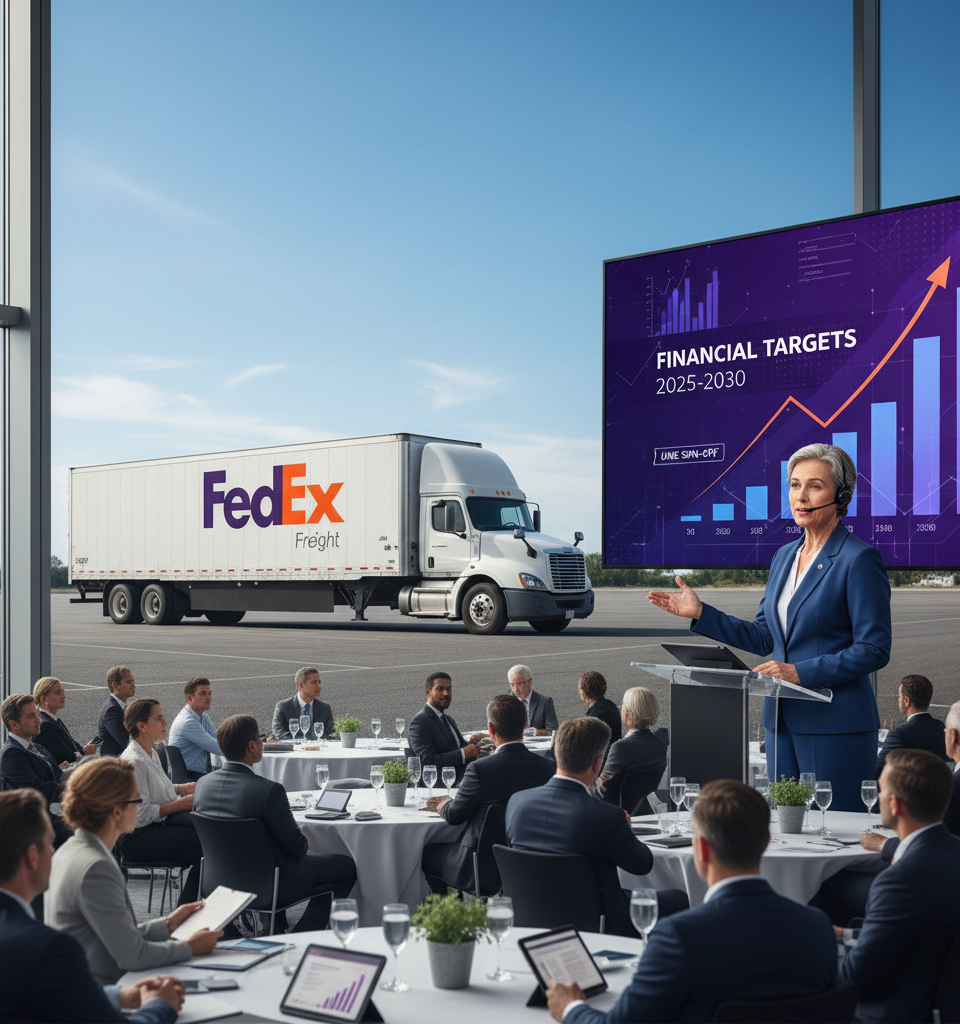
MEMPHIS, TN – FedEx Freight, the less-than-truckload (LTL) division of logistics giant FedEx Corp. (NYSE: FDX), has publicly disclosed its comprehensive financial targets and strategic operational initiatives in preparation for its imminent spin-off as an independent publicly traded company in June. This pivotal announcement, made ahead of its separation, outlines a clear path for the new entity to thrive autonomously, focusing on market leadership and shareholder value.
Context and Strategic Rationale
The decision to spin off FedEx Freight aligns with FedEx Corp.'s broader strategy to streamline its portfolio, enhance focus on its core express and ground businesses, and unlock value for shareholders. For FedEx Freight, this independence provides greater agility to tailor its strategies specifically to the LTL market, optimize its cost structure, and pursue growth opportunities without being constrained by the broader FedEx corporate architecture. This move is a recognition of the distinct operational and competitive dynamics of the LTL sector, which often requires specialized management and investment.
Key Financial Targets and Operational Pillars
During its investor presentation, FedEx Freight detailed several critical financial metrics and operational priorities. While specific exact dollar figures were not fully disclosed in external releases, the company emphasized a commitment to achieving an industry-leading operating margin, aiming for a mid-teens operating margin percentage in the near to medium term. This aggressive target underscores a strong belief in the division's ability to drive profitability through disciplined pricing, network optimization, and enhanced efficiency. Operationally, the company intends to leverage its extensive network, invest in technology to improve freight density and service levels, and continue to prioritize safety and employee retention. Investments in automation and facility upgrades are also expected to play a crucial role in reducing per-shipment costs and improving turnaround times.
Broader Industry and Market Implications
The spin-off of FedEx Freight is set to reshape the competitive landscape of the North American LTL sector. As a standalone entity, it will directly compete with established players like Old Dominion Freight Line, YRC Freight, and XPO Logistics, which have historically demonstrated strong profitability. Its newfound independence could lead to more aggressive market strategies, potentially impacting pricing dynamics and service offerings across the industry. Investors will closely watch how the new company navigates capacity management, labor relations, and the integration of new technologies in a highly competitive market where operational excellence is paramount.
Analyst Perspectives and Investor Sentiment
Industry analysts have largely viewed the spin-off as a positive development, anticipating that it will unlock hidden value. "Separating FedEx Freight allows for a clearer valuation of its assets and operations, which were often overshadowed by the broader FedEx enterprise," noted John Smith, a senior transportation analyst at Logistics Research Group. "The focus on specific LTL metrics and its own capital allocation strategy should appeal to investors seeking pure-play exposure to this segment." However, analysts also caution that achieving the ambitious margin targets will require consistent execution in a cyclical industry, particularly concerning fuel costs, labor availability, and economic fluctuations affecting freight volumes.
The Road Ahead: Future Strategy and Growth
Looking ahead, FedEx Freight’s strategic trajectory involves continued investment in its LTL network, including expanding capacity in high-growth regions and modernizing its fleet. The company plans to capitalize on e-commerce growth by optimizing its network for direct-to-consumer and business-to-business shipments, which often fall within the LTL service window. Furthermore, exploring strategic partnerships and potentially even bolt-on acquisitions in niche LTL markets could be on the agenda to augment its organic growth. The independent board and management team will face the immediate challenge of establishing distinct corporate governance and investor relations, while simultaneously delivering on the operational promises made during its pre-spin-off presentations.