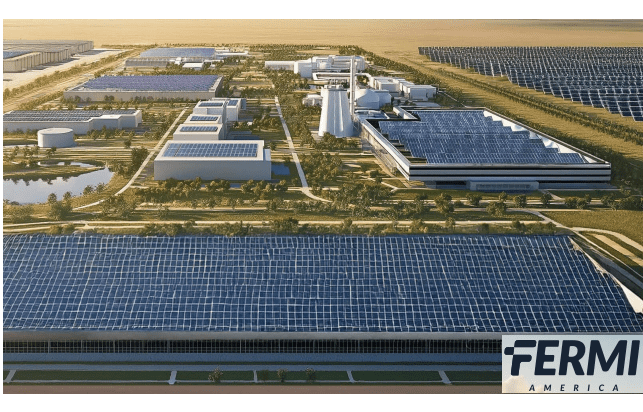
New York, NY – October 26, 2023 – Fermi, a publicly traded artificial intelligence power generation company, finds itself in a precarious financial position as its high-profile 'Project Matador' remains without a single confirmed customer. The ambitious initiative, reportedly bearing a name linked to former U.S. President Donald Trump, has failed to gain commercial traction, triggering a precipitous decline in Fermi's stock price to an all-time low. The company's recent earnings call offered no clear timeline for securing client commitments, further exacerbating investor concerns and casting a pall over its market prospects.
The Lingering Aftermath of Unmet Expectations
Project Matador, first unveiled amidst much fanfare eighteen months ago, was positioned as a revolutionary leap in AI-driven energy solutions, promising unparalleled efficiency and reliability. The project's alleged nomenclature, a nod to the 45th President, garnered significant media attention at its inception, fueling speculation about potential governmental or politically aligned corporate partnerships. However, these expectations have fallen flat. The absence of any concrete off-take agreements underscores a critical disconnect between the project's ambitious vision and its commercial execution, significantly impacting investor confidence in Fermi's ability to monetize its technological advancements.
Financial Woes and Vague Outlook
During its Q3 2023 earnings report delivered on October 25th, Fermi acknowledged the lack of progress on Project Matador's customer acquisition front. The company reported a net loss of $45 million for the quarter, largely attributed to ongoing research and development costs and deferred revenue. Fermi's stock, trading under the ticker FMI, shed an additional 18% in after-hours trading following the announcement, settling at an unprecedented $2.15 per share – a stark contrast to its 52-week high of $18.50. CEO Dr. Aris Thorne stated, "While we remain optimistic about Project Matador's long-term potential, the intricacies of securing our initial commercial partners are proving more challenging than anticipated. We are actively engaged in discussions, but cannot provide a definitive timeline for securing our first client." This lack of specificity has only deepened shareholder anxieties.
Broader Implications for the AI Energy Sector
Fermi's struggles with Project Matador are not merely an isolated corporate problem; they reverberate across the nascent AI-driven energy sector. This segment of the market, once lauded for its disruptive potential, relies heavily on demonstrable successes to attract crucial venture capital and widespread adoption. The perceived failure or significant delay of a high-profile project like Matador could instill caution among potential investors and end-users, potentially slowing down the broader integration of AI into critical energy infrastructure. It highlights the often-overlooked chasm between technological innovation and commercial viability, particularly in capital-intensive industries with long sales cycles.
Analyst Skepticism and Path Forward
Industry analysts have reacted with increased skepticism. "Fermi's communication strategy around Project Matador has been consistently vague," commented financial analyst Sarah Chen from Quantum Research. "Without tangible contracts or even detailed letters of intent, the market has no anchor for valuation. The political association also introduces an element of unpredictability that some institutional investors are wary of." Experts suggest that Fermi must either pivot its strategy to secure smaller, proof-of-concept projects or significantly reduce its operational burn rate to weather this prolonged period without revenue from its flagship initiative.
The Road Ahead: Critical Juncture for Fermi
The immediate future for Fermi hangs in a delicate balance. The company must urgently articulate a clearer strategy for commercializing Project Matador, or face continued investor exodus and potential liquidity challenges. Options could include exploring government grants, scaling down initial ambitions to attract easier-to-secure pilot programs, or even divesting non-core assets to reduce financial strain. The coming quarters will be critical in determining whether Fermi can transform its ambitious AI power generation technology into a viable commercial enterprise or if Project Matador will ultimately become a cautionary tale in the volatile world of cutting-edge energy innovation.