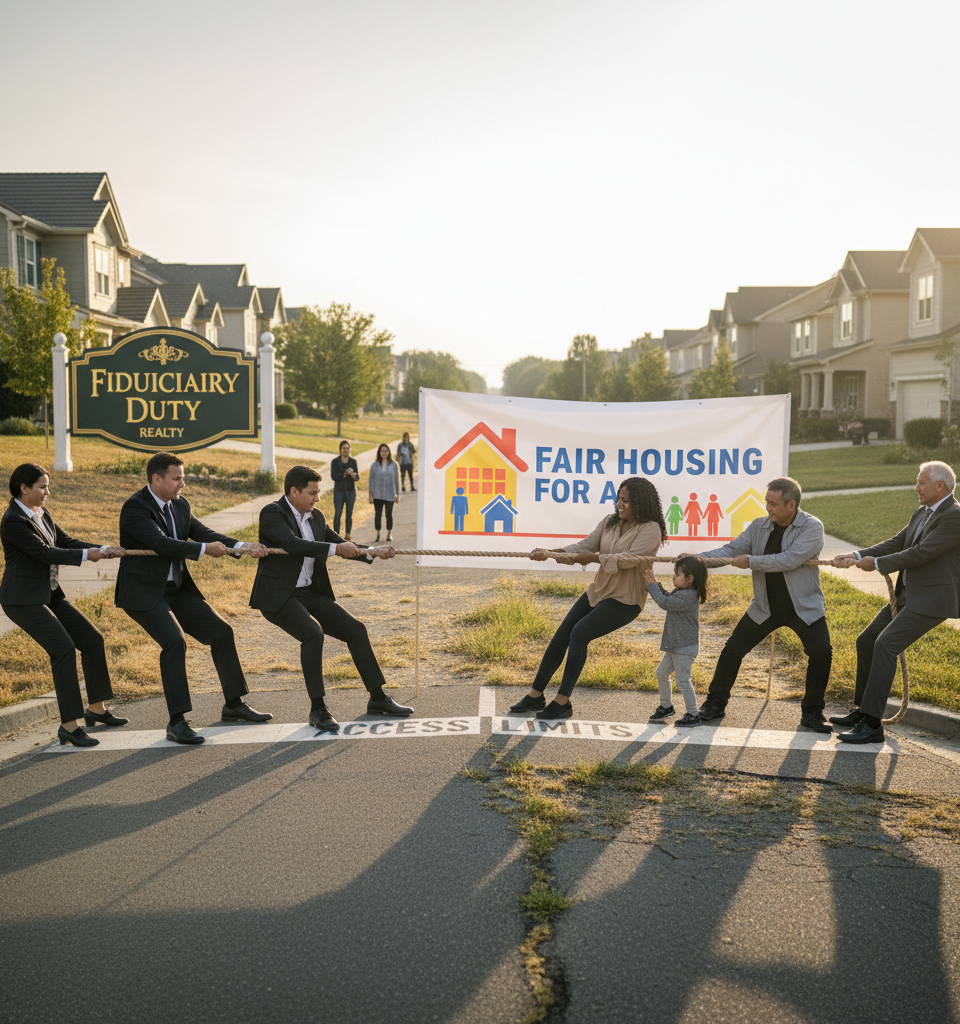
In the competitive landscape of modern real estate, a fundamental conflict is emerging between the long-held principle of a real estate agent’s fiduciary duty to their client and the foundational tenets of fair housing. This tension, as explored by industry professionals, highlights how practices such as deliberately limited showings, selective property exposure, and overly stringent buyer criteria are not merely inefficient market behaviors but are, in fact, systematically curating an environment of reduced access to homeownership for certain demographics. The consequence is a shrinking pool of opportunities for potentially qualified buyers, raising significant questions about equity and inclusion within the housing market across the nation.
The Historical Context of Housing Discrimination
This isn't a new phenomenon but rather a modern manifestation of historical biases that have long plagued the housing sector. Decades of redlining, discriminatory lending practices, and overt segregation have left an indelible mark on wealth creation and community development. While explicit discrimination is now largely outlawed, the current subtle mechanisms of filtering buyers through restricted access can achieve similar exclusionary outcomes. The Fair Housing Act of 1968, designed to eliminate these barriers, now faces a nuanced challenge from market-driven behaviors that, perhaps unintentionally, perpetuate uneven playing fields. The underlying issue is whether adherence to a seller's specific, often unwritten, preferences inadvertently contravenes the spirit, if not the letter, of fair housing regulations.
Unpacking the Mechanics of Exclusion
Sources across the real estate industry confirm that these practices are widespread. For instance, some listing agents, in a bid to streamline the selling process or cater to a seller's perceived ideal buyer, might restrict showings to only those pre-qualified to a certain, often excessive, financial threshold. In some cases, real estate professionals might tacitly or explicitly limit exposure to properties based on factors that correlate with protected classes, such as a buyer's perceived social status or even their surname, despite their financial qualification. A recent survey cited by the National Association of Realtors (NAR) indicated that approximately 15% of agents reported feeling pressured to limit showings, often from sellers, with another 8% admitting to doing so based on buyer profiles. This suggests a systemic issue, rather than isolated incidents, impacting market dynamics.
The Broader Market Ramifications
The ripple effects of these restrictive practices extend far beyond individual transactions. By artificially limiting the buyer pool, these actions can suppress demand for certain properties or in particular neighborhoods, potentially impacting property values. More critically, they entrench existing socio-economic disparities. Data from the U.S. Census Bureau consistently shows a significant homeownership gap between different racial and ethnic groups; for example, in Q4 2023, the homeownership rate for non-Hispanic White households was 74.3%, compared to 45.7% for Black households. Practices that diminish access disproportionately affect these already underserved groups, widening the wealth gap and hindering upward mobility. This also fosters a less diverse and inclusive housing market, detrimental to community cohesion and economic vitality.
Expert Insights on Ethical Dilemmas
Industry experts are divided on the nuanced interpretation of these practices. Dr. Evelyn Reed, a housing policy expert at the Urban Institute, posits, "While a real estate agent's primary duty is to their client, this duty cannot supersede federal law. The line blurs when a seller's 'preferences' translate into discriminatory filtering by their agent." She emphasizes the need for clearer ethical guidelines and robust enforcement to ensure fair play. On the other hand, some argue agents are merely fulfilling their fiduciary duty to secure the best possible outcome for their seller, which might involve vetting buyers rigorously. However, the intent behind such vetting becomes critical: is it purely financial, or are implicit biases at play? The challenge lies in objectively discerning intent in such subjective processes.
Toward a More Equitable Future
The path forward requires a multi-pronged approach. Real estate associations and regulatory bodies must provide clearer, mandatory training initiatives that highlight the intersections of fiduciary duty and fair housing. Emphasis should be placed on education not only for agents but also for sellers, who may unknowingly impose discriminatory criteria. Furthermore, technology can play a role; open showing schedules, standardized offer submission platforms, and anonymized initial buyer profiles could help mitigate bias. Legislative actions to strengthen fair housing protections and increase penalties for violations might also be necessary. For instance, proposals in several states suggest requiring a minimum number of publicly available open house slots to ensure broader access.
The Imperative for Change
Ultimately, the real estate industry stands at a critical juncture. Upholding the integrity of fair housing while navigating the complexities of fiduciary duty demands proactive engagement and a commitment to equitable access. Failure to address these emerging conflicts risks exacerbating housing inequality, undermining public trust, and attracting increased scrutiny and potentially tighter regulations. The goal must be to ensure that the American dream of homeownership is truly accessible to all, irrespective of background, and that the mechanisms of commerce do not become unwitting gatekeepers of opportunity.