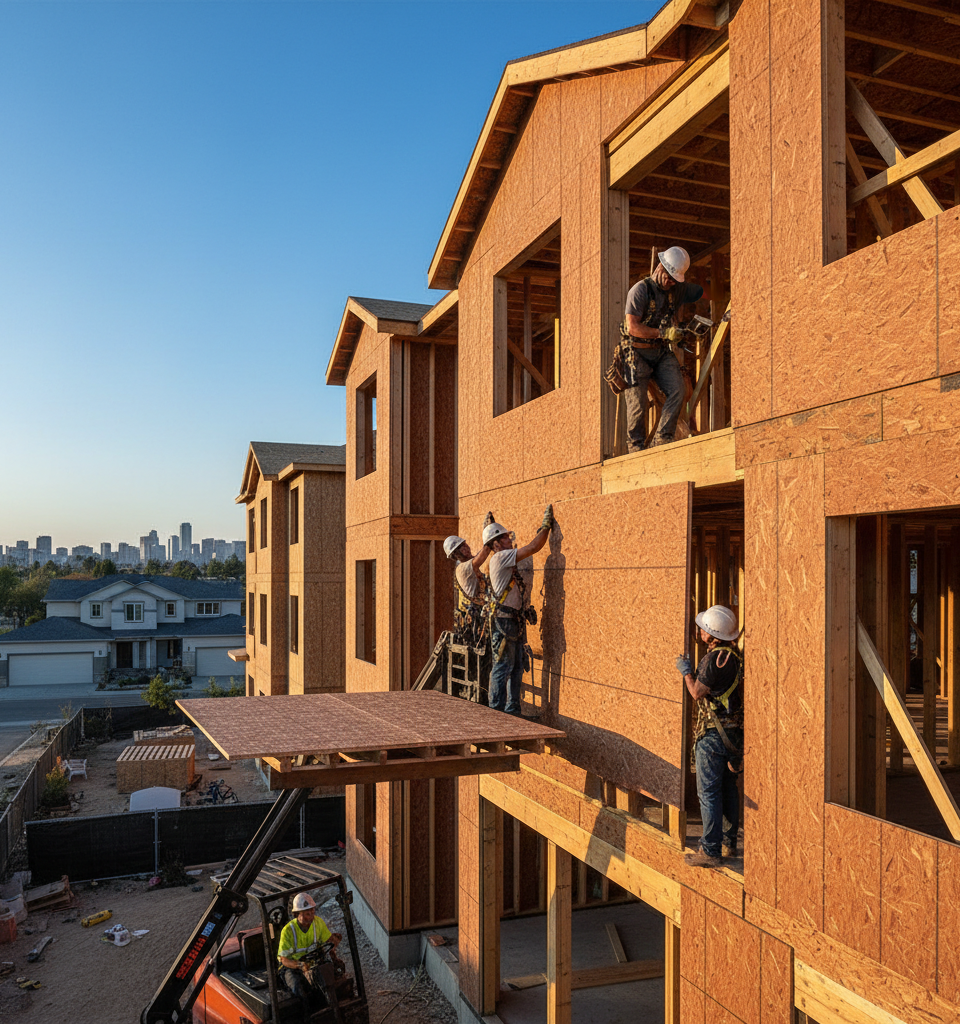
In a pivotal advancement for building safety and material science, fire-retardant oriented strand board (FR-OSB) is rapidly emerging as a transformative component in large-scale construction, particularly within the burgeoning multifamily housing sector. This development signifies a critical stride towards more resilient and safer structures, fundamentally altering how architects, builders, and developers approach fire-resistant construction protocols and material specifications.
The Imperative for Enhanced Fire Safety
The push for advanced fire-resistant materials stems from a confluence of factors, including increasingly stringent building codes, a heightened public awareness of fire safety, and the complex fire dynamics introduced by modern building designs and materials. Historically, achieving adequate fire resistance often involved costly and labor-intensive methods, frequently lacking in consistent performance. The inherent challenges of traditional materials, coupled with a series of high-profile fires that underscored existing vulnerabilities, have created an urgent demand for more reliable and efficient fire protection solutions. FR-OSB directly addresses these concerns by offering a factory-treated product designed for predictable fire performance.
Unpacking the Innovation: FR-OSB's Core Advantages
FR-OSB distinguishes itself through its integrated fire-retardant treatment, applied during the manufacturing process. Unlike post-construction applications, this method ensures uniform distribution of the fire-retardant chemicals throughout the panel, resulting in consistent, predictable performance. Key advantages include enhanced flame spread ratings, reduced smoke development, and extended charring time, which provides crucial additional minutes for occupants to evacuate and firefighters to respond. Industry data indicates that FR-OSB panels can achieve a Class A fire rating, significantly outperforming untreated OSB and even some traditional lumber products. This superior performance is critical in diverse applications, from wall and roof sheathing to floor underlayment, particularly in mid-rise and multi-story structures where fire containment is paramount.
Reshaping the Construction Landscape
The integration of FR-OSB is profoundly impacting various facets of the construction industry. For developers and builders, it offers a streamlined approach to meeting stringent fire codes, potentially reducing construction timelines and labor costs associated with onsite fire treatment. Its consistent quality also minimizes variables often encountered with traditional methods, leading to more predictable project outcomes. The rise of multifamily housing, driven by urbanization and demographic shifts, has been a significant catalyst for FR-OSB adoption. Projects in dense urban environments, especially those exceeding three stories, are increasingly specifying FR-OSB to fulfill both fire safety requirements and contribute to faster, more efficient build cycles. Market analysts project a Compound Annual Growth Rate (CAGR) of over 6% for the global fire-retardant materials market, with FR-OSB playing a substantial role in this expansion.
Expert Insights on Adoption and Impact According to Dr. Elena Petrova, a renowned materials scientist specializing in building composites,
"The pre-treatment aspect of FR-OSB is its game-changer. It removes the variability and potential human error associated with fieldwork applications, ensuring a consistently high level of fire protection from the moment the material arrives on site. This consistency is invaluable for risk management and regulatory compliance." Furthermore, architecture firms are increasingly recognizing FR-OSB not just as a compliance tool, but as a design enabler that allows for greater flexibility in structural choices without compromising safety. "It's not just about meeting codes," comments David Chen, a principal at a leading architectural firm, "it's about building smarter, safer, and with greater material integrity. FR-OSB offers a compelling blend of all three."
The Horizon of Fire-Resistant Building
The future of fire-resistant construction is poised for continued innovation, with FR-OSB at the forefront. Ongoing research is focused on developing even more sustainable fire-retardant chemistries, exploring bio-based flame retardants, and optimizing manufacturing processes to reduce environmental footprints. The market is also likely to see an expansion of FR-OSB products tailored for specific applications, such as high-performance exterior sheathing systems and specialized fire-rated assemblies. As regulatory frameworks continue to evolve and demand higher levels of building safety, materials like FR-OSB will become increasingly indispensable, solidifying their role as foundational elements in the next generation of safe and resilient buildings. This evolution promises to not only safeguard lives and assets but also to contribute to a more sustainable and efficient construction paradigm globally.