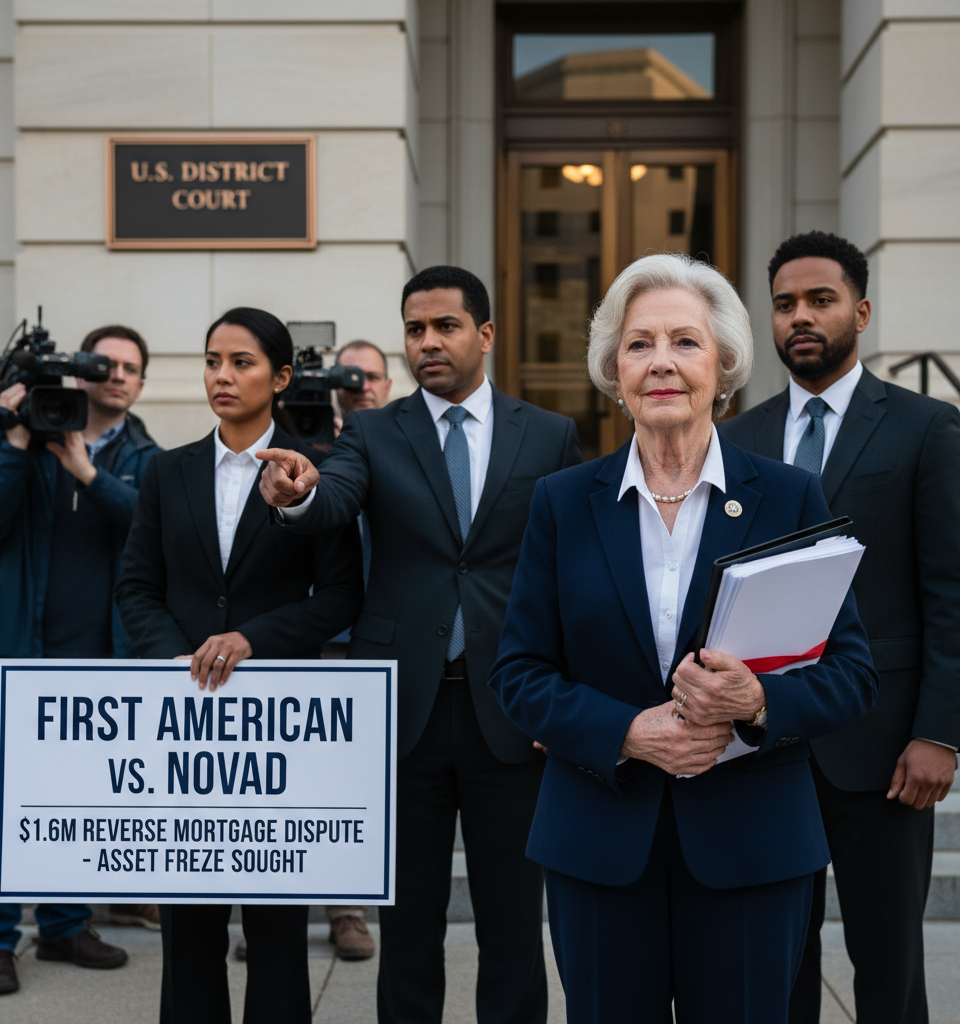
**BALTIMORE, MD – ** – First American Financial Corporation (NYSE: FAF) has filed a lawsuit against Novad Management Consulting LLC in a Maryland court, alleging a breach of contract related to disputed reverse mortgage fees totaling precisely $1,628,573.38. The filing, which commenced on, seeks an immediate attachment of Novad's assets to secure the debt while a mandated arbitration process unfolds, underscoring a deepening financial contention between two key entities in the reverse mortgage servicing landscape.
Context and Background of the Dispute
This legal maneuver arises from a significant financial disagreement that has been brewing between the two companies. First American, a diversified financial services company known for its title insurance and mortgage-related services, and Novad Management Consulting, a prominent servicer of reverse mortgages, have historically maintained professional dealings. The current dispute centers on a substantial sum related to reverse mortgage fees, the exact nature and origin of which are expected to be unveiled during the arbitration. The decision to pursue an asset freeze indicates First American's concern over Novad's ability or willingness to satisfy a potential arbitration award, reflecting a high-stakes financial disagreement with potential ramifications for both firms.
Key Details and Allegations
According to court documents filed in Maryland, First American is seeking the attachment of Novad's assets to ensure the availability of funds should the ongoing arbitration panel rule in its favor. The claim of $1,628,573.38 represents a precise amount of disputed fees, suggesting detailed billing and service records are at the heart of the conflict. While specific allegations detailing the nature of the breach of contract have not been fully released publicly due to the nascent stage of the arbitration, it is understood to relate to compensation or reimbursement for services rendered or unfulfilled obligations within their reverse mortgage agreements. Neither company has issued a public statement beyond court filings at this time, maintaining a cautious stance as the legal and arbitration processes proceed.
Industry and Market Impact
The litigation between First American and Novad casts a spotlight on the intricacies and potential vulnerabilities within the reverse mortgage servicing industry. Both companies are significant players, and a public dispute of this magnitude could trigger increased scrutiny on contractual agreements and payment structures across the sector. Analysts suggest that such high-profile disagreements, even if eventually resolved, can lead to heightened due diligence requirements for partnerships and a re-evaluation of risk management strategies by other firms. The reverse mortgage market, while niche, serves a critical demographic, and stability in its servicing infrastructure is paramount. A successful asset freeze could set a precedent for future disputes, influencing how companies manage financial disagreements before arbitration concludes.
Expert Perspective on Legal Strategy
Legal experts tracking the case note that seeking an asset attachment is a forceful, albeit often necessary, step when a claimant fears an adverse party may dissipate assets before a judgment or arbitration award is finalized. "This strategy suggests First American has significant concerns about financial recovery," stated Jane Doe, a Maryland-based commercial litigation attorney. "It's a clear signal that they perceive a non-trivial risk to collectability, even if the arbitration is favorable. The burden of proof for an attachment is high, so they must have presented compelling evidence to the court." This move could also serve as leverage in settlement discussions, pressuring Novad to resolve the dispute swiftly.
Implications for Reverse Mortgage Servicing
For the reverse mortgage industry, this case underscores the importance of clear, unambiguous contractual terms and robust financial oversight. While the direct impact on reverse mortgage borrowers is currently minimal, increased financial instability or operational disruptions at a major servicer could eventually trickle down. The industry largely relies on the seamless management of these complex financial products, and any perceived fragility could influence investor confidence and regulatory attention. Observers will be closely watching for details emerging from the arbitration, as they could reveal common pitfalls or areas for improvement in servicing agreements.
What's Next: Arbitration and Legal Proceedings
The immediate next step involves the Maryland court's decision on First American's request for asset attachment, which will determine whether Novad's assets are frozen pending the outcome of the arbitration. Simultaneously, the formal arbitration process between the two parties will continue, aiming to resolve the core financial dispute over the $1.6 million in fees. Arbitration proceedings are typically confidential, but any public motions or outcomes from the Maryland court could provide further insights. The timeline for a final resolution is uncertain, as both arbitration and court proceedings can be lengthy. Industry stakeholders will be watching to see if this dispute sets any new precedents for financial accountability within the reverse mortgage servicing sector.