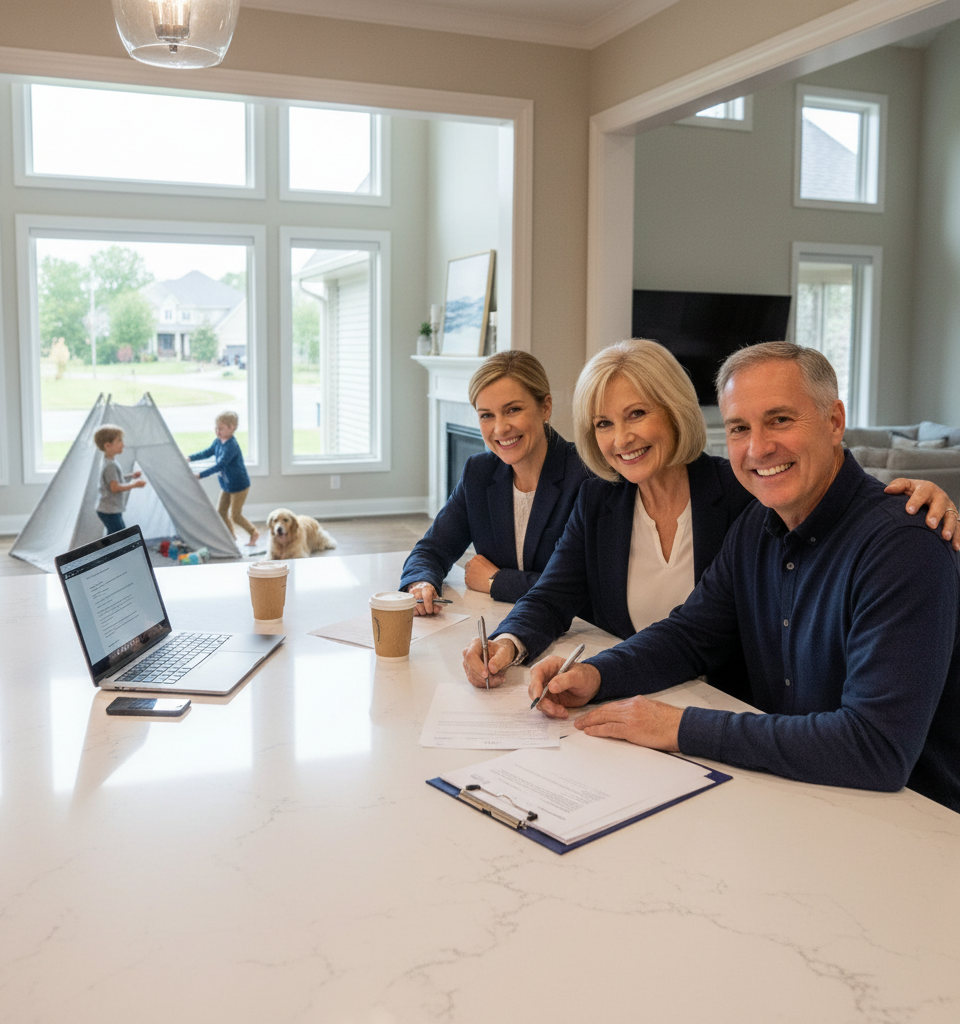
The traditional ladder of homeownership, beginning with a starter home and gradually moving up, is increasingly becoming a relic of the past for many first-time buyers in the United States. Driven by a confluence of rising interest rates, stubbornly high home prices, and a national median age for first-time buyers that has climbed to a record high of 36 years old, a new cohort of purchasers is deliberately bypassing smaller, entry-level properties. ' This strategic shift highlights a profound recalibration of aspirations and financial realities within the housing market.
Context and Historical Shift Historically, the starter home served as an accessible entry point into homeownership, allowing younger individuals or couples to build equity before upgrading.
This model was particularly prevalent in the post-war era and through the late 20th century, supported by more affordable prices and lower interest rates. However, the dynamics have fundamentally changed. The median sale price of existing homes reached an all-time high of $410,200 in May 2024, a 5.8% increase year-over-year, according to the National Association of Realtors (NAR). This substantial appreciation, coupled with mortgage rates hovering above 7% for a 30-year fixed loan, means that the financial barrier to entry has become significantly higher, making the concept of a 'starter home' a much more substantial investment than in previous generations.
Key Driving Factors
Several critical factors are fueling this trend. Firstly, the aforementioned increase in the median age of first-time buyers suggests these individuals have had more time to accumulate savings, advance in their careers, and potentially start families before entering the housing market. This accumulated capital allows for a larger down payment, reducing the loan-to-value ratio and making a more expensive property feasible. Data from the NAR indicates that the median down payment for first-time buyers has crept upwards. Secondly, the inventory of true 'starter homes' (typically under 1,400 square feet) has dwindled significantly. A recent report by Realtor.com showed a 40% decline in available starter homes over the past five years. Developers, facing higher material and labor costs, often find it more profitable to build larger, higher-margin homes, further exacerbating the supply-demand imbalance at the lower end of the market. Furthermore, renovation costs have soared; an average kitchen remodel can cost upwards of $30,000, making a fixer-upper less appealing and less financially viable for many.
Industry and Market Impact
This reorientation by first-time buyers has significant implications across the housing sector. It contributes to persistent upward pressure on prices for mid-to-large-sized homes, as demand shifts away from smaller units. Conversely, the market for traditional starter homes, when available, may see reduced competition from this demographic, potentially leading to varied price dynamics in different market segments. Mortgage lenders are also adjusting, often seeing larger loan applications from first-time buyers. The residential construction industry is increasingly focused on building larger homes to meet this evolving demand, which perpetuates the cycle of limited affordable starter home inventory. Real estate agents report a noticeable change in client expectations, with more first-time buyers prioritizing amenities, space, and a location that can serve them for decades, rather than just a few years.
Expert Perspective Jessica Lautz, Deputy Chief Economist at the National Association of
Realtors, describes this phenomenon as a "consequence of affordability challenges." She elaborates, "When house prices are high and interest rates are elevated, buyers need a larger down payment and often a higher income to qualify. This pushes up the median age of buyers, who then decide to buy the home they expect to stay in for a longer period because the transaction costs of moving again are so high." Other experts, like Dr. Lawrence Yun, NAR Chief Economist, point to demographic shifts, noting that "many first-time buyers are now older and may be entering the market with children, necessitating more space and better school districts from the outset." This strategic decision to 'buy once, buy right' reflects a pragmatic response to an expensive and volatile market.
What's Next: Future Implications
Looking ahead, this trend is likely to persist as long as housing affordability remains a significant hurdle. Policy interventions aimed at increasing the supply of diverse housing types, particularly more affordable starter homes, could eventually temper this dynamic. However, without significant shifts in construction costs or interest rates, the 'forever home' strategy for first-time buyers may become the new norm. It could also lead to diverse impacts across geographies; areas with strong job markets and limited developable land may see continued pressure on larger home prices, while regions with more flexible housing policies might see a more balanced market over time. Future generations of homebuyers may face an even more entrenched housing market where the traditional rung of the starter home has all but disappeared, necessitating even longer periods of saving and delayed homeownership.