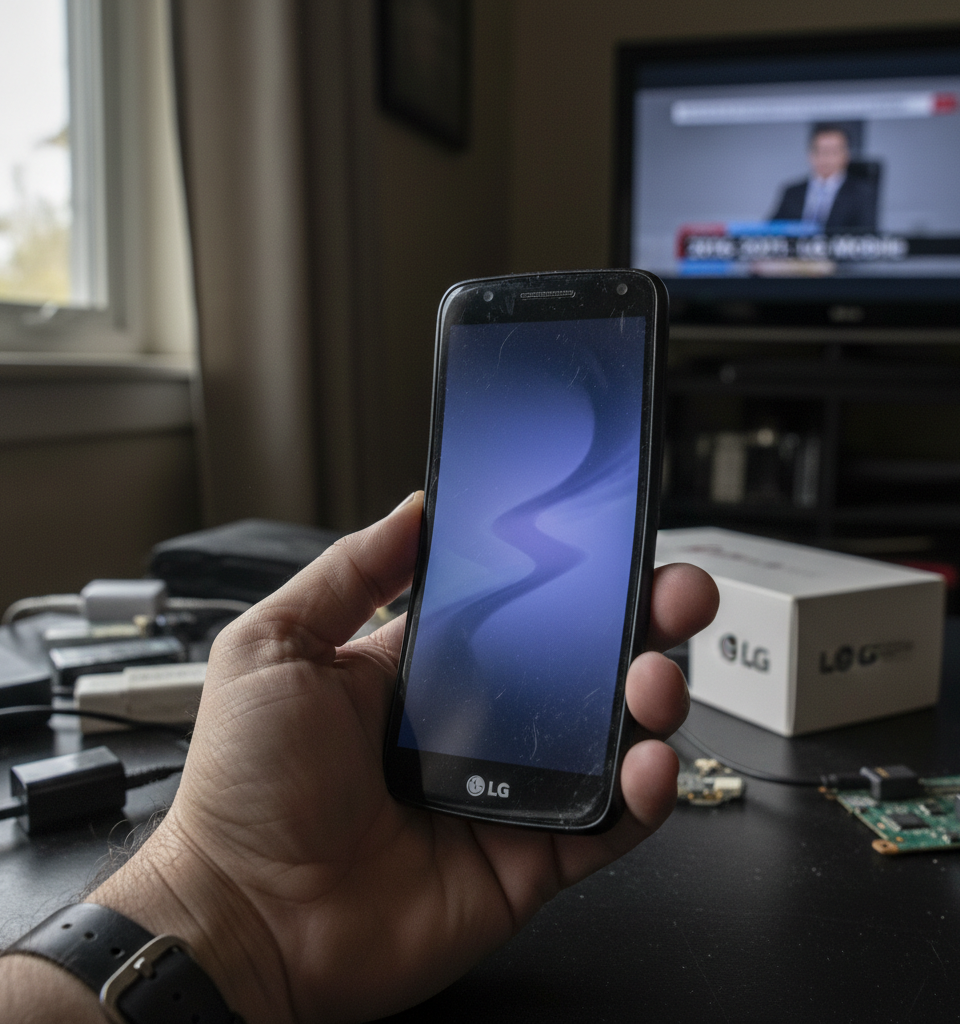
SEOUL, South Korea – April 5, 2024 – It has been precisely five years since LG Electronics, a once-formidable player in the global smartphone industry, officially announced its strategic withdrawal from the mobile sector on April 5, 2021. This stunning departure, following years of significant financial losses, marked the end of an era for a company renowned for its bold innovations and distinctive designs. Today, as the smartphone market rapidly evolves, a sense of nostalgia permeates the tech community, with many reminiscing about LG's unique contributions and lamenting the absence of a genuine innovator.
A Pioneer's Troubled Path: Context and Historical Significance
LG's journey in mobile telecommunications was characterized by periods of brilliant innovation interspersed with strategic missteps and intense competition. From the early days of feature phones with iconic designs like the 'Chocolate' series to its later ventures into Android smartphones, LG often pushed boundaries. The company was among the first to introduce wide-angle cameras, modular designs with the G5, and dual-screen form factors with the V series and the experimental Wing. Its G and V series flagships, in particular, carved out a niche for users seeking advanced audio capabilities, manual camera controls, and robust build quality. However, despite these technological leaps, LG consistently struggled with inconsistent software experiences, delayed updates, and aggressive marketing from rivals like Samsung and Apple.
Key Innovations and the Cost of Experimentation
At its peak, LG's smartphone division was a vibrant hub of experimentation. The LG G Flex, with its curved, self-healing display, showcased engineering prowess, while the LG V20 was lauded by audiophiles for its Quad DAC audio. The LG Wing, a dual-screen swivel phone, represented a final, audacious attempt at redefining form factors. These innovations, while celebrated by critics and a loyal user base, often failed to translate into significant market share or profitability. The company reported substantial operating losses for 23 consecutive quarters, cumulatively exceeding $4.5 billion by the time of its exit. Despite strong brand recognition for its home appliances and televisions, LG's smartphone division struggled to achieve economies of scale and efficient supply chain management in a market increasingly dominated by a few giants.
Industry Repercussions and the Vanishing Innovator's Niche
LG's departure sent ripples through the industry. While it created an immediate vacuum that competitors like Samsung, Xiaomi, and even smaller players VIVO and OPPO rushed to fill, its absence also signaled a broader shift. The market became slightly less diverse, with fewer non-conformist designs reaching consumers. The intense competition, coupled with the high R&D costs associated with groundbreaking features, made it incredibly difficult for companies without massive scale or a cult following to thrive. LG’s exit served as a cautionary tale: innovation alone, without robust commercial execution and market dominance, is not a guarantee of survival in the cutthroat smartphone industry.
Expert Perspectives: A Mix of Regret and Realism
Industry analysts widely acknowledge LG's role as an innovator while understanding the rationale behind its withdrawal. "LG often had brilliant ideas, but they struggled with execution and marketing to the masses," states Dr. Lee Min-ho, a tech industry analyst at Seoul National University. "Their modular G5 was ahead of its time but plagued by poor implementation. The V series had incredible multimedia capabilities, yet wasn't effectively communicated to mainstream consumers who opted for Samsung's flashy marketing." Another analyst, Ms. Kim Ji-yeon of TechInsights, adds, "The smartphone market demands relentless efficiency, aggressive pricing, and seamless software. LG had pockets of brilliance in hardware but couldn't consistently stitch it together into a compelling, profitable package that resonated globally against hyper-aggressive rivals. Their exit, while sad, was financially necessary."
The Aftermath and Future Implications for Mobile Innovation
Five years on, the smartphone landscape continues its relentless march towards incremental improvements and consolidation. While foldable phones have emerged as a new frontier for form factor innovation, building on some of LG's earlier experimental spirit, the overall pace of truly radical change has arguably slowed. LG's patents, ranging from display technologies to camera modules, were reportedly sold off or retained, potentially influencing future designs from other manufacturers. The company's focus has since shifted heavily towards its highly profitable home appliance, television, and automotive components divisions, where it continues to be a global leader. For consumers, the absence of LG means one less voice in the choir of design and functionality, potentially leading to a more homogenized market where daring, unconventional ideas are increasingly risky bets for remaining players.
Looking Forward: A Lingering Question of 'What If?'
The enduring sentiment five years after LG's departure is a blend of respect for its past innovations and a poignant sense of 'what if?'. What if LG had refined its software? What if it had adopted a more focused strategy rather than chasing every trend? While these questions remain hypothetical, LG's legacy serves as a powerful reminder that while innovation is crucial, sustainable success in the smartphone arena requires a delicate balance of visionary design, flawless execution, and shrewd market strategy. The mobile world is undoubtedly poorer without the unique flavor LG brought, and many continue to 'miss our LG phones' for the distinct experiences they offered.