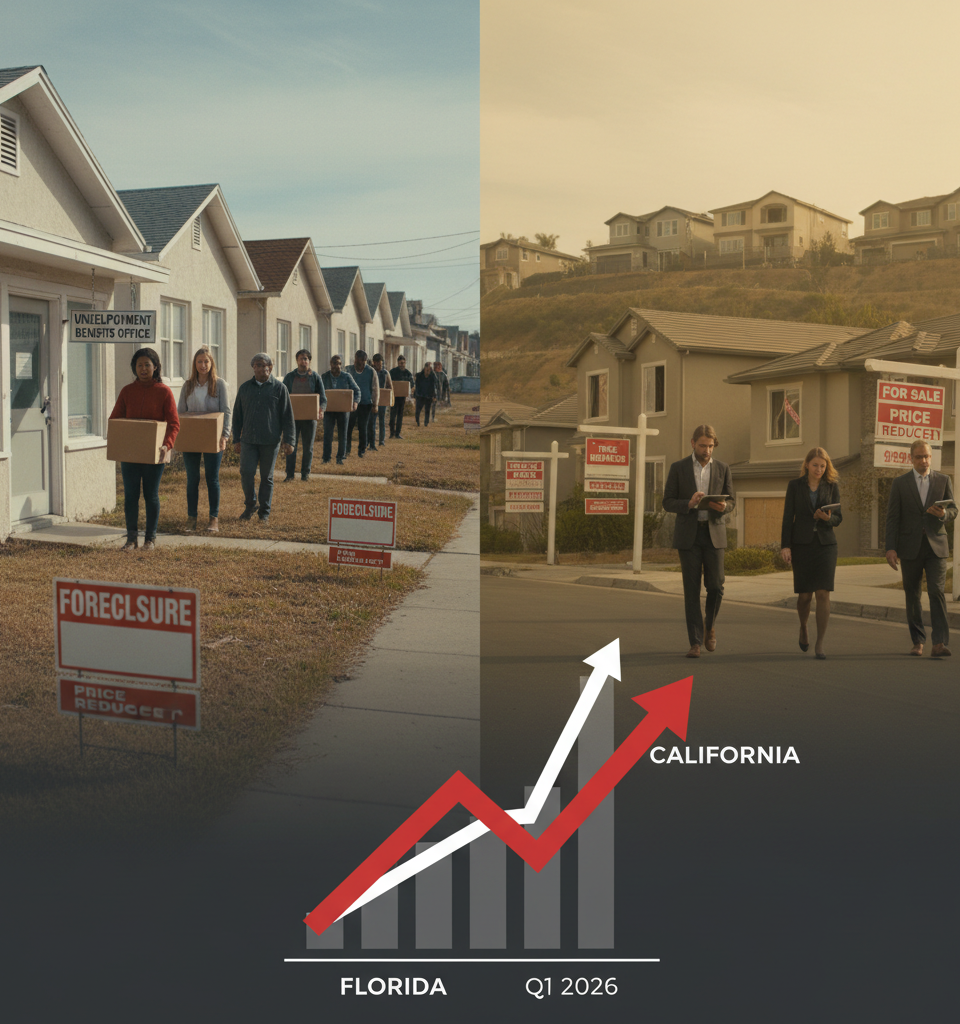
Newly released analysis from ATTOM for the first quarter of 2026 indicates that several counties across Florida and California are at the forefront of the nation's riskiest housing markets. The primary factors contributing to this elevated risk are notably sustained high unemployment rates and an uptick in foreclosure activity within these regions. This trend suggests a growing economic strain impacting homeowners and the broader real estate sector in these historically dynamic markets.
Context and Drivers of Risk
The identification of these high-risk areas underscores a significant shift in housing market dynamics compared to previous periods of sustained growth. The health of a housing market is intrinsically linked to local economic stability, and the confluence of unemployment and foreclosure rates serves as a crucial barometer. Historically, periods of economic uncertainty often precede or coincide with heightened foreclosure filings as homeowners struggle to meet mortgage obligations. The current data points to a re-emergence of these pressures, particularly concentrated in specific Floridian and Californian locales, which have often been bellwethers for national housing trends.
ATTOM's methodology for assessing market risk typically involves a comprehensive evaluation of various economic indicators, with unemployment rates and foreclosure starts being among the most weighted. High unemployment directly reduces household income, increasing the likelihood of mortgage defaults. Simultaneously, a rise in foreclosure activity indicates a deeper distress signal, suggesting that preventative measures or market corrections are not adequately addressing the underlying economic challenges faced by residents. Conversely, the analysis notes a contrasting trend of safer housing markets, primarily concentrated in Tennessee, suggesting a regional divergence in economic resilience and real estate stability.
Geographic Disparities and Market Impact
The concentration of vulnerable counties in Florida and California is particularly noteworthy. Both states feature diverse economies, but certain areas appear to be experiencing localized setbacks. Florida, known for its tourism and retirement communities, may be seeing impacts from shifts in these sectors, while California, with its high cost of living, could be experiencing a magnified effect of layoffs on residents' ability to maintain housing payments. These regional vulnerabilities can have ripple effects, potentially slowing down housing transaction volumes, suppressing price growth, or even leading to price depreciation in affected sub-markets.
The broader industry impact extends beyond individual homeowners and lenders. Real estate developers, investors, and local governments could face challenges. For developers, increased market risk might lead to a slowdown in new construction or a reassessment of ongoing projects. Lenders, in turn, may need to adjust their risk assessment models and potentially tighten lending standards in affected areas to mitigate exposure to potential defaults and foreclosures. Local governments could see impacts on property tax revenues, further complicating municipal finance.
Expert Perspectives and Future Implications
While ATTOM's report primarily presents data, the findings implicitly suggest areas where economic analysts and policymakers will be focusing their attention. Experts would likely point to the need for sustained economic recovery efforts, targeted employment initiatives, and potentially homeowner assistance programs to stem the tide of foreclosures in these vulnerable regions. The divergence between the concentrated risk in Florida and California versus the relative safety in Tennessee also highlights the disparate economic recoveries and regional strengths across the United States.
Looking ahead, the trends observed in the first quarter of 2026 will likely inform market predictions for the remainder of the year. Investors and prospective homebuyers in Florida and California will be closely monitoring unemployment data and foreclosure filings. The resilience of housing markets in areas like Tennessee could offer insights into effective economic strategies or simply reflect inherent regional strengths that are currently buffering them from broader economic headwinds. Continued monitoring of these key indicators will be crucial to understand whether these high-risk clusters expand or contract in subsequent quarters and what that might portend for the national housing landscape.