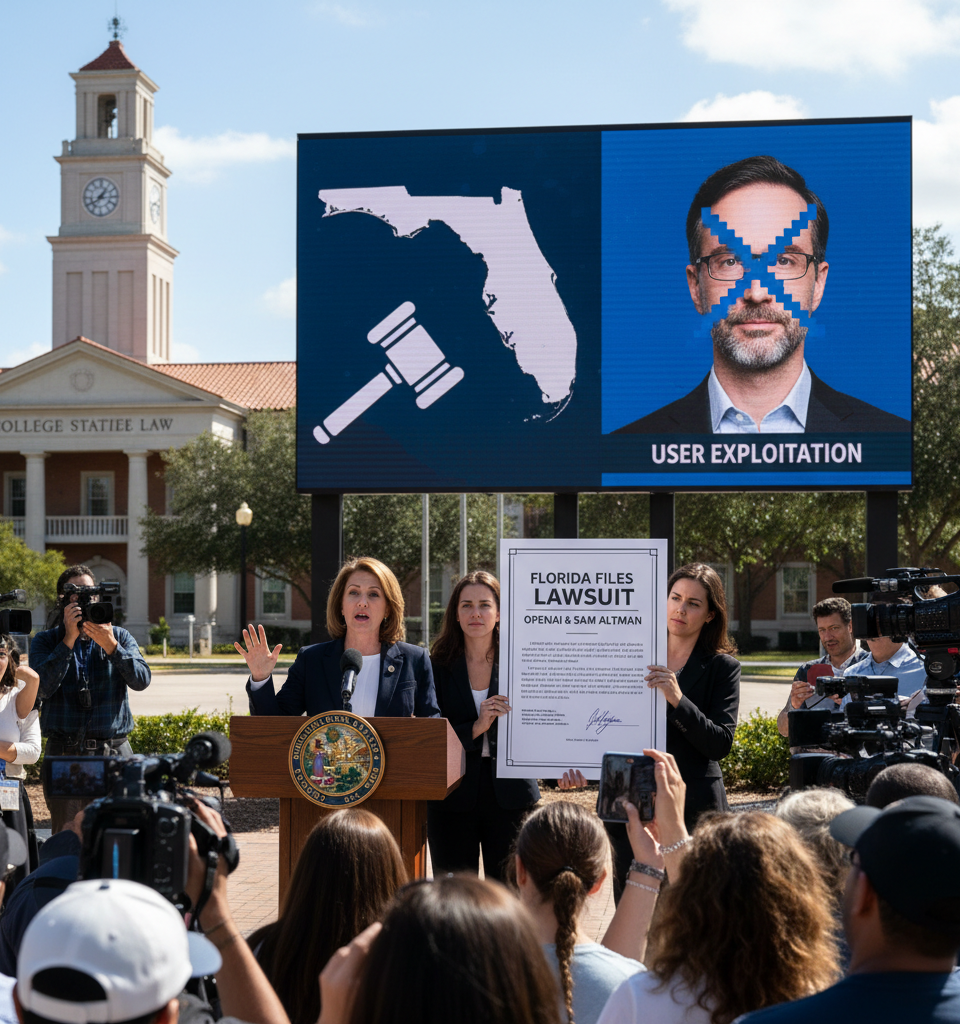
The State of Florida has filed a significant lawsuit against tech innovator OpenAI and its chief executive, Sam Altman, alleging a pattern of "exploitation of users." This legal action stems from disturbing reports indicating that a perpetrator of a mass shooting at Florida State University (FSU) engaged with OpenAI's sophisticated chatbot, ChatGPT, as part of their planning activities before the tragic incident. The suit marks a critical escalation in the ongoing debate surrounding accountability for AI-generated content and its potential real-world implications.
Context and Background
This lawsuit places OpenAI, a company at the forefront of the artificial intelligence revolution, under intense scrutiny regarding the ethical deployment and potential misuse of its powerful language models. The reported consultation of ChatGPT by a mass shooter introduces a grave new dimension to the discussion around AI safety and the responsibilities of AI developers. While the specific nature of the alleged "exploitation" remains to be fully elucidated in court documents, the connection to a violent crime immediately amplifies the case's public and legal significance. The legal challenge from Florida is among the first of its kind to directly link AI tool usage to consequential real-world harm, potentially setting a precedent for future litigation.
Key Details of the Allegations
At the core of Florida's legal complaint are the allegations surrounding the FSU mass shooter's reported interactions with ChatGPT. According to sources familiar with the lawsuit, investigators uncovered evidence suggesting the individual sought information or guidance from the AI platform in the period preceding the attack. The lawsuit will likely seek to establish a causal link between OpenAI's technology, the alleged exploitation of its users, and the subsequent tragic events. Details regarding the specific queries made to ChatGPT by the shooter, and the nature of the AI's responses, are expected to be central to Florida's arguments. The state will contend that OpenAI, and by extension Sam Altman, failed in their duty to prevent the misuse of their technology or adequately warn against its potential for harmful application.
Industry and Market Impact
This lawsuit could send significant ripple effects throughout the artificial intelligence industry. Companies developing large language models and other generative AI tools may face increased pressure to implement more robust safety protocols, content moderation, and user monitoring systems. The legal battle may also prompt regulators nationwide, and possibly globally, to accelerate efforts to define clear legal and ethical frameworks for AI development and deployment. For OpenAI, a company that has largely been praised for its groundbreaking work, this action presents a substantial challenge to its public image and operational practices. Investors and stakeholders across the tech sector will be closely watching the proceedings, aware that the outcome could shape future liabilities and compliance requirements for AI firms.
Potential Legal Ramifications for OpenAI
The legal ramifications for OpenAI and Sam Altman could be substantial. Beyond potential financial penalties, a ruling against the company could lead to mandates for significant changes in how AI models are trained, accessed, and governed. It could force OpenAI to re-evaluate its moderation policies, implement more stringent safeguards against malicious use, and potentially restrict access to certain functionalities based on user profiles or query types. The case also raises complex questions about the legal personhood of AI and the extent to which a developer can be held responsible for the autonomous outputs of their algorithms. Sam Altman, as CEO, is specifically named, underscoring the state's intent to hold leadership directly accountable.
What's Next
The legal proceedings are expected to be protracted and complex. Both sides will likely engage in extensive discovery, with Florida seeking to uncover internal communications, development methodologies, and safety protocols at OpenAI. OpenAI, in turn, will undoubtedly mount a vigorous defense, likely arguing that they cannot be held liable for every misuse of their technology and that imposing such liability would stifle innovation. The outcome of this case could significantly influence the legal landscape for AI, establishing precedents regarding product liability, free speech considerations within AI outputs, and the scope of corporate responsibility in the evolving digital age. Experts anticipate that the court's decision will have lasting implications for how AI is regulated and developed globally, shaping the future trajectory of this transformative technology.