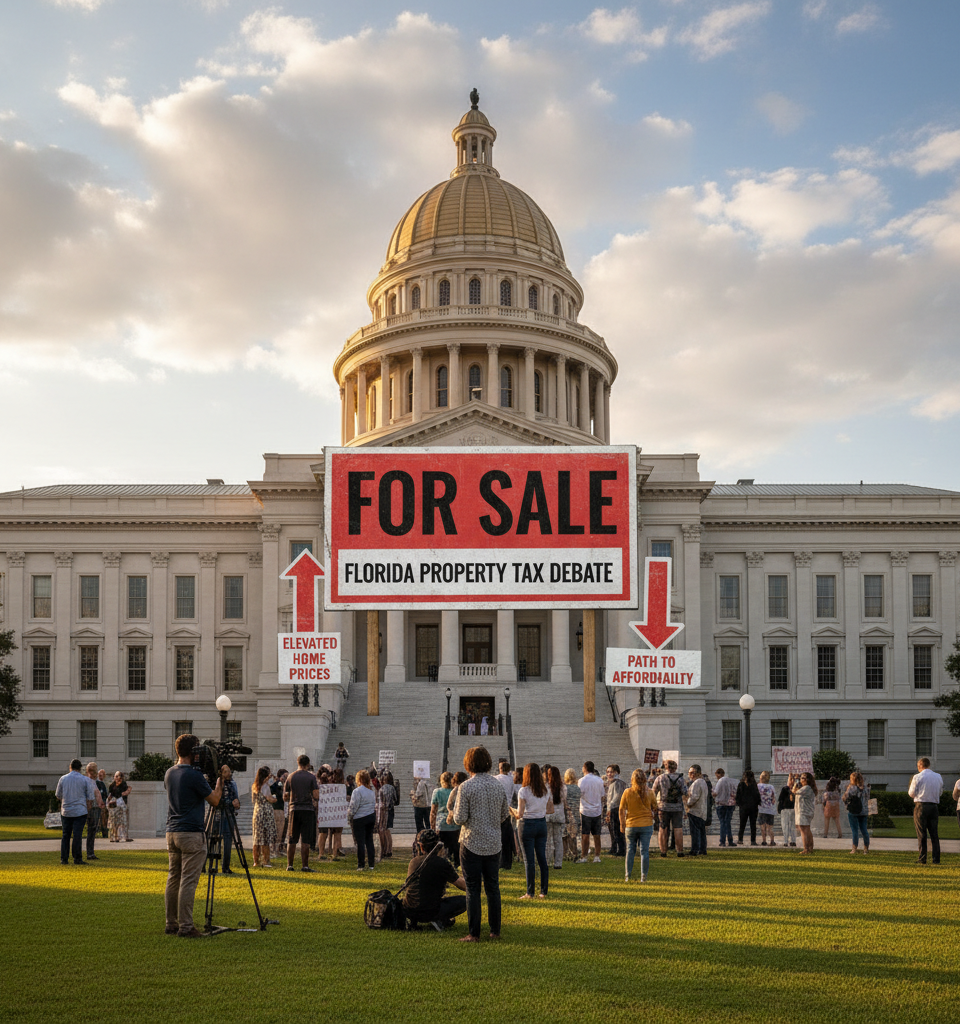
Florida is currently grappling with a contentious policy discussion: the potential elimination of property taxes across the state. This proposition, gaining traction among certain political and economic factions, is framed by its adherents as a crucial mechanism to address the escalating cost of living and housing affordability crisis. The underlying premise is that removing this significant financial burden from homeowners and prospective buyers would free up capital, thereby making the state more accessible for residents.
The genesis of this discussion lies in Florida's persistent challenge with housing affordability, a predicament exacerbated by rapid population growth and a competitive real estate market. Property taxes represent a substantial annual outlay for many homeowners, and their removal could, theoretically, reduce the overall cost of homeownership. Historically, property tax reform has been a recurring theme in state politics, often presented as a solution to economic strains experienced by the populace. However, the current proposal to entirely abolish these taxes marks a more radical departure from traditional fiscal policy.
Key proponents of the property tax abolition argue that the current system places an undue burden on residents, particularly those on fixed incomes or facing economic hardships. They contend that the savings realized by homeowners would either be reinvested into the local economy, spent on other goods and services, or contribute to personal savings, thereby stimulating broader economic activity. The direct financial relief for households could be substantial, potentially lowering monthly housing costs significantly and making homeownership attainable for a wider segment of the population.
Conversely, a vocal contingent of critics and economists expresses serious reservations about the long-term impact of such a policy. Their primary concern is that the elimination of property taxes, while seemingly beneficial in the short term, could instead fuel an even more aggressive surge in home prices. With the removal of a major carrying cost, the perceived value and affordability of homes could increase, leading to heightened demand and, consequently, elevated prices. This dynamic could effectively negate any intended affordability improvements for new buyers and potentially price out lower and middle-income residents even further.
The implications for local governance and public services are also a central point of contention. Property taxes traditionally serve as the bedrock of funding for municipal and county services, including public schools, infrastructure maintenance, law enforcement, and emergency services. Abolishing them would necessitate a fundamental reshaping of local tax structures, likely requiring the introduction of alternative revenue streams or significant cuts to essential services. This shift could lead to a less stable funding environment for local governments, potentially impacting the quality and availability of public provisions across the state.
Experts weighing in on the debate highlight the complex interplay between taxation, housing markets, and public finance. While acknowledging the appeal of reducing the tax burden, they caution against unintended consequences. The state would need to identify robust, equitable, and sustainable alternative funding mechanisms to compensate for the lost property tax revenue. Without a clear and viable replacement, the fiscal health of local communities could be severely compromised.
From an industry perspective, the real estate market could experience significant volatility. While some developers and real estate agents might initially welcome a policy that could boost buyer interest, the risk of an overheated market and subsequent affordability crisis remains paramount. Banks and mortgage lenders might also need to adjust their lending models based on the altered cost structure of homeownership.
Looking ahead, the debate is anticipated to intensify as various stakeholders, including homeowners, local government officials, economists, and advocacy groups, present their cases. The Florida Legislature would face the monumental task of evaluating the economic models, potential benefits, and substantial risks associated with such a transformative tax reform. The path forward for Florida's property tax system remains uncertain, with the ultimate decision carrying profound implications for the state's economic future and the daily lives of its residents.