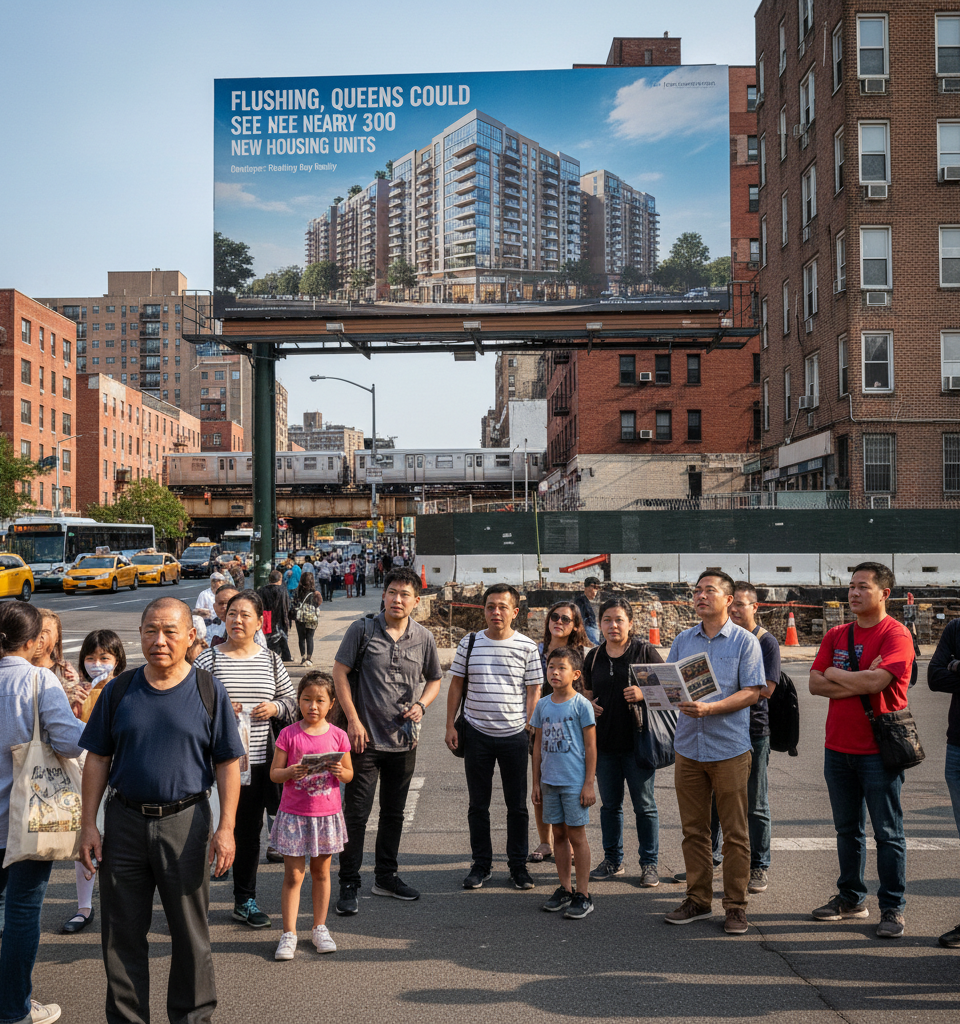
New York City-based developer Gary Chen has formally initiated plans for a notable mixed-use development in Flushing, Queens, by submitting a zoning change application for a 10-story building. Filed with the New York City Department of City Planning, the proposal outlines a project at 32-02 Linden Place that would introduce 296 residential units and accompanying retail or community facilities to the burgeoning neighborhood.
Context and Significance
This proposed development arrives amidst a persistent housing crunch across New York City and particularly in high-demand areas like Flushing. As one of Queens' most dynamic and rapidly evolving neighborhoods, Flushing has experienced significant growth in recent years, driven by its vibrant commercial corridors, diverse population, and robust transportation infrastructure. The influx of nearly 300 new units would represent a substantial addition to the local housing stock, potentially alleviating some market pressures while also raising questions about infrastructure capacity and neighborhood character. Developers are increasingly looking to leverage zoning changes to unlock greater development potential in areas with strong demand.
Project Specifics and Filings
The details of the filing, made public on Monday, indicate that the structure would be a 10-story building combining residential units with commercial or community space at the base. While the exact breakdown of residential unit types (e.g., market-rate, affordable) is not yet publicly detailed in the initial application, the sheer volume of 296 units suggests a considerable scale for the project. The application for a zoning change is a crucial first step, signaling that the current zoning designation for 32-02 Linden Place does not permit the proposed density or height without modification. Such changes typically involve a public review process, including scrutiny by local community boards and various city agencies, before final approval by the City Council.
Market Impact and Development Trends
The construction of such a large-scale project would undoubtedly have an impact on Flushing's real estate market. An increase in housing supply could contribute to moderating rent increases or stabilizing property values in the long term, although immediate effects are often subject to broader economic conditions and absorption rates. Furthermore, mixed-use developments are increasingly favored by urban planners and developers as they promote walkability and provide essential services to residents within the same complex, contributing to a more self-contained and vibrant neighborhood ecosystem. The project also underscores a broader trend of densification in transit-rich areas of New York City, as developers aim to capitalize on existing infrastructure and changing urban living preferences.
The Approval Process Ahead
The path to approval for a project of this magnitude, particularly one requiring a zoning change, is typically extensive and involves several stages. Following the initial submission to the Department of City Planning, the proposal will undergo reviews by the local Community Board, the Borough President, the City Planning Commission, and ultimately the City Council. Each stage provides opportunities for public input and potential modifications to the plan. Gary Chen's next steps will likely involve presenting detailed plans and justification for the zoning amendment, addressing potential community concerns, and navigating the city's complex land use review procedure known as ULURP (Uniform Land Use Review Procedure). This multi-month, often multi-year, process will determine the ultimate fate of the proposed 296-unit development.
Looking Forward
The proposal for 32-02 Linden Place marks a significant potential development for Flushing. Should it gain approval, it would not only reshape a portion of Linden Place but also contribute substantially to the residential capacity of one of New York City’s most dynamic neighborhoods. The coming months will be critical as the application progresses through the initial phases of review, setting the stage for public discourse and agency feedback that will ultimately decide whether nearly 300 new homes will rise in Flushing.