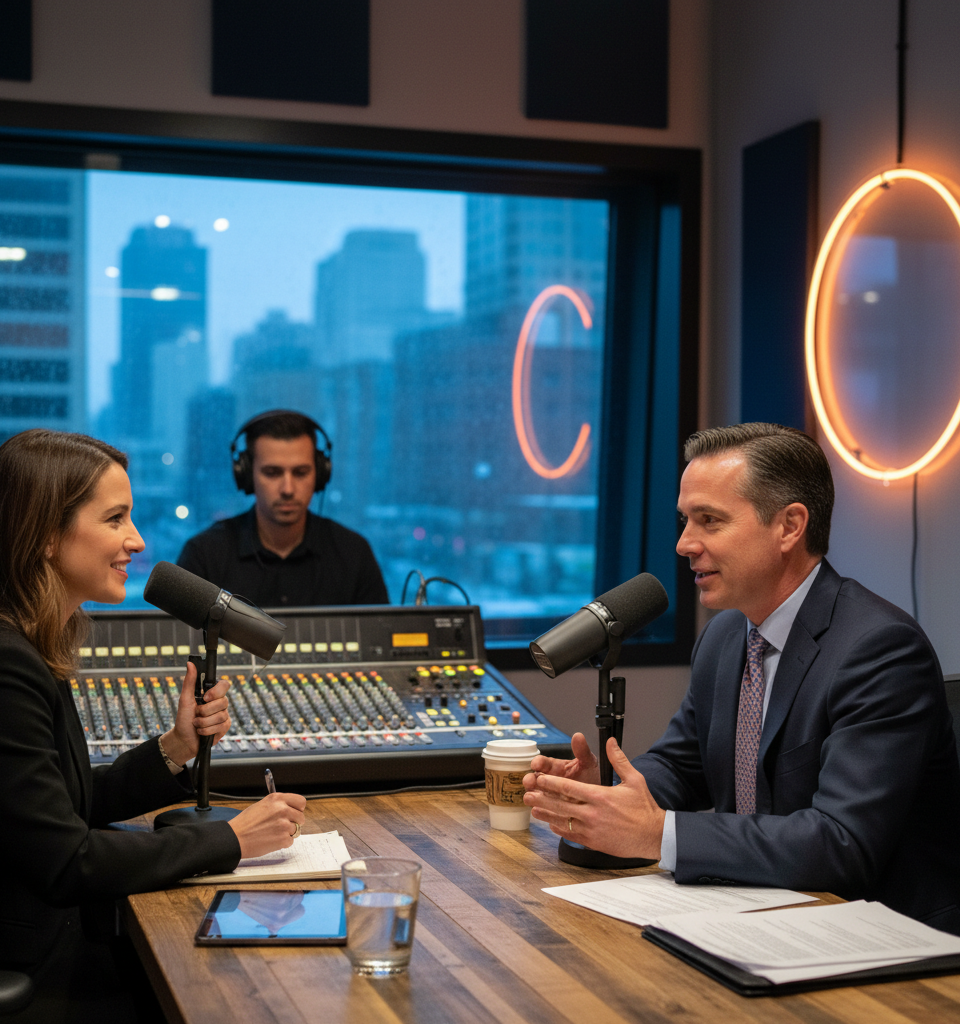
Federal Motor Carrier Safety Administration Administrator Derek Barrs engaged in a substantive policy conversation this week during a live taping of the 'Freight Expectations' podcast in Chattanooga. The interview, conducted with Matt Leffler, provided what is being described as the clearest articulation to date of why the current administration's approach is producing measurable responses within the freight market.
Renewed Engagement at the FMCSA
The perception of increased leadership and engagement at the FMCSA marks a significant shift for an agency whose impact directly influences the multi-trillion-dollar freight industry. Historically, the agency has often been criticized for its perceived distance from the day-to-day realities of carriers, shippers, and logistics providers. Barrs' visible involvement and willingness to engage directly with industry stakeholders, such as during the podcast interview, suggest a more proactive and responsive era for federal motor carrier regulation. This heightened presence aims to bridge previous communication gaps and foster a more collaborative environment between regulators and those they oversee.
Policy Discourse and Market Implications
The hour-long discussion during the Freight Expectations taping delved into substantive policy matters. While specific policy details from the conversation were not immediately disclosed in the reporting, the mere act of Barrs participating in such a forum is noteworthy. It signals a departure from past administrations, where FMCSA leadership might have been less accessible or less vocal in public forums. This active participation can lead to a more informed regulatory process, potentially incorporating broader industry perspectives and leading to more effective outcomes.
The Freight Market's Perceptible Response
Crucially, the report indicates that the freight market is already responding to this invigorated leadership. This response could manifest in various ways, ranging from increased compliance rates among carriers to shifts in investment patterns or operational strategies as companies anticipate a more stable and predictably regulated environment. A regulator who "shows up" can instill greater confidence and provide much-needed clarity in an industry frequently grappling with complex and evolving regulations.
Industry Receptiveness and Future Outlook
For the vast network of truckers, logistics firms, and shippers, a more engaged FMCSA under Barrs' leadership could signify a period of enhanced dialogue and potentially more pragmatic regulatory frameworks. The industry has long advocated for leadership that understands its operational intricacies and challenges. Barrs' apparent commitment to active participation and communication suggests he is working to fulfill that need. The observable market response reinforces the idea that regulatory leadership plays a critical role not just in enforcement, but also in shaping market sentiment and operational efficiency across the supply chain.
While the full extent of the policy discussions and their direct impact remains to be seen, the current administration's perceived success in garnering a 'measurable response' from the freight market points to the strategic advantage of visible and engaged leadership. Future developments will likely involve the rollout of specific policy initiatives that reflect the insights gathered from such engagements, further shaping the operational landscape for motor carriers and the broader freight ecosystem.