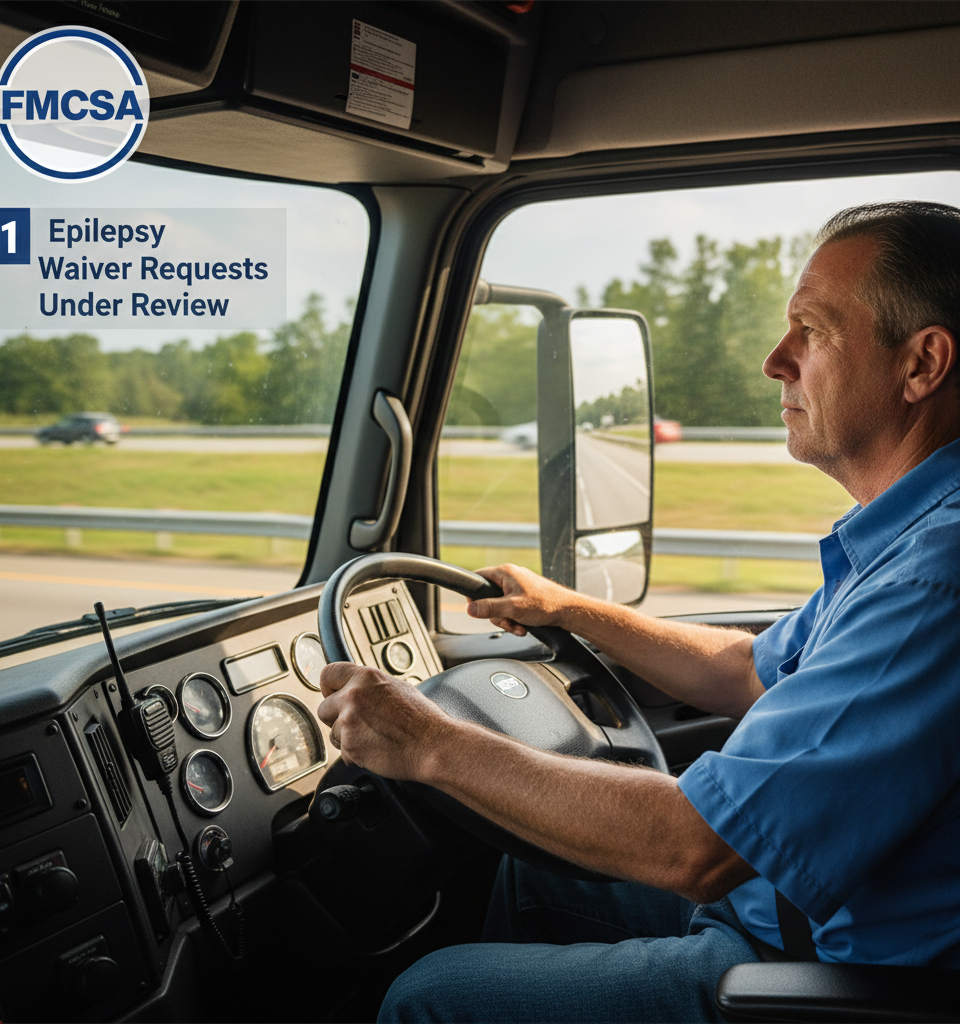
The Federal Motor Carrier Safety Administration (FMCSA) is presently reviewing waiver applications submitted by eleven commercial truck drivers, each of whom has a documented history of epilepsy or seizure disorders. These individual requests represent a critical juncture for both the drivers involved and the regulatory body charged with ensuring safety on the nation's roadways. The potential exemptions, if granted, would allow these experienced professionals to continue operating commercial motor vehicles, a decision that necessitates a careful balance between individual opportunity and public safety.
Background on Epilepsy and Commercial Driving Regulations
Historically, regulations governing commercial motor vehicle operation have been stringent concerning medical conditions that could impair a driver's ability to safely control a heavy vehicle. Epilepsy and seizure disorders fall squarely within this category due to the inherent risk of sudden incapacitation. For decades, a diagnosis of epilepsy often meant an automatic disqualification from holding a commercial driver's license (CDL). However, advancements in medical understanding, treatment, and monitoring of seizure disorders have prompted a re-evaluation of these blanket prohibitions. The FMCSA has, in recent years, established pathways for individualized assessments and potential waivers, recognizing that not all seizure disorders are alike and that many can be effectively managed.
The Waiver Process and Criteria
The process for obtaining an epilepsy waiver from the FMCSA is rigorous and involves extensive medical documentation. Drivers are typically required to demonstrate a period of seizure freedom, often without medication or, if on medication, with a stable and effective treatment regimen. Comprehensive evaluations by neurologists, including detailed medical histories, electroencephalograms (EEGs), and sometimes other neuroimaging studies, are standard prerequisites. The FMCSA’s review considers the frequency, severity, and triggers of past seizures, as well as the driver's adherence to treatment and overall prognosis. Each of the eleven current applications will undergo this thorough scrutiny, with the agency's primary concern being the safety of the driver and the public.
Implications for the Trucking Industry
For the trucking industry, these waiver requests highlight ongoing challenges concerning driver supply and retention. With a persistent shortage of qualified commercial drivers, any measure that could safely expand the pool of eligible operators is of interest. Granting waivers to drivers with well-managed medical conditions could potentially allow experienced professionals to remain in the workforce, preserving valuable expertise. Conversely, the industry also recognizes the paramount importance of safety; any perceived reduction in safety standards could have significant repercussions, including increased insurance costs and public concern.
Looking Ahead: Regulatory Evolution and Future Decisions
The FMCSA's decisions on these eleven waivers will be closely watched. While individual, these cases contribute to the broader regulatory landscape regarding medical fitness for duty in commercial transportation. The agency continues to evolve its medical standards, often incorporating new scientific evidence and clinical best practices. Future policy adjustments regarding epilepsy and other medical conditions are anticipated as medical knowledge advances. The outcomes of these specific applications may influence future guidelines, potentially paving the way for more nuanced and individualized assessments, or reinforcing the strict criteria currently in place. The FMCSA's commitment remains to facilitate safe commercial transportation while adapting to contemporary medical realities.