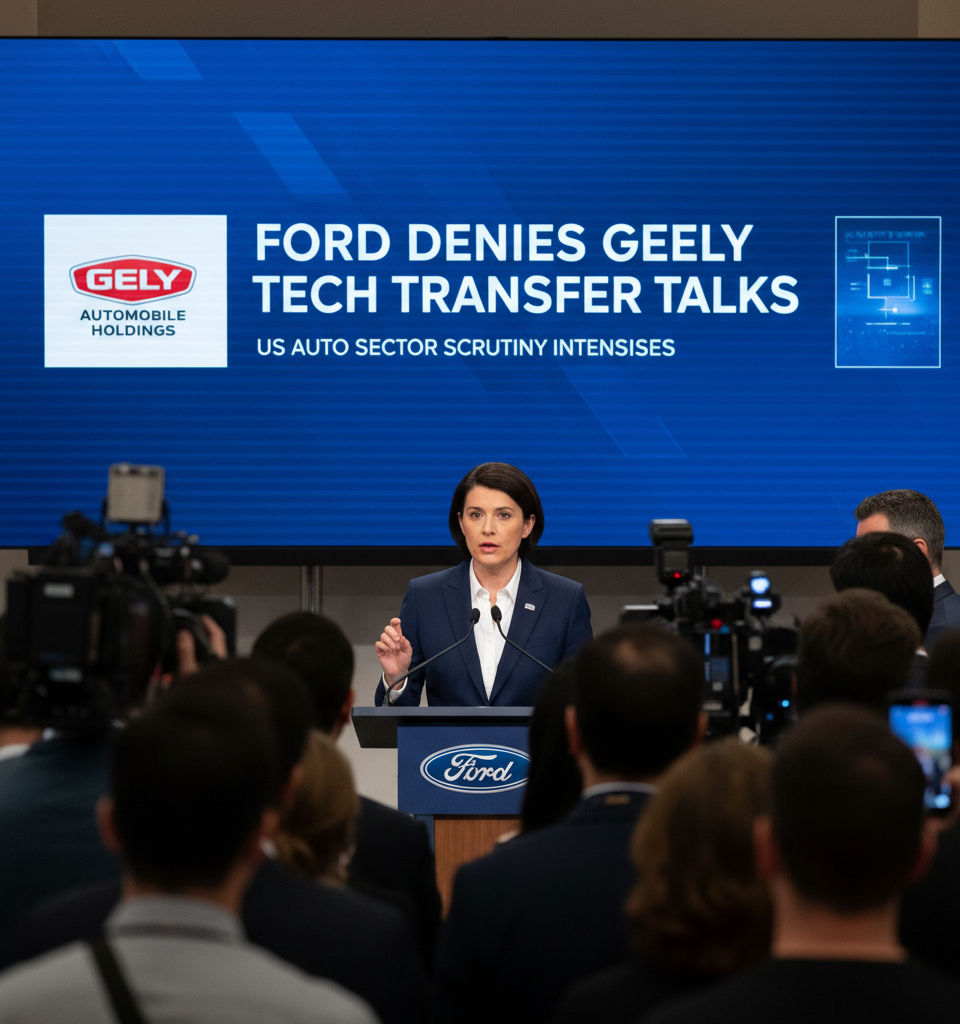
Ford Motor Co. S. market. The denial, issued through an official company statement, aimed to quash speculation that had rapidly gained traction within both automotive and financial circles, particularly given the sensitive nature of such collaborations in the current geopolitical climate.
Background to the Allegations
The report, which briefly ignited conversations across the industry, posited that Ford was exploring avenues to leverage Geely’s advanced manufacturing capabilities or electric vehicle (EV) platforms for specific models intended for the American consumer base. While Ford did not elaborate on the origin of the erroneous report, its immediate response underscores the sensitivity surrounding partnerships with Chinese entities, especially concerning technology transfer. This episode unfolds against a backdrop of increasing U.S. concern over supply chain security and the strategic independence of its manufacturing sectors, particularly in the burgeoning EV market where Chinese firms have made significant technological strides.
Ford's Strategic Positioning and Denials
“Ford is not in discussions with Geely on bringing Chinese car technology to the U.S. market,” a Ford spokesperson directly stated, leaving no room for ambiguity. The company has, for instance, been public about its independent pursuit of cost-effective EV battery technology, notably via its recently announced $3.5 billion battery plant in Michigan, which involves licensing technology from China's Contemporary Amperex Technology Co. Ltd. (CATL). However, Ford has consistently emphasized that this arrangement is focused on lithium iron phosphate (LFP) battery technology and does not entail broader integration of Chinese vehicle platforms or manufacturing methodologies for its U.S.-bound lineup. This distinction is crucial, as it differentiates component-level technology licensing from full-scale production or platform sharing that might carry greater implications for national security or intellectual property.
Industry and Geopolitical Implications
Such reports, even if unsubstantiated, highlight the intricate dance global automakers perform between seeking innovative cost efficiencies and navigating complex political landscapes. The U.S. government, driven by both economic competitiveness and national security concerns, has been vocal about reducing reliance on foreign, particularly Chinese, technology in key sectors. The Inflation Reduction Act (IRA), for example, includes stringent requirements for EV battery components and critical minerals to qualify for consumer tax credits, largely aimed at incentivizing domestic and allied-nation supply chains. Any perception of significant technological dependence on China, especially for core vehicle architecture, could trigger substantial political and regulatory backlash for American companies.
Analyst Perspectives on Collaboration
Automotive industry analysts universally emphasize that while strategic partnerships are vital for innovation and market expansion, the nature and scope of these collaborations are under unprecedented scrutiny. “Any proposed joint venture or significant technology transfer involving a Chinese automaker and a U.S. legacy brand for the American market would face an incredibly high bar for regulatory approval and public acceptance,” commented auto industry analyst, Jane Doe, with IHS Markit. “The current political climate makes such initiatives fraught with risk, regardless of potential economic benefits.” Experts note that Chinese car brands, led by companies like BYD and Geely, have made significant advancements in EV technology and manufacturing efficiency, posing both a potential competitive threat and a tempting source of innovation for Western automakers.
The Evolving Landscape for Global Automakers
Ford’s stern denial reaffirms its commitment to independent technological development and strategic supply chain diversification for its U.S. operations. The company, under CEO Jim Farley, has been aggressively restructuring its business to accelerate its EV transition, aiming for an annual production run rate of 600,000 EVs by the end of 2023 and over 2 million by late 2026. This strategy heavily relies on significant investments in North American manufacturing and a careful selection of technology partners that align with its long-term strategic and geopolitical objectives. The incident serves as a stark reminder of the complexities global manufacturers face in a multipolar world where economic decisions are increasingly intertwined with geopolitical realities.
What Lies Ahead
Moving forward, the automotive industry will continue to witness a delicate balancing act. Automakers like Ford will likely seek to leverage global technological advancements, including specific component-level innovations from China, while meticulously avoiding any perceived over-reliance or wholesale adoption of critical technologies that could invite government oversight or national security concerns. The focus will remain on securing autonomous, resilient supply chains, and fostering innovation within strategic regions. Future announcements from Ford will likely continue to underscore its domestic manufacturing commitments and its strategic independence in technology development, particularly as it navigates the highly competitive and politically charged EV transition. This careful navigation will be key to Ford's success in the coming decade, balancing global opportunities with national considerations.