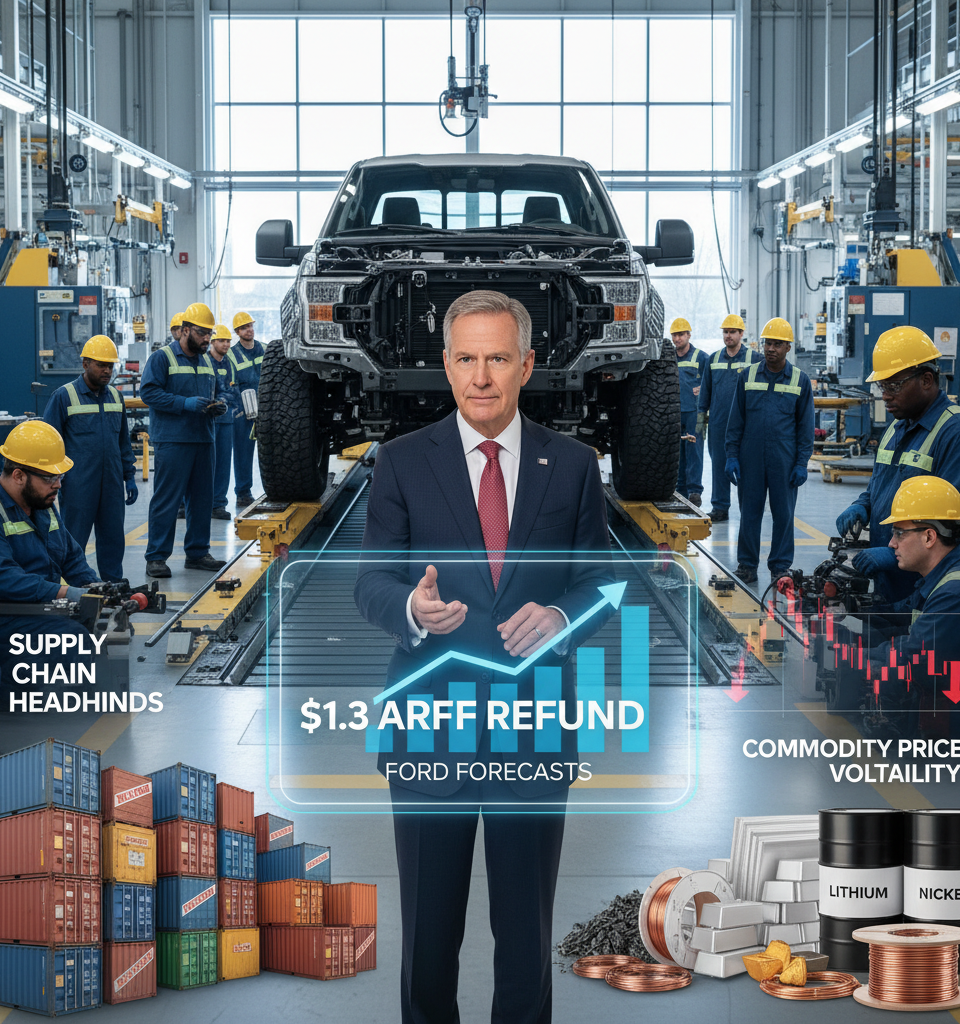
Ford Motor Company is poised to receive an unexpected financial boost, forecasting a $1.3 billion refund related to tariffs. This announcement comes as the automaker navigates a complex economic landscape still heavily influenced by supply chain disruptions and volatile commodity markets. Despite this impending refund, the company continues to project a substantial $1 billion financial hit from tariffs alone by 2026, underscoring the persistent challenges in global trade and sourcing.
Context and Background
The automotive industry has been particularly susceptible to the vagaries of international trade policies and raw material price fluctuations over the past few years. Tariffs, primarily those imposed on imported goods, have significantly increased the cost of components and materials essential for vehicle manufacturing. These costs are often absorbed by manufacturers or passed on to consumers, impacting profitability and market competitiveness. The anticipated refund for Ford likely pertains to retroactive adjustments or successful appeals against previously paid tariffs, offering a temporary respite from these financial burdens.
Key Details and Projections
Ford CFO John Lawler confirmed the expected $1.3 billion tariff refund during a recent investor briefing. While the specifics of the refund's origin were not fully detailed, it is understood to be a one-time benefit. Concurrently, Lawler emphasized the continuing struggle with rising commodity prices, including steel, aluminum, and precious metals, all vital for vehicle production. The company is actively implementing strategies to mitigate these costs, including long-term supply agreements and exploring alternative material sources. Despite these efforts, the projected $1 billion tariff impact by 2026 indicates a belief that trade barriers will persist, continuing to inflate operational expenses.
Industry and Market Impact
This development from Ford reflects a broader industry trend where automakers are grappling with dual pressures: managing legacy trade policies while also adapting to new geopolitical realities. A $1.3 billion infusion can provide crucial capital for investments in emerging technologies, such as electric vehicle development and autonomous driving systems, areas where Ford is heavily committed. However, the ongoing commodity pressures could lead to increased vehicle prices across the industry, potentially dampening consumer demand or squeezing profit margins for manufacturers and suppliers alike. The ability to effectively manage these external cost factors will be a key differentiator in the competitive automotive market.
Expert Perspective
Industry analysts view the tariff refund as a positive, albeit temporary, relief for Ford. "While the $1.3 billion refund is certainly favorable for Ford's near-term balance sheet, it doesn't fundamentally alter the long-term outlook on commodity inflation and trade friction," stated an automotive sector analyst from a prominent financial institution. "The overarching challenges of supply chain resilience, geopolitical tensions affecting material availability, and the push for localization remain critical drivers of cost for all major OEMs." Experts suggest that companies like Ford must continue to innovate in supply chain management and manufacturing efficiency to offset these persistent headwinds.
What's Next for Ford
Looking ahead, Ford will likely leverage the tariff refund to fortify its financial position, potentially accelerating investments in its 'Ford+’ transformation plan, which includes aggressive targets for EV production and software-driven services. The company's focus will remain on optimizing its supply chain, hedging against commodity price volatility, and advocating for more stable and predictable international trade policies. As the automotive industry moves towards electrification and digitalization, the ability to manage external economic pressures will be paramount for securing future growth and profitability. The journey to 2026 will be closely watched, as Ford aims to navigate these multi-faceted financial challenges while driving its ambitious strategic objectives forward.