For owners and potential buyers in Southern California's luxury enclaves like Malibu, Calabasas, and Bel Air, understanding the nuances of national housing trends is critical for strategic decision-making. While headlines about rising foreclosures might spark concern, this analysis suggests such activity is isolated, implying continued stability and potentially attractive investment opportunities rather than a market downturn that would significantly impact high-end valuations.
Foreclosure Activity Rises, but Broader Market Holds Steady
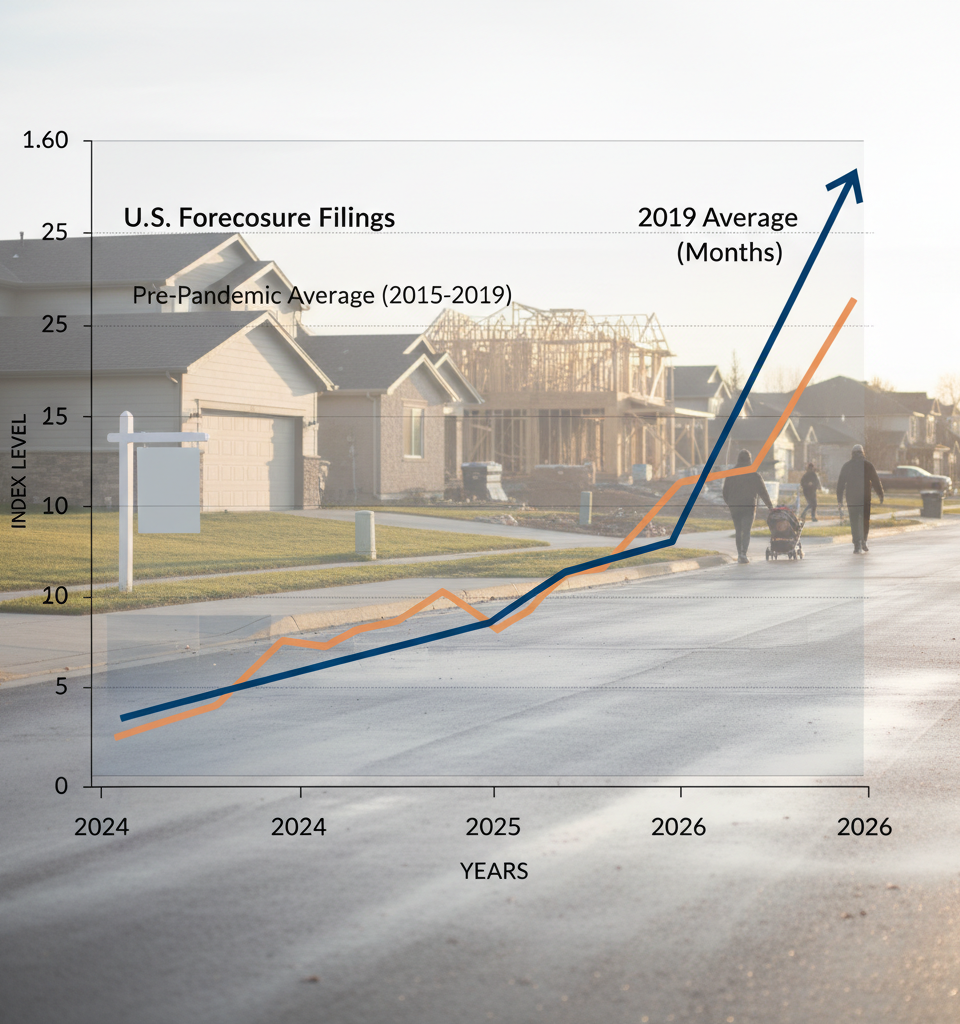
Recent reports indicate a notable increase in foreclosure activity across the U.S. in 2026, drawing comparisons to past housing crises. However, a closer examination of key economic and housing market indicators suggests that this rise is not a precursor to a widespread housing crash. Instead, analysts frame the current situation as a rebalancing, distinct from the systemic issues that led to previous downturns.
Differentiating from Past Crises
The New York Fed's foreclosure index, a crucial metric for gauging distress, indicates that while foreclosures are up from historically low levels, they remain far below the peaks observed during the 2008 financial crisis. This differentiation is critical; the current increase is largely attributed to the unwinding of pandemic-era forbearance programs and some localized economic pressures, rather than broad financial instability or reckless lending practices that underpinned the last major crash. The nature of current defaults is often linked to specific circumstances of individual homeowners rather than a widespread inability to pay mortgages across the board.
Muted New Listings and Sustained Demand
Further reinforcing the view that a crash is not imminent is the behavior of housing inventory. Despite the rise in foreclosures, the market is not seeing an influx of distressed properties overwhelming supply. New listings remain relatively muted, a phenomenon that has helped sustain home values even as interest rates have fluctuated. This suggests that the broader pool of homeowners is not facing widespread distress, and those properties entering foreclosure are absorbed without significantly inflating overall inventory levels. Demand, while perhaps moderating slightly from peak pandemic levels, continues to underpin market stability in many regions.
The Role of Home Equity
Homeowners today generally possess significantly more equity than during previous market downturns. This substantial equity acts as a buffer, allowing many struggling homeowners to sell their properties on the open market and avoid foreclosure altogether. For those who do face foreclosure, the accumulated equity often means that lenders are able to recoup losses without triggering a cascade of negative economic consequences, further limiting the broader market impact.
Expert Consensus on Market Stability
Analysts and economists broadly concur that the current foreclosure trends represent a normalization rather than a crisis. The consensus is that strong labor markets, albeit with some regional variations, and generally conservative lending standards instituted since the last crisis are preventing a broader contagion. They point to the targeted nature of current distress, primarily affecting specific segments or regions, rather than an economy-wide phenomenon.
Looking Ahead: Continued Monitoring, Not Panic
The outlook for the remainder of 2026 suggests continued vigilance but not alarm. While foreclosure numbers may continue to rise modestly as more lingering pandemic-era measures fully expire, the underlying strength of the housing market — characterized by low overall inventory, robust homeowner equity, and a healthy job market — is expected to contain these pressures. Investors and homebuyers are advised to focus on local market dynamics and individual property fundamentals rather than succumbing to generalized fears of a crash driven by headline figures alone.