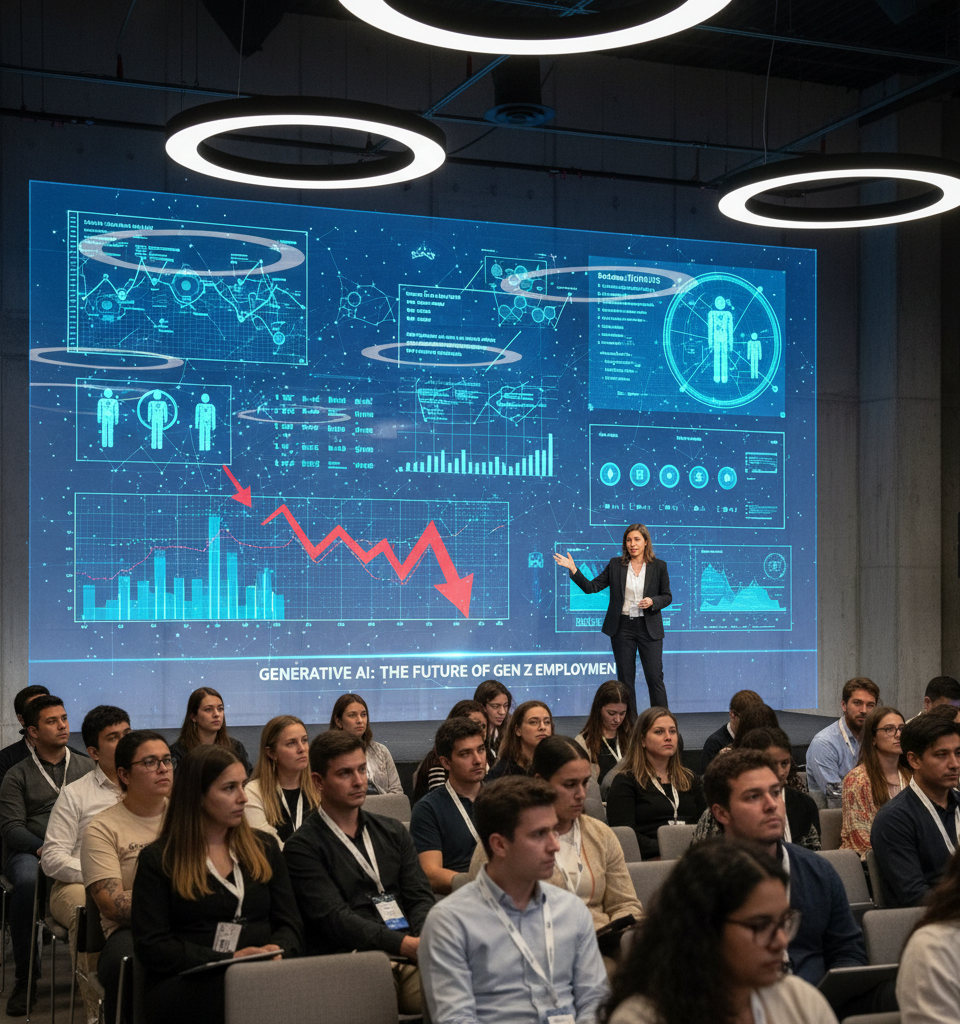
Clara Shih, a revered figure in the tech world formerly at the helm of AI initiatives at Meta and Salesforce, has launched a new nonprofit organization aimed at safeguarding Generation Z's career prospects amidst the ascendance of artificial intelligence. The genesis of this endeavor stems from a profound observation: Shih witnessed firsthand AI agents outperforming her seasoned human teams in critical business functions, a phenomenon she described as "radicalizing." This stark realization, unfolding within the hallowed halls of Silicon Valley, prompted her to pivot from corporate leadership to philanthropic action, focusing on reskilling young workers to leverage, rather than be replaced by, AI technology.
The urgency of Shih’s mission is underscored by growing evidence of AI’s impact on the global labor market, particularly affecting entry-level positions. Analysts from companies like Goldman Sachs have projected that generative AI could automate 300 million full-time jobs globally, with sectors such as administrative support, legal services, and tech experiencing significant shifts. This technological upheaval is creating a daunting landscape for Gen Z, many of whom are entering a job market with fewer traditional entry points.
Shih’s initiative seeks to bridge this skills gap, providing new graduates and young professionals with the competencies needed to operate and manage AI agents, thereby transforming them from potential victims of automation into architects of AI-driven workflows. Shih's experience during her tenure at Meta and Salesforce was a crucial catalyst. She recounted an incident where AI agents, operating autonomously, significantly boosted productivity metrics, leading to a palpable sense of anxiety among her human workforce.
This direct encounter with AI's potent capabilities crystallized her conviction that the future of work for Gen Z would not lie in competing with AI, but in collaborating with it. Her nonprofit's curriculum is reportedly focusing on practical applications of AI, teaching young professionals how to effectively prompt large language models, oversee AI-driven tasks, and integrate AI tools into various business processes. This hands-on approach is designed to produce a workforce capable of navigating the complexities of an AI-augmented professional environment.
The broader industry impact of such initiatives is substantial. As AI tools become more sophisticated and ubiquitous, companies are increasingly seeking talent equipped with AI literacy. Traditional roles are evolving, and the demand for data scientists, AI engineers, and prompt engineers is skyrocketing. Furthermore, AI proficiency is becoming a critical differentiator even in non-tech roles, as automation streamlines routine tasks, elevating the importance of higher-order cognitive skills and AI-assisted problem-solving.
Shih's nonprofit aims to feed this burgeoning demand, supplying the market with a cadre of AI-savvy professionals. Industry experts largely concur with Shih's assessment of the evolving job market. Dr. Ethan Mollick, an associate professor at the Wharton School, has frequently highlighted the "cobots" phenomenon—humans and AI working collaboratively—as the most likely future of work.
He argues that individuals who master AI tools will see significant productivity gains and career advancement. Similarly, a recent report by McKinsey Global Institute found that "creative and high-level cognitive skills" paired with technological fluency—specifically AI proficiency—will be paramount for career resilience. These analyses reinforce the strategic importance of initiatives like Shih's, which are proactively addressing a structural shift in the global economy.
Looking ahead, the success of Shih's nonprofit could serve as a blueprint for similar educational and reskilling programs worldwide. The coming years are expected to see continued rapid advancements in generative AI, further blurring the lines between human and machine capabilities. Policy discussions around universal basic income, retraining programs, and ethical AI development are gaining momentum globally.
For Gen Z, the ability to adapt and master these new tools will not just be an advantage, but a necessity for long-term career viability. The long-term vision includes not only skills development but also advocating for systemic changes in education to incorporate AI literacy from an earlier stage, ensuring a future workforce that is not merely reactive but proactively prepared for the AI era. The implications extend beyond individual career paths to national competitiveness.
Countries that successfully integrate AI education and foster AI-savvy workforces are likely to gain economic advantages in the innovation race. As AI tools become more accessible, the barrier to entry for developing new products and services can decrease, potentially democratizing innovation. However, this also intensifies the need for a skilled workforce to harness these tools effectively, preventing wider social inequalities driven by technological displacement.