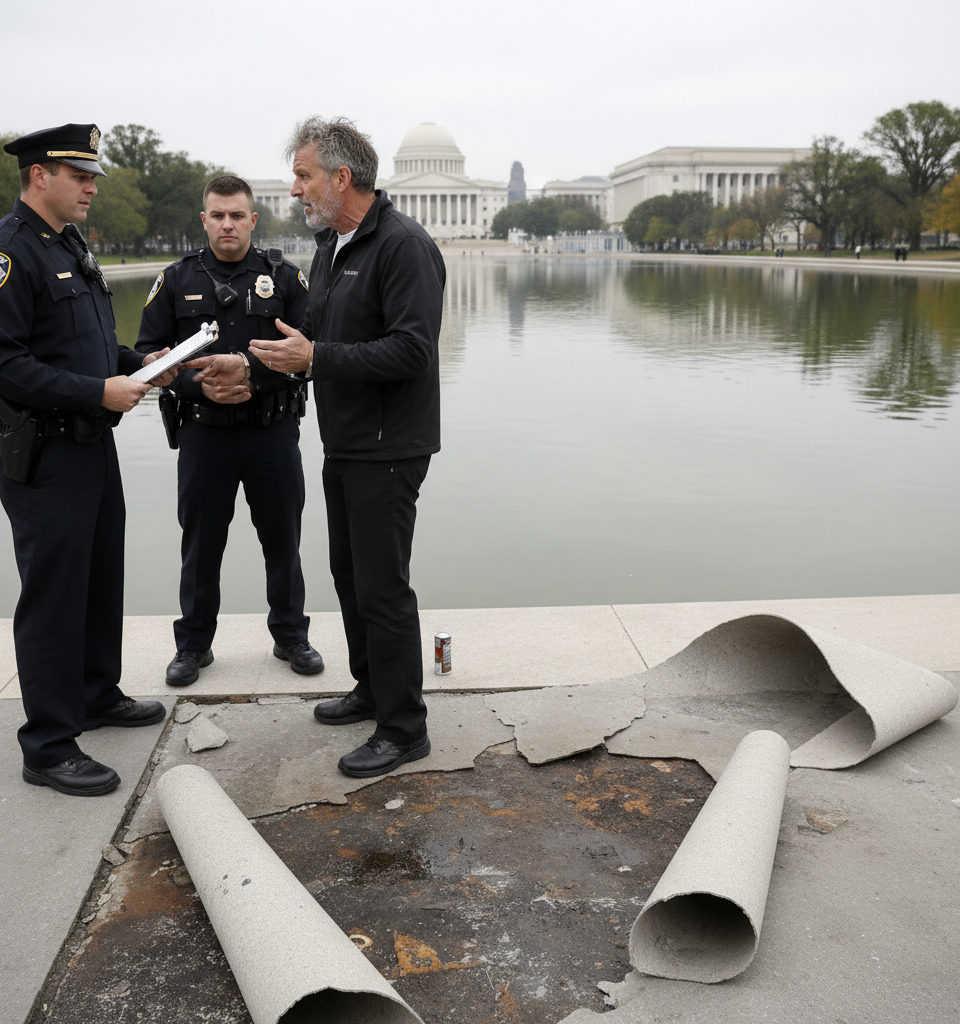
Former Olympian David Hearn was reportedly arrested today, 2026-06-20, at the Reflecting Pool in Washington D.C., an incident he attributes to a misunderstanding rather than an act of vandalism. Hearn, a cyclist, has publicly stated that while he did touch a detached liner in the pool, he "didn't destroy or break or peel anything," directly refuting claims of sabotage. The arrest unfolds amidst a backdrop of renewed scrutiny over the Reflecting Pool's refurbishment, a project that has recently drawn criticism and accusations of intentional damage.
The incident gains significance given former President Trump's recent pronouncements regarding the condition of the Reflecting Pool. Trump has publicly accused unnamed vandals of actively sabotaging the extensive refurbishment efforts. These accusations were fueled by visual evidence of paint peeling and floating within the iconic body of water, leading to speculation about deliberate interference with the historic landmark's restoration. The timing of Hearn's arrest, coinciding with these high-profile allegations, inevitably links him to the broader narrative of potential disruption.
The refurbishment of the Reflecting Pool is a significant undertaking, designed to preserve an integral part of the National Mall and a symbol of American civic life. Prior to the recent issues, the project had been progressing with an aim to ensure the structural integrity and aesthetic appeal of the pool for future generations. The appearance of peeling paint and other anomalies would undoubtedly lead to concerns regarding the quality of workmanship, the materials used, or, as Trump suggests, external interference. The cost and duration of such a project are typically considerable, and any setbacks can lead to further delays and increased expenditure.
Hearn's defense centers on his assertion that his interaction with the pool's liner was benign and did not involve any intent to damage or destroy property. As a former Olympian, Hearn's public profile adds another layer of complexity to the incident, ensuring it receives heightened media attention. His counsel is expected to argue that his actions were limited to merely touching an already detached component rather than actively causing the damage observed. This distinction is crucial in determining the legal ramifications and public perception of the events.
The broader implications of this incident, particularly the allegations of sabotage, extend beyond the immediate arrest. Such claims, especially from a former head of state, can trigger extensive investigations and increase security measures around national monuments. It also raises questions about the oversight and protective measures in place during significant public works projects, particularly those as iconic as the Reflecting Pool. The incident could prompt a review of access protocols and surveillance capabilities to prevent future occurrences, whether accidental or intentional.
Legal experts suggest that the outcome of Hearn's case will hinge on forensic evidence regarding the pool liner and eyewitness accounts. If the damage to the liner can be definitively linked to his actions, regardless of intent, he could face charges related to property damage. Conversely, if it is determined that the liner was already compromised and his interaction was incidental, the charges could be reduced or dropped. The public nature of the site and the historical context will likely mean that the proceedings are closely watched.
Looking ahead, the incident may accelerate efforts to complete the Reflecting Pool's refurbishment, potentially altering schedules and resource allocation. Authorities will likely escalate their investigation into the broader claims of vandalism, seeking to identify any individuals or groups attempting to disrupt national projects. The incident serves as a stark reminder of the challenges in maintaining public infrastructure, especially those with such profound symbolic value, against both natural degradation and potential human interference. The ongoing investigation is expected to provide further clarity on the precise sequence of events leading up to Hearn's arrest and the wider issue of the pool's state.