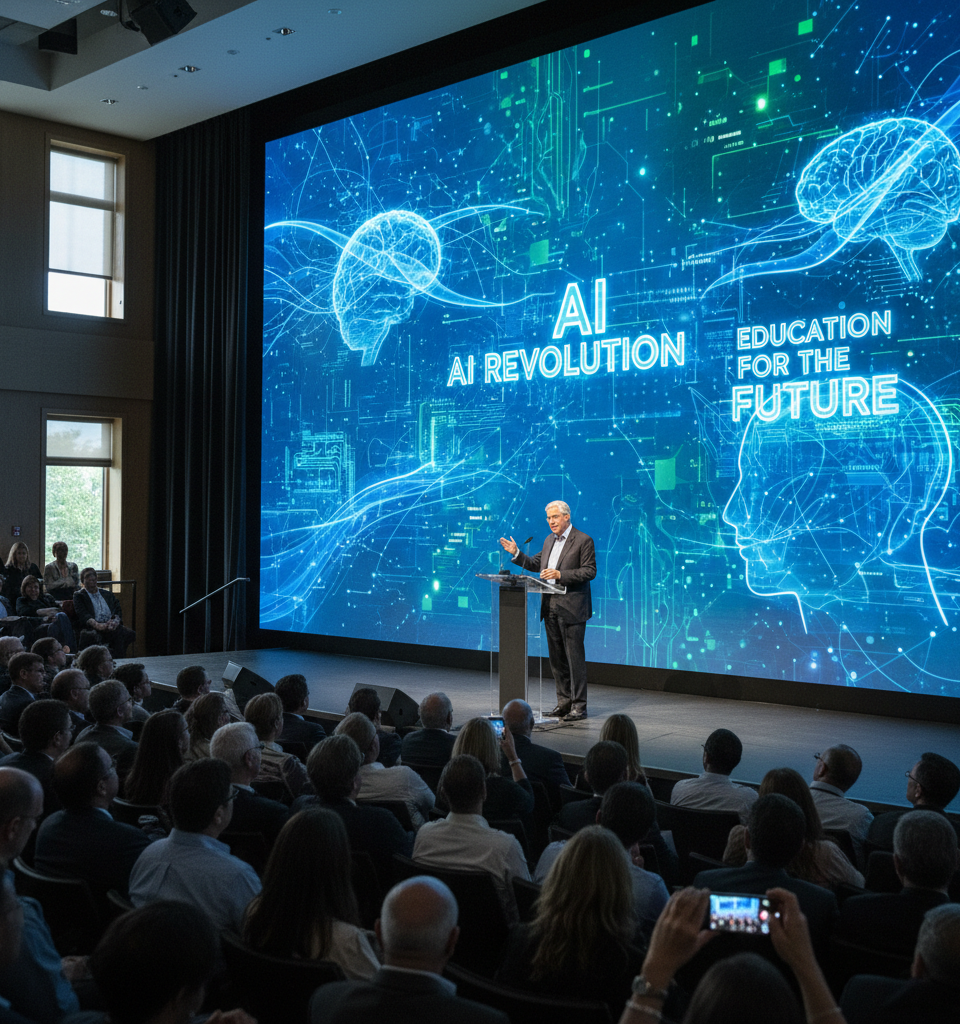
Washington D.C. – Ted Dintersmith, a former venture capitalist and prominent educational advocate, has launched a renewed and urgent call for fundamental reform within the American education system. Dintersmith, who has for years warned of the misalignment between current schooling and future workforce needs, asserts that the rapid advancements in artificial intelligence (AI) now represent an critical inflection point, demanding immediate and transformative changes to how American students are prepared for their adult lives. His initiative, unveiled this week, specifically targets the development of adaptive skills, critical thinking, and creativity, which he argues are paramount in an AI-dominated future.
For over a decade, Dintersmith has been a vocal critic of the standardized testing culture and rote learning prevalent in many U.S. schools, advocating instead for an education model that fosters innovation and real-world problem-solving. His best-selling book, "What School Could Be," and his documentary, "Most Likely to Succeed," have highlighted the shortcomings of traditional educational paradigms. The advent of sophisticated AI technologies has lent a new layer of urgency to his arguments, as he posits that jobs requiring repetitive or predictable tasks will be increasingly automated, rendering a significant portion of current curricula obsolete. This historical context underscores his consistent message: the educational system must evolve at pace with technological change, or risk leaving an entire generation ill-equipped.
Dintersmith's plan is multifaceted, emphasizing project-based learning, interdisciplinary studies, and a significant reduction in high-stakes standardized testing. He advocates for a shift in pedagogical focus from content memorization to skill development, particularly in areas difficult for AI to replicate, such as emotional intelligence, ethical reasoning, and complex collaboration. "We are preparing kids for a world that simply won't exist if we continue down the current path," Dintersmith stated in a recent interview, emphasizing the need for schools to cultivate entrepreneurial mindsets and resilience. He points to data from a 2023 McKinsey report suggesting that up to 30% of current work activities could be automated by 2030, highlighting the profound economic implications of inaction.
The implications for the broader education industry and the labor market are substantial. Private education technology companies are already racing to integrate AI tools into their offerings, yet Dintersmith argues that simply layering AI onto an outdated system is insufficient. He calls for a re-imagining of school structures, teacher training, and curriculum design from the ground up. Employers, particularly in tech and innovation sectors, have long bemoaned a skills gap among graduates, citing deficiencies in critical thinking and adaptability. Dintersmith's proposals could, if adopted, bridge this gap, potentially saving U.S. businesses billions in retraining costs and boosting national competitiveness on a global scale.
Experts largely concur with Dintersmith's assessment of AI's transformative power and the imperative for educational reform. Dr. Anya Kamenetz, an education journalist and author, notes, "The challenge isn't just about teaching kids to code; it's about teaching them how to learn, unlearn, and relearn continually." A recent survey by the National Association of Manufacturers found that 89% of manufacturers are struggling to find skilled workers, a figure projected to worsen with increasing automation. Analysts like those at the Brookings Institution suggest that countries that proactively adapt their educational systems to foster AI-complementary skills will gain a significant economic advantage, potentially adding trillions to their GDP over the next two decades.
Looking ahead, Dintersmith plans to engage with policymakers, school administrators, and parent groups across the country, advocating for pilot programs and systemic changes. He envisions a future where educational funding is tied more directly to innovative pedagogies and student outcomes relevant to the AI era. The coming months will likely see increased debate over federal and state education budgets, with growing pressure to allocate resources towards future-proof learning models. The success of Dintersmith's initiative could determine whether American students are prepared to lead the charge in an AI-driven world or are left behind in its wake.
The urgency of his message resonates with the accelerating pace of technological change. The question is no longer if AI will disrupt, but how profoundly and how quickly. Dintersmith's framework offers a roadmap, albeit a challenging one, for navigating this disruption by empowering the next generation with the tools they truly need to thrive.