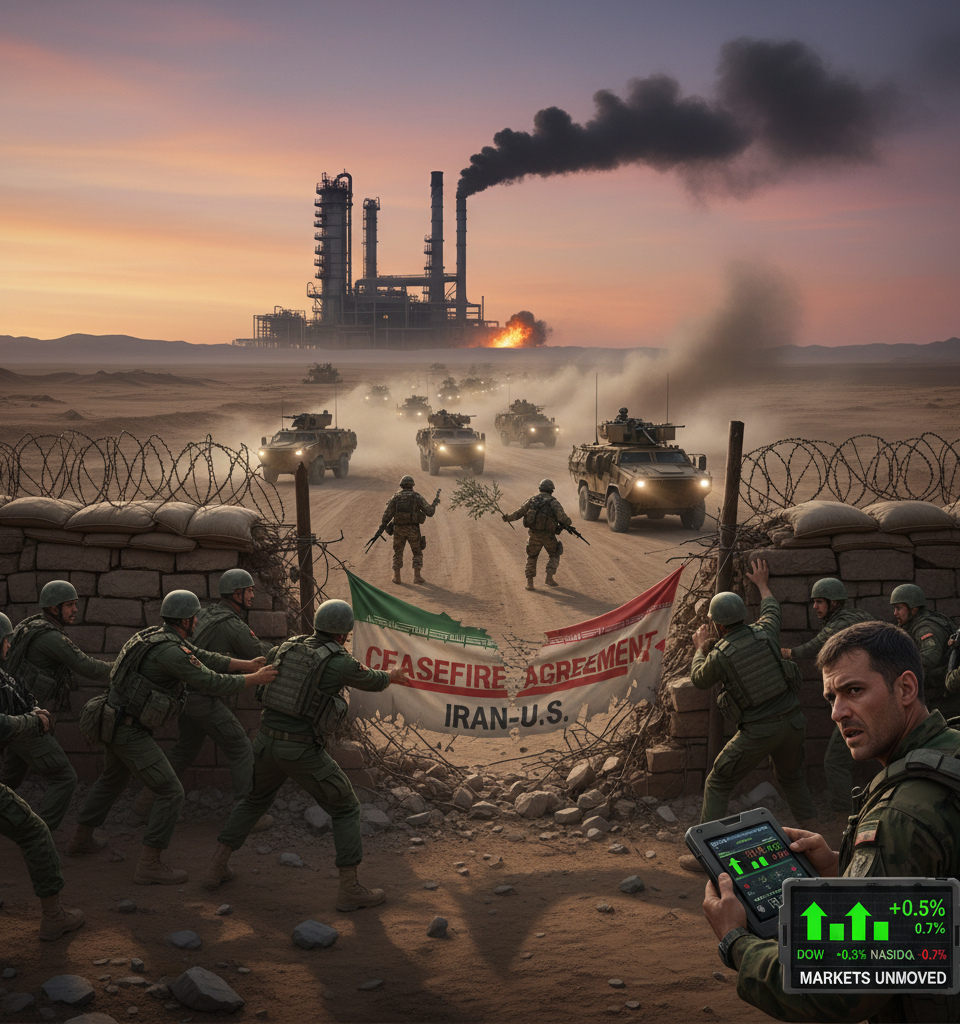
WASHINGTON D.C. / TEHRAN – OCTOBER 27, 2024 – A painstakingly negotiated ceasefire between Iran and the United States, intended to de-escalate simmering tensions across the Middle East, began unraveling within 24 hours of its announcement. The rapid deterioration was primarily attributed to alleged Israeli strikes in Lebanon, a development that Iran's Speaker of Parliament vociferously condemned as a direct violation of the fragile agreement. Concurrently, former U.S. President Donald Trump, a vocal critic of current foreign policy, unleashed a scathing rebuke of unspecified actors, labeling them "Fraudsters, Charlatans, and WORSE," further muddying the geopolitical waters just as a delicate truce was attempting to take hold.
Context and Historical Precedent
This immediate breakdown underscores the deeply entrenched animosities and complex proxy conflicts that characterize the Middle East. The region has consistently been a flashpoint for international crises, with previous attempts at de-escalation often derailed by unforeseen events or the actions of non-state actors. The current ceasefire initiative itself emerged from months of heightened rhetoric and sporadic military engagements, particularly across Syria and Iraq, with both Washington and Tehran seeking to avoid a full-scale direct confrontation. The historical backdrop includes decades of mistrust, sanctions, and proxy warfare, making any lasting peace extraordinarily challenging to achieve.
Key Details and Accusations
According to Mohammad Bagher Ghalibaf, Speaker of the Iranian Parliament, the alleged Israeli strikes in Lebanese territory directly contravened the spirit and letter of the ceasefire agreement. While specific details of the strikes remain unconfirmed by neutral sources, Iranian state media widely reported on the incidents, framing them as a deliberate provocation. Ghalibaf's statements, delivered in a televised address, emphasized Iran's right to respond, raising concerns about potential retaliatory actions. Simultaneously, Donald Trump's cryptic remarks, posted on his social media platform, are widely interpreted as a broadside against political opponents or critics of his past foreign policy stances, injecting domestic political turbulence into an already volatile international situation. The lack of specific targets in Trump's criticism allows for wide interpretation but undeniably adds to the sense of global instability.
Industry and Market Impact: Apathy on Display
Perhaps the most striking aspect of this immediate geopolitical deterioration was the muted reaction from global financial markets. Oil prices, which often spike dramatically at the first sign of Middle Eastern instability, edged up only marginally by less than 0.5%, with Brent Crude trading around $86.50 per barrel. Major stock indices in New York, London, and Tokyo showed negligible movement, largely shrugging off the news. The MSCI All-Country World Index remained relatively flat, indicating investor indifference. This market apathy suggests a degree of desensitization; traders and investors have grown accustomed to transient crises in the region and no longer perceive every flare-up as an immediate threat to global economic stability, unless it explicitly targets critical oil infrastructure or shipping lanes in the Strait of Hormuz.
Expert Perspectives on Sustained Instability
Geopolitical analysts are expressing a mix of resignation and cautious alarm. Dr. Elena Petrova, a Senior Fellow at the Council on Foreign Relations, commented, "The rapid fracture of this ceasefire is disappointing but not surprising. The underlying issues – Iranian proxy networks, Israel's security concerns, and U.S. strategic interests – remain fundamentally unaddressed. A true de-escalation would require a far more comprehensive agreement, involving multiple regional actors and robust enforcement mechanisms, which were clearly absent here." Other experts point to the inherent difficulty of enforcing a ceasefire when non-signatory state actors, such as various militias or even other sovereign nations, continue to operate within the contested zones. The lack of clear communication channels and trust between all parties further exacerbates the situation.
The Unfolding Path: What Comes Next?
The immediate future appears fraught with uncertainty. The potential for tit-for-tat escalation remains high, particularly if Iran perceives continued Israeli aggression in areas where its proxies operate. Diplomatic efforts, if any, will need to be re-evaluated and potentially re-energized. International mediators will likely face an uphill battle to restore trust and re-establish the conditions for meaningful dialogue. The coming days will be critical in determining whether this initial breakdown spirals into a broader conflict or if cooler heads prevail, allowing for a return to the negotiating table. The world will be watching for specific responses from both Washington and Tehran, as well as any further actions from regional players that could either stabilize or destabilize the precarious situation further.
Economic Outlook Under Geopolitical Strain
Economically, prolonged instability in the Middle East, even if market reactions are currently subdued, poses long-term risks. Supply chain disruptions, heightened shipping insurance costs, and fluctuations in energy prices could eventually manifest, impacting global inflation and economic growth. While the immediate market reaction was minor, a sustained period of friction, particularly one involving major oil producers or transit routes, would undoubtedly trigger more significant economic headwinds. Companies with investments in the region or reliance on Middle Eastern trade routes are already factoring these perpetual risks into their operational strategies, often opting for diversification or contingency planning. The persistent geopolitical tension continues to be a 'known unknown' for global economic forecasting, underscoring the fragility of the international system.