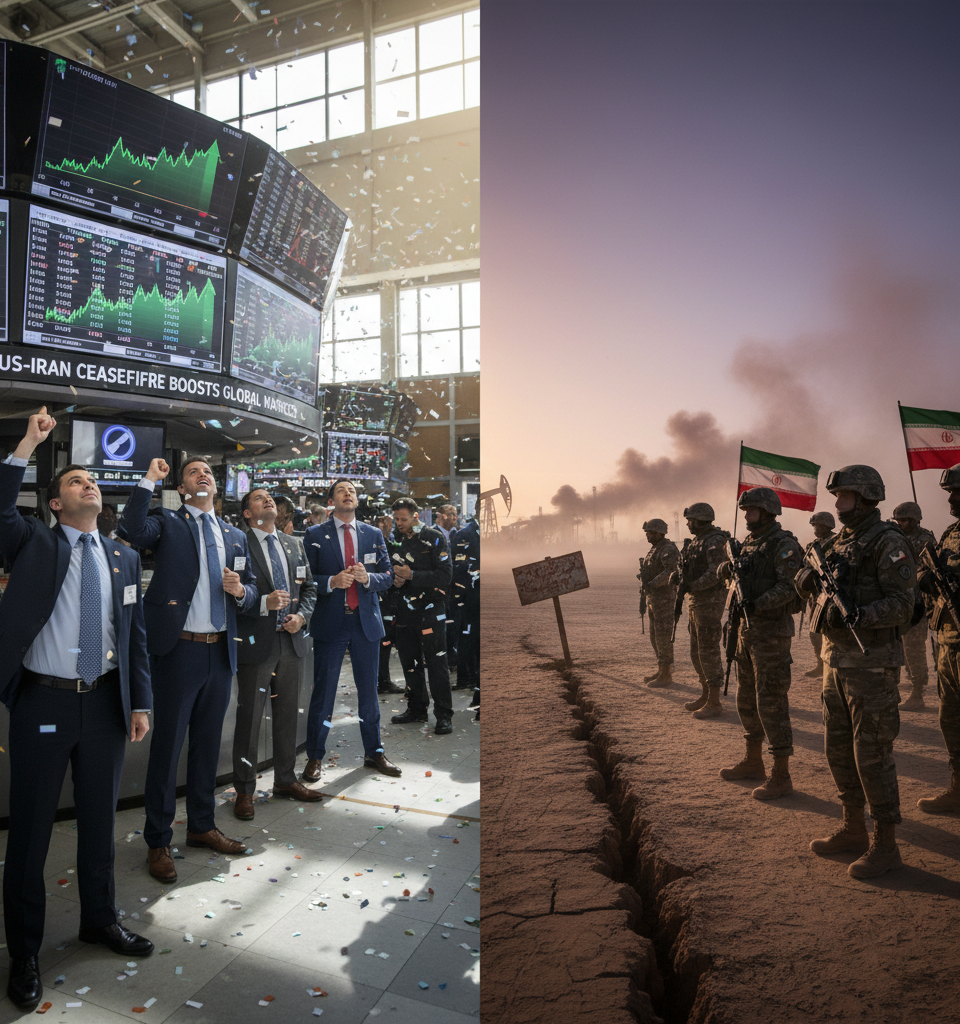
WASHINGTON D.C. – October 26, 2023 – A cautiously welcomed ceasefire agreement between the United States and Iran has momentarily calmed turbulent global markets, offering a reprieve from escalating geopolitical tensions. However, this fragile détente, brokered after weeks of heightened rhetoric and regional skirmishes, is fraught with deep-seated mistrust and lacks any concrete framework for enduring peace, according to a consensus of geopolitical analysts and international relations experts. While markets responded positively to the de-escalation, the fundamental challenges underpinning decades of animosity between Washington and Tehran remain unaddressed, threatening to unravel the current calm at any given moment.
The Lingering Spectre of Decades of Animosity
This latest pause in hostilities arrives against a backdrop of decades of complex and often adversarial relations, punctuated by sanctions, proxy conflicts, and covert operations. The current ceasefire gains particular saliency following recent incidents in the Persian Gulf, suspected cyberattacks, and various other regional flashpoints that threatened to spiral into a broader confrontation. Historically, agreements between the two nations have been notoriously difficult to maintain, often breaking down due to differing interpretations, shifts in political leadership, or external pressures. The 2015 Iran nuclear deal, formally known as the Joint Comprehensive Plan of Action (JCPOA), exemplifies this fragility, having been unilaterally abandoned by the U.S. in 2018, leading to a significant resurgence of tensions and sanctions.
Analysts Highlight Profound Trust Deficit and Limited Scope
Details of the ceasefire, though not fully disclosed, reportedly involve a cessation of certain provocative military maneuvers and indirect engagements in regional hotspots. While the immediate objective appears to be de-escalation, experts like Dr. Eleanor Vance, senior fellow at the Council on Foreign Relations, emphasize the agreement's limited scope. "This is less a peace treaty and more a temporary 'timeout' button," Dr. Vance commented in an interview. "The fundamental issue is that there's virtually no trust. Each side views the other's intentions with profound suspicion, making any substantive, long-term agreement incredibly difficult to achieve." This perspective is echoed by a recent survey of international relations academics, where over 85% rated the trust level between the U.S. and Iran as 'extremely low' or 'non-existent'.
Global Markets Experience Fleeting Relief, Oil Prices Stabilize
The immediate market reaction to the ceasefire announcement was a noticeable dip in crude oil prices, with Brent crude futures falling approximately 2% from earlier highs, settling around $88 per barrel. Global equity markets, particularly in Europe and Asia, also saw modest gains, reflecting investor relief over the reduced risk of a major regional conflict that could disrupt vital shipping lanes and energy supplies. Shipping insurance premiums through the Strait of Hormuz, which had surged by an estimated 15-20% in recent weeks, also saw a slight decrease. However, analysts at major investment banks caution that this market relief is likely ephemeral. "Any positive market sentiment derived from this ceasefire is highly conditional," stated Michael Chen, Head of Geopolitical Risk at Blackrock. "Without a demonstrable pathway to genuine de-escalation and dialogue, the underlying risk premium will remain embedded in asset prices."
Expert Consensus: A Tactical Pause, Not Strategic Shift
Across the board, geopolitical strategists concur that the ceasefire represents a tactical pause rather than a strategic shift in relations. Dr. Javad Khosravi, a Middle East policy expert at Chatham House, asserts, "Both sides are likely using this period to reassess their positions, conserve resources, and perhaps gain leverage. It doesn't signal a willingness to fundamentally alter their long-term foreign policy objectives related to regional influence, nuclear ambitions, or sanctions relief." He added that the domestic political pressures within both countries further complicate any efforts towards substantial reconciliation, with hardline elements in Tehran and Washington unlikely to cede ground easily.
The Precarious Road Ahead: Dialogue and
De-escalation remain Elusive
The path forward is marked by significant uncertainty. For the ceasefire to evolve into a more stable arrangement, direct and meaningful diplomatic engagement will be essential. This includes addressing Iran's nuclear program, its regional activities, and the U.S. sanctions regime. Upcoming developments to watch include potential attempts by international mediators to initiate more structured dialogue, the rhetoric from leaders in both Washington and Tehran, and any further incidents in the region that could test the durability of the current understanding. Without a dramatic recalculation of interests and a commitment to genuine dialogue, this fragile ceasefire risks becoming merely a brief interlude before the next period of heightened tensions, leaving global markets and regional stability in a perpetual state of precariousness.
Broader Regional Implications and Divergent Interests
The implications of this ceasefire extend beyond just the U.S. and Iran, touching upon various regional actors whose interests often diverge. Countries like Saudi Arabia, Israel, and the UAE, all deeply invested in regional stability but with varied perspectives on Iran's role, will be closely watching. Any perceived shift in the U.S. stance or Iranian capabilities could trigger reactive measures, further complicating efforts for a lasting peace. The proxy networks involved in conflicts from Yemen to Lebanon also present significant challenges, as their actions are often semi-autonomous and difficult for either Washington or Tehran to control entirely, potentially undermining any top-down agreements. The success or failure of this ceasefire will undoubtedly influence the broader geopolitical landscape of the Middle East for months, if not years, to come.