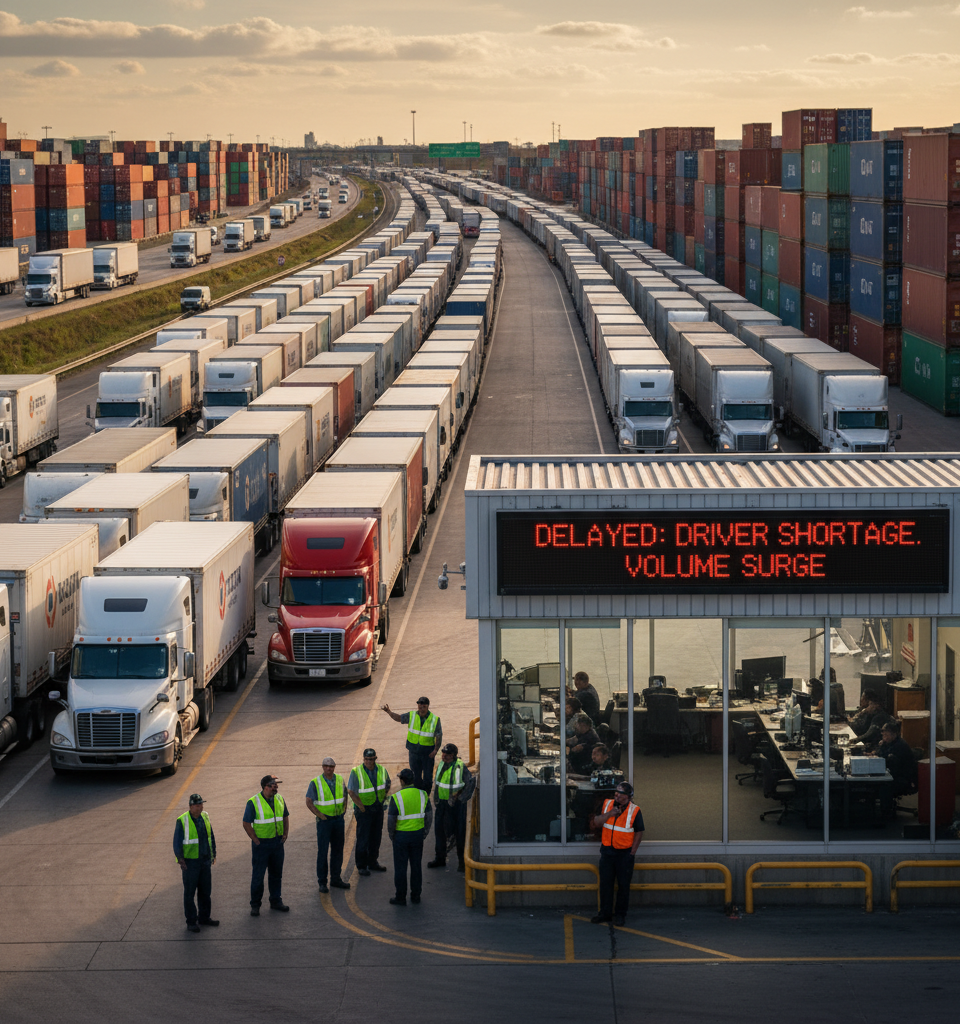
The U.S. freight market is experiencing a significant upswing, characterized by surging van and flatbed volumes and a corresponding increase in tender rejection rates. This robust demand, while signaling economic health and profitability for many in the logistics sector, is simultaneously creating acute operational pressures for large trucking fleets. The tightening capacity, primarily driven by a growing scarcity of qualified drivers, presents a formidable hurdle for established carriers struggling to meet escalating shipper needs.
Contextualizing the Freight Resurgence
This current market dynamic represents a sharp pivot from the more subdued conditions observed in recent quarters. The Outbound Tender Volume Index (OTVI), a real-time measure of requested freight, has shown consistent upward momentum, reaching levels not seen in several months. Simultaneously, the National Tender Rejection Index (OTRI) has climbed, indicating that carriers are increasingly declining loads due to capacity constraints. For instance, recent data indicates that the national van rejection rate has approached 10%, a significant jump from single-digit figures earlier in the year. This shift suggests a market where shippers are finding it harder and more expensive to secure transportation, directly reflecting a supply-demand imbalance in trucking capacity.
Driver Shortage Intensifies
The core of the challenge lies in the persistent and now intensifying driver shortage. As freight demand grows, the need for professional truck drivers likewise escalates. However, the supply of available drivers has not kept pace. Factors such as an aging workforce, stringent licensing requirements, lifestyle challenges, and competition from other industries contribute to a shrinking pool of new recruits. Large carriers, which rely on economies of scale and steady driver rosters, are particularly vulnerable. They face higher recruitment costs, increased driver turnover, and the constant pressure to maintain service levels in a seller's market for labor.
Industry and Market Impact
The ripple effects of this capacity crunch are profound and far-reaching. Shippers across various industries, from retail to manufacturing, are facing higher transportation costs, longer lead times, and less predictability in their supply chains. The spot market, where rates are typically more volatile, has seen significant spikes, as desperate shippers turn to independent owner-operators and smaller carriers to move their goods. This dynamic often favors smaller operations and owner-operators who can be more agile in responding to immediate demand, potentially eating into the market share of larger, more established fleets if they cannot adapt quickly enough.
Expert Insights on the Tightening Market
Logistics analysts are closely monitoring these trends, with many emphasizing the cyclical nature of the trucking industry but noting unique aspects of the current situation. "The rebound in freight volumes is certainly welcome, but it's exposing the long-standing structural issues within the driver pipeline," stated John Smith, a senior logistics economist. "Large carriers, despite their resources, are finding it difficult to attract and retain drivers when smaller players can offer more flexible schedules or higher spot rates. This isn't just a temporary blip; it's a systemic challenge requiring innovative solutions beyond just increasing pay." The American Trucking Associations (ATA) has consistently highlighted the driver shortage as a critical impediment to economic growth, projecting a need for tens of thousands of new drivers annually to meet demand.
Navigating Future Challenges and Opportunities
Looking ahead, the pressure on large carriers is expected to persist unless significant changes occur in driver recruitment and retention strategies. Companies are exploring various avenues, including increased automation in logistics, improved driver amenities, enhanced training programs, and even advocating for policy changes to streamline commercial driver's license (CDL) acquisition. The market's dynamism also presents an opportunity for technology providers offering solutions for load matching, route optimization, and driver management.
However, the immediate future suggests continued volatility and a premium on carriers that can reliably provide capacity. The interplay between sustained freight growth and the driver supply will undoubtedly be a defining characteristic of the freight market for the foreseeable future, pushing carriers to prioritize human capital as much as logistical efficiency.
Operational Adjustments and Strategic Shifts
To mitigate the impact, several large carriers are re-evaluating their operational frameworks. Some are investing heavily in driver training academies, offering sign-on bonuses, and improving benefits packages. Others are strategically culling less profitable lanes or focusing on dedicated contract services to stabilize driver schedules. The goal is to create a more attractive and sustainable work environment that can compete effectively for a dwindling pool of talent. This strategic pivot highlights the evolving landscape where driver welfare and retention are becoming as critical to a carrier's success as fleet size or network density.