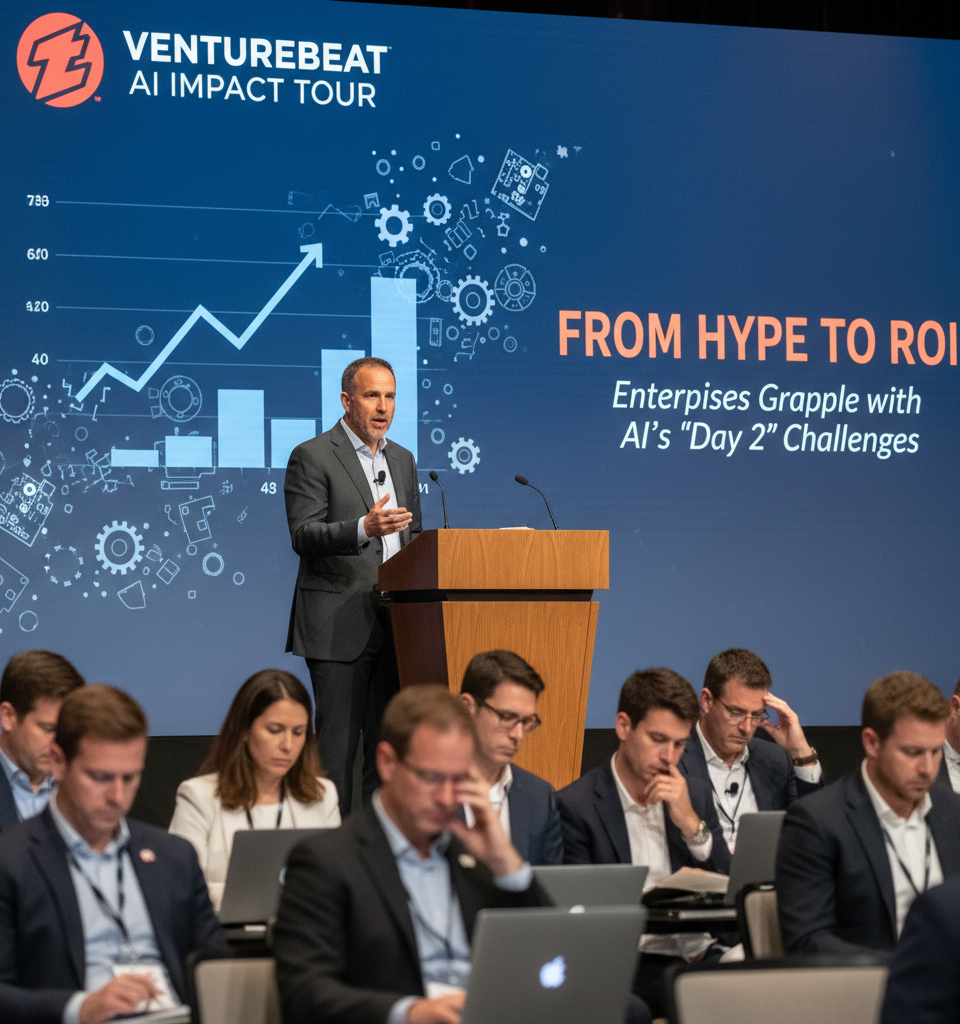
SAN FRANCISCO, CA – The burgeoning era of enterprise Artificial Intelligence has officially transitioned from the optimistic glow of potential to the rigorous demands of operational reality. As organizations scale their AI initiatives beyond pilot programs, a significant pivot is underway, focusing less on what AI can achieve and more on how to extract demonstrable, measurable value from substantial investments. This critical Juncture, dubbed the "Day 2 moment" by industry leaders, was a central theme at VentureBeat's recent AI Impact Tour session, where experts detailed the operational complexities large enterprises now face.
This re-evaluation of AI strategy comes as companies grapple with the pervasive challenge of "AI sprawl" – a fragmented landscape of diverse AI models and solutions implemented across various departments without cohesive oversight. Compounding this issue are rapidly rising inference costs associated with deploying and running these models at scale, alongside a notable lack of visibility into the actual return on investment (ROI) these technologies are generating. The initial rush to adopt AI, driven by competitive pressures and the promise of transformative change, is now giving way to a more pragmatic assessment of its economic efficiency and strategic alignment.
Brian Gracely, Director of Portfolio Strategy at Red Hat, provided a stark assessment of this operational reality during his address. "The central question is no longer what can be built, but how to make the most of our AI investment," Gracely explained, highlighting the shift from innovation to optimization. He underscored the escalating costs incurred as AI models move from development environments to full production, stressing the urgent need for enterprises to gain greater transparency and control over their AI expenditures. Without clear metrics and centralized management, the financial benefits of AI risk being outweighed by its operational overhead.
Economically, the stakes are substantial. While global AI spending is projected to surpass $300 billion by 2026, according to IDC, a significant portion of this investment is at risk if enterprises cannot effectively measure and optimize their AI deployments. Reports from McKinsey suggest that only a fraction of companies are successfully scaling AI beyond pilots, with many struggling to integrate AI into core business processes and achieve tangible financial or operational improvements. This indicates a widespread gap between aspirational AI adoption and realized business impact, potentially leading to widespread disillusionment and a slowdown in investment if the ROI remains elusive.
Industry analysts are increasingly advocating for a more disciplined approach to AI governance and lifecycle management. "The initial fascination with bleeding-edge AI models needs to evolve into a strategic focus on model efficiency, cost management, and clear value propositions," commented Dr. Anya Sharma, a principal analyst at Tech Insights Group. "Enterprises must establish robust MLOps practices, implement granular cost tracking mechanisms, and develop comprehensive frameworks for measuring the business impact of each AI initiative. The era of 'build it and they will come' for AI is over; now it's about 'build it and prove its worth.'"
The broader market impact of this shift is multifaceted. Vendors of AI infrastructure, MLOps platforms, and FinOps solutions are poised to see increased demand as enterprises seek tools to manage and optimize their AI estates. This push for efficiency could also drive consolidation in the AI market, favoring platforms that offer integrated solutions for model development, deployment, monitoring, and cost attribution. Furthermore, companies that successfully navigate this "Day 2" challenge will gain a significant competitive advantage, leveraging AI not just for innovation, but for demonstrable improvements in efficiency, customer experience, and profitability.
Looking ahead, the next phase of enterprise AI will be defined by a renewed emphasis on responsible AI governance, sustainable operational models, and a sharper focus on business outcomes. Key developments expected include the widespread adoption of specific AI cost centers within corporate budgets, the emergence of AI FinOps roles dedicated to managing and optimizing AI expenditures, and the integration of AI performance metrics directly into business KPIs. The challenge now is to transform the immense potential of AI into sustained, verifiable economic success, ensuring that the momentum generated by early AI adoption translates into meaningful and measurable value for the enterprise.
Toward a Sustainable AI Future
The journey from fragmented AI pilots to cohesive, value-driven production systems requires a strategic rethinking of how AI is procured, deployed, and managed. Organizations must prioritize building a unified AI strategy that aligns with overarching business objectives, implements robust governance structures, and fosters a culture of continuous optimization. This includes investing in platforms that offer end-to-end visibility, predictive cost management, and automated performance monitoring. Without these foundational elements, the promise of AI risks being overshadowed by its complexity and cost, relegating truly transformative potential to unrealized aspirations.
The industry's collective ability to address these "Day 2" challenges will ultimately determine the long-term trajectory of enterprise AI. Success hinges not just on technological innovation, but on operational excellence and a rigorous commitment to deriving quantifiable business value from every AI investment. The era of casual AI experimentation is over; the age of accountable, production-ready AI has begun.