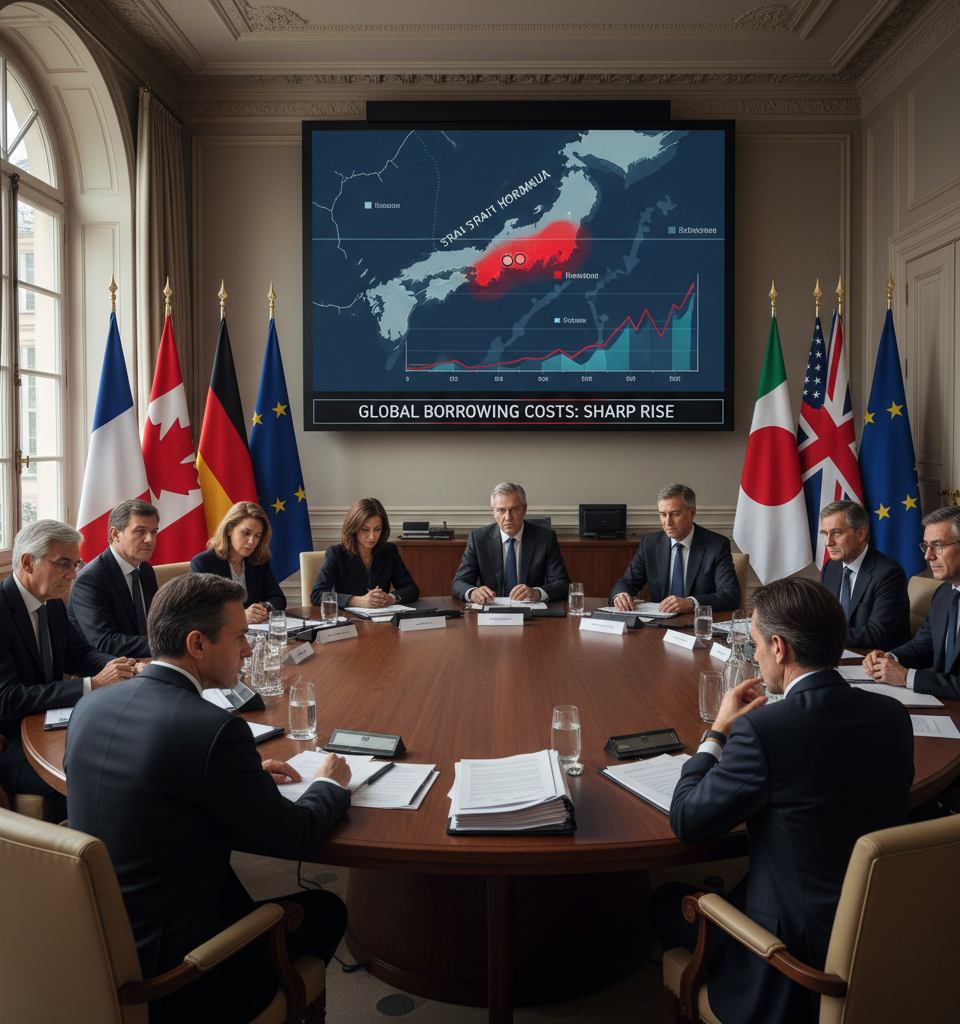
G7 finance ministers gathered in Paris on Monday and Tuesday for an urgent summit, primarily focused on mitigating the severe economic fallout anticipated from any sustained closure or significant disruption of the Strait of Hormuz. The influential group of developed economies met against a backdrop of rapidly rising long-term borrowing costs, a clear indicator of market jitters concerning global energy supply stability and the broader implications for international commerce.
Geopolitical Tensions and Economic Vulnerability
The Strait of Hormuz, a narrow waterway between Iran and Oman, is notoriously vital for global energy transit, with approximately 20% of the world's petroleum liquids passing through it daily. Recent heightened tensions in the region have stoked fears of supply chain interruptions, prompting this high-level economic consultation. A prolonged closure, whether due to military action or sustained hostile acts, could send oil prices skyrocketing, trigger global energy shortages, and significantly dampen economic growth prospects worldwide. The current geopolitical climate, characterized by tit-for-tat actions and increased military presence, underscores the immediacy of these concerns, forcing G7 leaders to prioritize contingency planning and collaborative economic responses.
Rising Borrowing Costs Signal Market Anxiety
One of the most pressing issues discussed was the recent surge in long-term borrowing costs for governments. Yields on benchmark 10-year government bonds across major economies, including the U.S., Germany, and Japan, have seen notable increases. For instance, the yield on the U.S. 10-year Treasury bond recently climbed to over 4.3%, its highest in several months, while German 10-year Bunds surpassed 2.6%. This ascent reflects heightened investor demand for a risk premium, signaling concerns over persistent inflation, aggressive monetary policy from central banks, and the added uncertainty introduced by Middle East instability. Such elevated borrowing costs can stifle investment, increase the cost of capital for businesses, and make it more expensive for governments to service their debts, potentially slowing economic recovery.
Industry and Market Implications
The potential for Strait of Hormuz disruption sends reverberations far beyond the energy sector. Global shipping and logistics companies face increased insurance premiums and rerouting challenges, leading to higher transportation costs for nearly all internationally traded goods. Sectors heavily reliant on stable energy prices, such as manufacturing, aviation, and agriculture, would experience significant cost pressures. Stock markets, particularly those sensitive to geopolitical risk, have shown volatility, with energy futures markets already reflecting a premium for crude oil due to ongoing tensions. Analysts at JPMorgan Chase estimated that a full closure could lead to a sustained $150 per barrel increase in oil prices, plunging the global economy into a severe recession.
Expert Analysis and Collaborative Efforts
Economists and geopolitical strategists emphasize the need for a coordinated international response. Dr. Elara Vance, a senior economist at the International Monetary Fund, commented, "The G7's focus on this issue is critical. A unilateral approach will be insufficient; market confidence hinges on a unified front that can both de-escalate tensions and provide economic assurances to prevent a spiraling crisis." Discussions reportedly included strategies for diversifying energy supply routes, coordinated releases from strategic petroleum reserves, and potential financial aid mechanisms for economies most vulnerable to energy shocks. There was also a strong emphasis on diplomatic efforts to de-escalate regional tensions and ensure freedom of navigation.
The Path Forward: Diplomacy and Economic Resilience
Looking ahead, the G7 finance ministers are expected to issue a joint communiqué outlining their shared concerns and commitment to economic stability. While no immediate, radical policy shifts are anticipated, the meeting serves as a crucial platform for intelligence sharing and contingency planning. The focus will remain on bolstering energy security, managing inflationary pressures exacerbated by geopolitical events, and maintaining fiscal prudence in an era of elevated global debt. The international community will closely monitor diplomatic overtures in the Gulf region, as sustained stability in the Strait of Hormuz remains paramount for global economic health. Future meetings and consultations are expected to refine these strategies as the geopolitical landscape evolves.