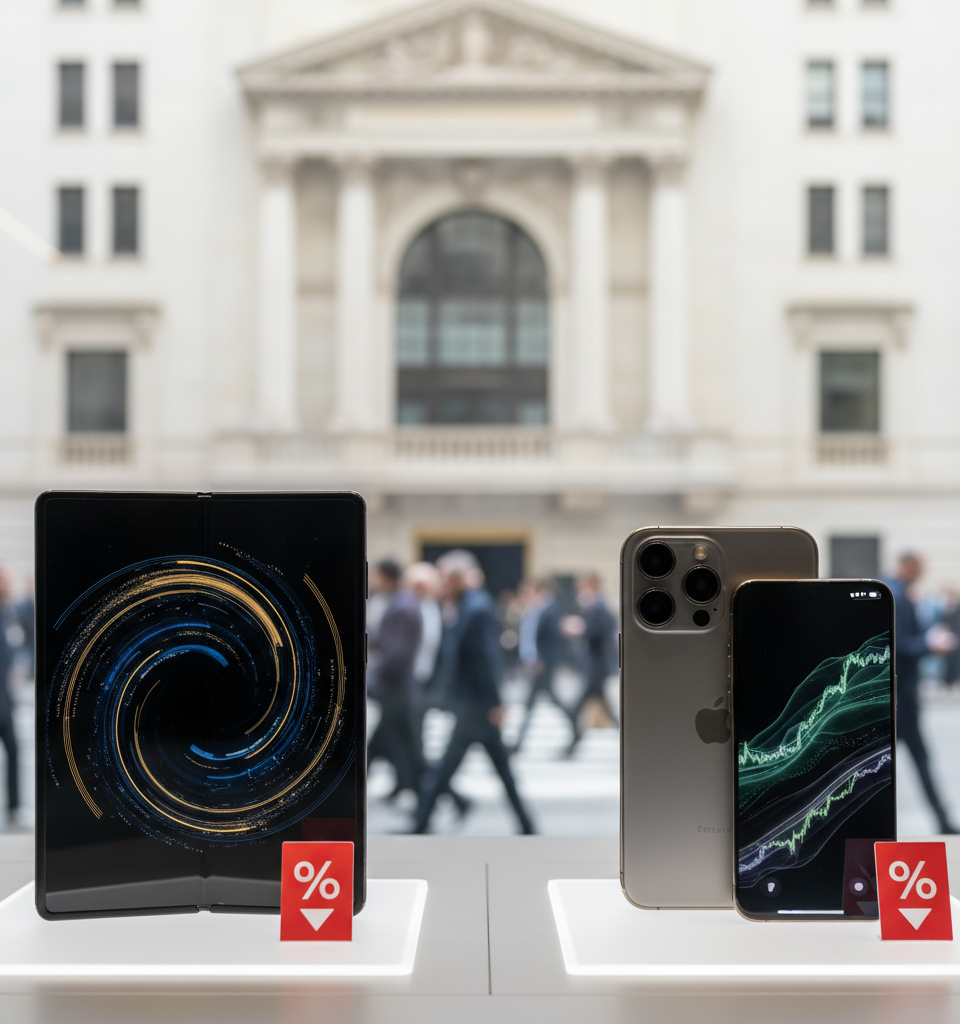
The simultaneous launch of flagship smartphone lines from Samsung and Apple signals a critical juncture for the global technology sector, underscoring the fierce battle for premium segment dominance and consumer loyalty. Businesses reliant on mobile platforms, from app developers to accessory manufacturers and telecom providers, face immediate strategic decisions regarding inventory, marketing, and ecosystem integration. This moment will dictate competitive positioning for the upcoming holiday season and beyond, with implications for supply chain resilience and investor confidence in both tech giants.
Today, August 21, 2026, marks a significant convergence in the premium smartphone market as both Samsung and Apple have made their latest flagship devices available for purchase. Samsung's highly anticipated Galaxy Z Fold8 series, comprising the Galaxy Z Fold8, the high-end Galaxy Z Fold8 Ultra, and the compact Galaxy Z Flip8, officially began general sales following a period of pre-orders. Concurrently, Apple has launched its iPhone 17 Pro series, making the devices accessible to consumers from today.
Market Dynamics and Competitive Landscape
The simultaneous release of these major device lines amplifies the ongoing rivalry between Samsung and Apple, two of the world's leading technology innovators. Samsung's latest foldable offerings aim to solidify its pioneering position in the nascent, yet rapidly growing, foldable smartphone segment. The availability of multiple models within the Z Fold8 series suggests a strategy to cater to diverse consumer preferences and price points within the premium foldable category. Meanwhile, Apple's iPhone 17 Pro series is expected to continue its tradition of incremental yet impactful improvements, focusing on performance, camera capabilities, and ecosystem integration to retain its substantial market share among high-end consumers.
Device Availability and Consumer Access
For the Samsung Galaxy Z Fold8 series, pre-orders had been ongoing, culminating in general availability today. This staggered release approach allows manufacturers to gauge initial demand and streamline distribution logistics. Apple's iPhone 17 Pro series has also become available for purchase starting today, indicating a direct-to-market strategy that maximizes immediate sales potential. The availability across various retailers and carrier partners for both brands ensures broad consumer access globally, setting the stage for a period of intense sales activity.
Industry Implications
This synchronized product rollout has immediate implications across the mobile technology industry. Component suppliers, software developers, and accessory manufacturers are all poised to benefit from the new product cycles. The competition is not just about device sales but also about ecosystem lock-in, with both companies vying to attract and retain users within their respective app stores, cloud services, and hardware integrations. The performance of these devices in the market will offer crucial insights into current consumer spending habits and the overall health of the premium smartphone segment.
What's Next for the Smartphone Market
With both major players now having their latest flagships on the market, attention will turn to initial sales figures, early adoption rates, and user reviews. The holiday shopping season, now just months away, will provide a critical test for these new devices. Analysts will be closely monitoring how the foldable form factor of Samsung's Z series competes against the established and refined design of Apple's Pro models. The success of these launches will not only impact the financial performance of Samsung and Apple but will also set benchmarks for innovation and consumer expectation in the broader mobile technology sector for the coming year. Future updates and competitive responses are anticipated as both companies continue to vie for market leadership.