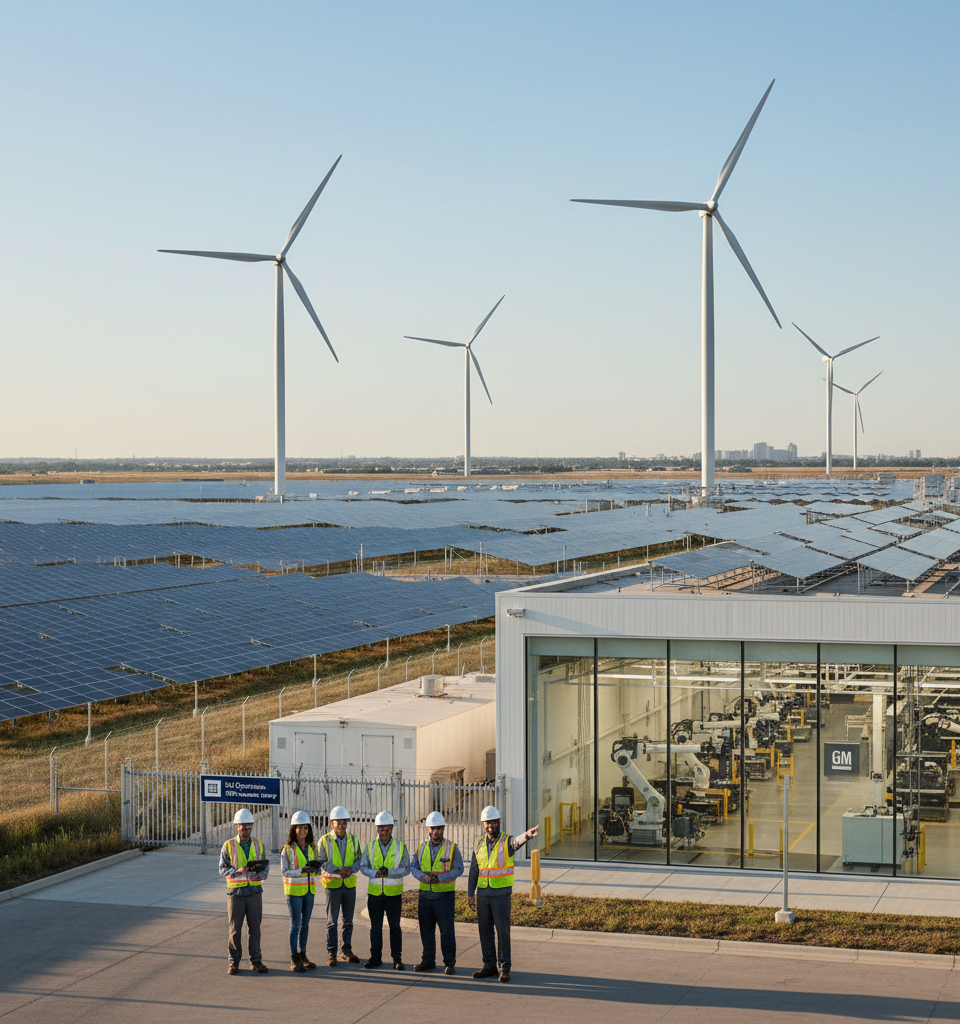
General Motors (GM) announced this week that it has achieved 100% renewable energy sourcing for its U.S. operations, marking a significant milestone as the first U.S. automaker to reach this ambitious target. The Detroit-based automotive giant also confirmed that it matched 70% of its global electricity consumption with renewable sources in 2025, underscoring a rapid acceleration in its sustainability commitments. This achievement positions GM at the forefront of corporate endeavors to decarbonize manufacturing and operational footprints, aligning with broader global climate goals.
Context and Background
This move by General Motors is part of a decade-long strategic pivot towards environmental sustainability, initiated well before the recent surge in electric vehicle (EV) production. The company had initially set a target to source 100% renewable energy globally by 2040, a goal it has now significantly advanced for its U.S. facilities. The transition involves a multifaceted approach, including direct power purchase agreements (PPAs) from wind and solar farms, investments in renewable energy projects, and the utilization of green tariffs offered by utility providers. This aggressive strategy reflects a growing corporate understanding of both the environmental imperative and the long-term economic benefits associated with renewable energy adoption, including energy price stability and enhanced brand reputation.
Key Details and Implementation
S. operations, GM has entered into agreements with numerous renewable energy projects across various states. These include substantial wind farms in Texas, Illinois, and Ohio, alongside burgeoning solar installations in states like Arkansas.
These PPAs provide a direct pipeline of clean energy, offsetting the electricity consumption of GM's manufacturing plants, technical centers, and offices across the country. Specific projects like the Cavalier Wind Farm in North Dakota and the Hive Solar Project in Virginia are key components of this strategy. The company emphasized that this achievement is not merely the purchase of renewable energy credits but involves a direct link to actual renewable energy generation.
With 70% global renewable energy matching in 2025, GM is also making significant strides internationally, signaling a comprehensive shift in its energy procurement strategy.
Industry and Market Impact
General Motors' accomplishment sends a powerful signal across the automotive industry and beyond, challenging competitors to accelerate their own decarbonization efforts. As one of the largest manufacturing entities in the United States, GM's transition to 100% renewable energy demonstrates the feasibility and scalability of such initiatives even for energy-intensive industries. This move could spur increased investment in renewable energy infrastructure, drive innovation in sustainable manufacturing practices, and influence supply chain partners to adopt similar environmental standards. For consumers, it reinforces GM's commitment to building a more sustainable future, potentially enhancing brand loyalty, particularly among environmentally conscious buyers who are increasingly seeking products from responsible companies.
Expert Perspective
Industry analysts regard GM's achievement as a significant step forward in corporate sustainability. "This isn't just about good PR; it's a strategic business decision that enhances resilience and reduces operational risk," commented Dr. Eleanor Vance, a lead energy sector analyst at GreenFlow Consulting. "By locking in renewable energy prices through long-term PPAs, GM hedges against volatile fossil fuel costs, providing stability to their extensive manufacturing operations. It also positions them favorably in a competitive landscape where ESG (Environmental, Social, and Governance) performance is increasingly scrutinized by investors and consumers alike." Dr. Vance also highlighted the potential for such large-scale corporate commitments to drive down the cost of renewable energy further through increased demand and investment.
Future Implications and Developments
Looking ahead, General Motors aims to extend its 100% renewable energy commitment to its global operations, with the ultimate goal of achieving carbon neutrality by 2040 for its entire global enterprise. S. and further integrating sustainable practices throughout its supply chain.
This includes initiatives to reduce waste, conserve water, and source sustainable materials for its vehicle production. Upcoming developments are anticipated to include further announcements regarding international renewable energy agreements and the continued rollout of a fully electric vehicle portfolio, ensuring that not only the manufacturing but also the product itself contributes to a zero-emissions future. S.
by 2035, underscoring a dual strategy of clean production and clean products.