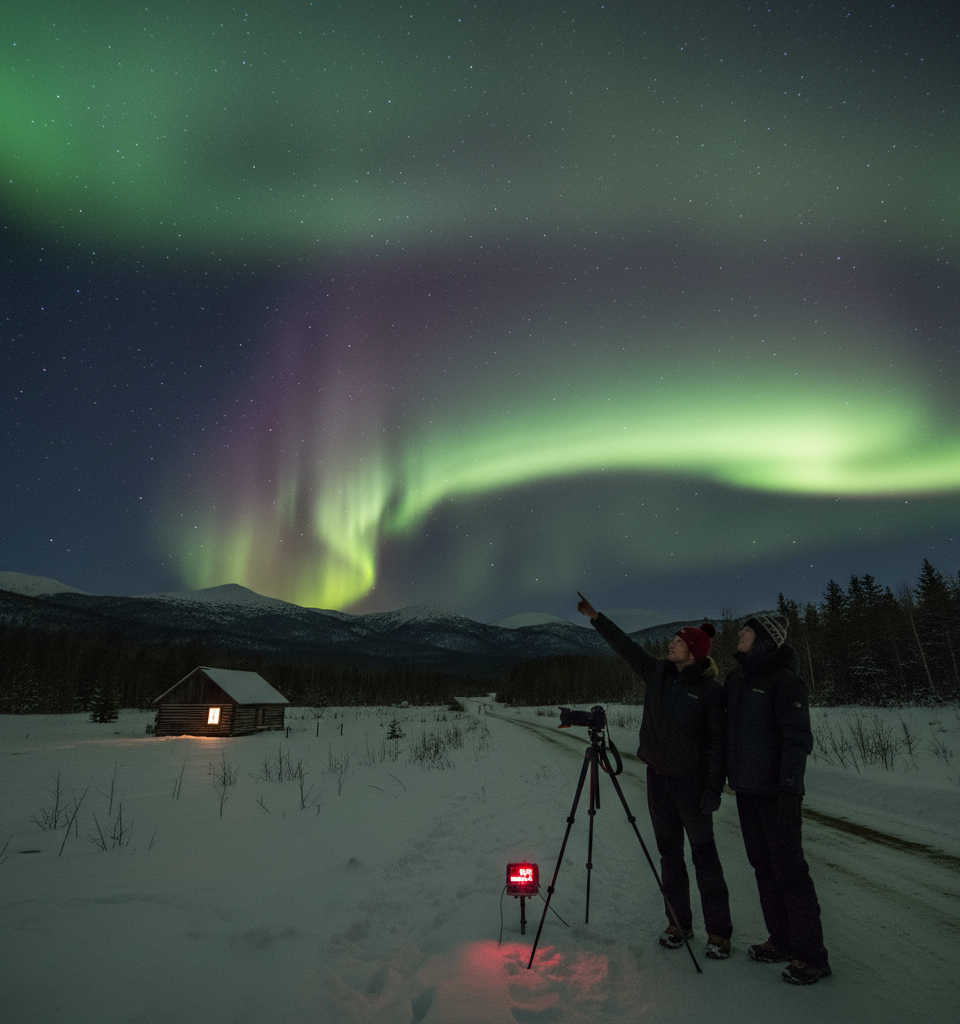
NEW YORK, NY — A G2-class moderate geomagnetic storm, triggered by a coronal mass ejection (CME) from the sun, has put large swathes of the northern United States on high alert for a potential sighting of the aurora borealis tonight. The National Oceanic and Atmospheric Administration's (NOAA) Space Weather Prediction Center (SWPC) issued the advisory, indicating that the celestial display could be visible significantly further south than usual, encompassing states from New York westward to Wisconsin and even Washington state. This rare event offers a unique opportunity for millions of residents to witness the ethereal glow of the Northern Lights, a phenomenon typically reserved for higher latitudes.
Unpacking the Science: How a Solar Storm Creates Earthly Spectacles
The aurora borealis occurs when energized particles from the sun collide with Earth's magnetic field and atmosphere. These particles, primarily electrons and protons, are channeled by the planet's magnetic field towards the poles, exciting atmospheric gases – primarily oxygen and nitrogen – which then emit light. The intensity and geographical reach of an auroral display are directly correlated with the strength of the geomagnetic storm. A G2 designation, while moderate, is significant enough to push the auroral oval equatorward, making it accessible to a broader audience. Such events are a reminder of the dynamic interplay between our sun and Earth, constantly shaping our planet's environment in visible and invisible ways.
Key Details and Viewing Prospects
The SWPC's forecast indicates that the geomagnetic storm reached its peak sometime late this afternoon or early evening, creating optimal conditions for nighttime viewing. For the best chance to witness the aurora, experts recommend moving away from urban light pollution to areas with dark, clear skies. Ideal viewing times are typically between 10 PM and 2 AM local time. Latitude plays a crucial role; observers in northern Maine, Michigan's Upper Peninsula, and northern Minnesota, for instance, have a higher probability of seeing brighter and more sustained displays. Photography enthusiasts are advised to use long-exposure settings to capture the often subtle colors, which can appear as greenish, pinkish, or even purplish hues to the naked eye. Social media platforms, particularly X (formerly Twitter) and Facebook, are abuzz with real-time updates and sighting reports, providing dynamic community-sourced intelligence for prospective viewers.
Economic and Tourism Impact of Celestial Events
While largely an astronomical event, strong aurora forecasts can have unexpected economic and tourism implications. Regions known for dark skies, even those not typically associated with aurora viewing, can experience a surge in interest. Local observatories and stargazing tour operators often report increased bookings and inquiries. Furthermore, the spectacle provides a natural boost for local economies through increased activity in hospitality sectors, from hotels to restaurants, as people travel to less populated areas for optimal viewing. This unexpected boon underscores the broader trend of astro-tourism, where unique celestial events drive significant interest and revenue.
Expert Insights: "A Truly Special Opportunity"
Dr. Elena Rodriguez, a prominent astrophysicist at the National Astronomical Society, emphasized the rarity of such widespread visibility. "A G2 storm extending visibility to a densely populated state like New York is truly special," Dr. Rodriguez stated in an interview. "While not a once-in-a-lifetime event, it's certainly not an annual occurrence. It highlights the power of solar activity and its tangible effects on our planet." She further advised patience and preparedness for potential viewers, noting that even under clear skies, the aurora can be fleeting. NOAA space weather forecasters continue to monitor solar wind conditions and update their models, providing crucial tactical information for both professional and amateur skywatchers.
Future Implications and Space Weather Monitoring
The recurrence of moderate geomagnetic storms like this underscores the ongoing importance of space weather monitoring. Beyond the visual spectacle, severe geomagnetic storms (G3 and above) can pose significant threats to infrastructure, including power grids, satellite communications, and GPS systems. The push for more robust space weather forecasting capabilities, fueled by events such as these, aims to provide earlier warnings and mitigate potential disruptions. Looking ahead, as the sun approaches the peak of its 11-year activity cycle, known as solar maximum, in the coming years, scientists anticipate an increase in both the frequency and intensity of solar flares and CMEs. This means the potential for more widespread auroral displays, and critically, a heightened need for preparedness against more severe space weather hazards, will continue to grow.