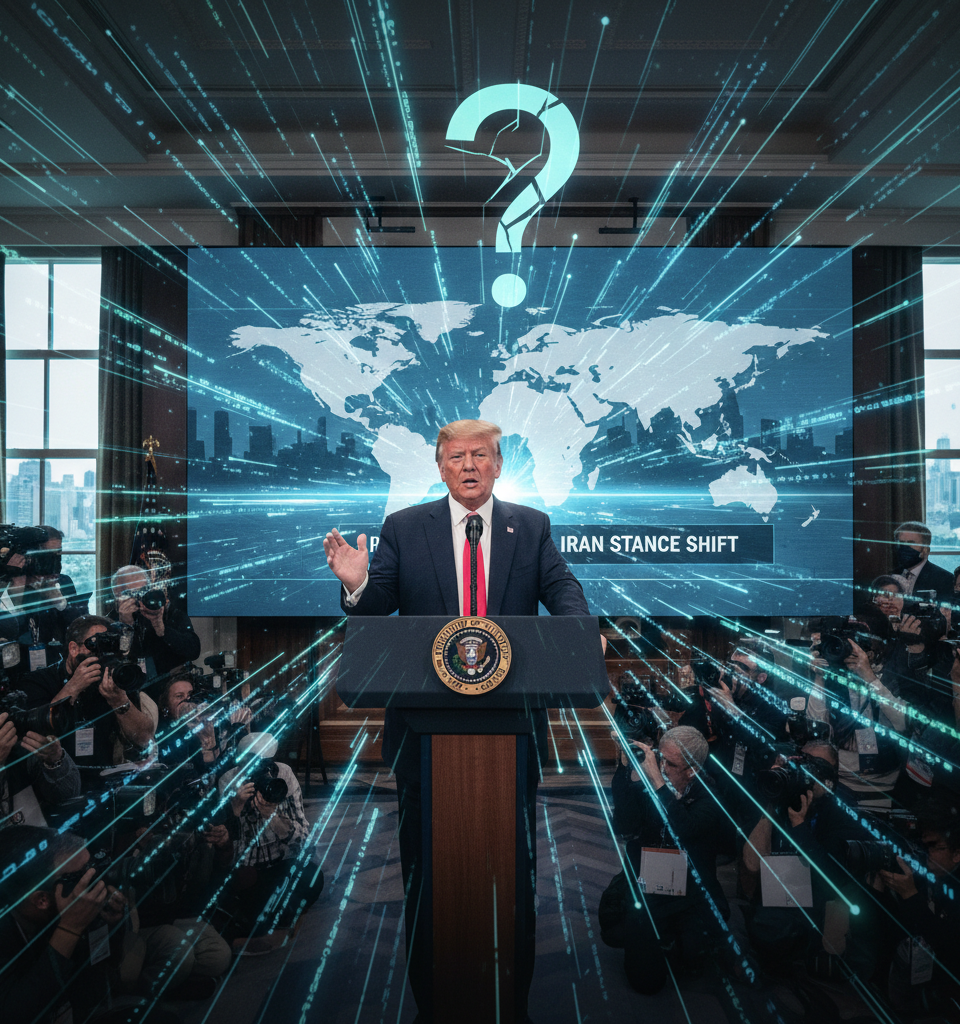
WASHINGTON D.C. – Former President Donald Trump has indicated a notable softening of his typically bellicose stance towards Iran, suggesting a potential recalibration of U.S. foreign policy in the Middle East. This strategic pivot, communicated through recent public statements, comes amidst burgeoning concerns within the artificial intelligence (AI) industry regarding its ethical foundations and regulatory future, a confluence of events signaling a period of significant reevaluation across geopolitical and technological landscapes.
This shift on Iran represents a departure from the "maximum pressure" campaign that characterized his administration's approach. While details remain fluid, the overtures suggest a potential pathway for renewed dialogue or a less confrontational posture, a development that could ripple through regional power dynamics and global energy markets. The timing is particularly noteworthy, given ongoing regional instabilities and the sensitive nature of nuclear non-proliferation efforts, rekindling hopes for diplomatic solutions in a historically volatile area.
In concurrent developments, the AI sector is bracing for what industry leaders and ethicists are labeling a fundamental "reckoning." This intensified scrutiny stems from a growing awareness of AI's societal implications, ranging from job displacement and algorithmic bias to issues of privacy and autonomous decision-making. Recent high-profile incidents involving AI-driven facial recognition controversies and the spread of deepfake technology have amplified calls for robust regulatory frameworks and ethical guidelines, pushing the industry to confront its responsibilities head-on.
The Geopolitical Chessboard: Trump's Iran Gambit
Trump's recent remarks, while not a complete policy reversal, have been interpreted by analysts as a strategic move to reduce immediate tensions. During a recent interview, he stated, "We don't want a war with Iran," a stark contrast to his earlier rhetoric. This subtle but significant shift is seen by some foreign policy experts as an acknowledgement of the complexities and potential costs of a direct confrontation, especially in an election year. The United States has maintained sanctions on Iran's oil exports, which have severely hampered its economy, reducing daily oil production from over 3.8 million barrels in 2018 to approximately 2.5 million barrels currently, according to OPEC data. Any de-escalation could potentially lead to a partial lifting of these sanctions, offering a lifeline to Iran's struggling economy and potentially stabilizing global oil prices.
AI's Existential Crisis: The Ethical Dilemma
The simultaneous "reckoning" in AI is driven by a confluence of rapid technological advancements and a belated realization of their profound societal impact. Industry giants, academics, and policymakers are grappling with questions of accountability, transparency, and fairness in algorithms. As AI increasingly permeates critical sectors like healthcare, finance, and defense, the potential for unintended consequences – from discriminatory lending practices to autonomous weapons systems – is drawing sharp criticism. A recent survey by the Pew Research Center found that 66% of Americans are more concerned than excited about the increasing use of AI, highlighting public apprehension.
Market Impact and Expert Perspectives
The potential easing of U.S.-Iran tensions could have a calming effect on global energy markets, potentially leading to a slight decrease in oil price volatility, which has seen Brent crude fluctuate widely between $75 and $90 per barrel in recent months. "Any signal of de-escalation from a major power inevitably provides a sigh of relief to commodity traders," noted Dr. Eleanor Vance, a geopolitical risk analyst at the Meridian Group. "However, the devil is in the details, and past rhetoric has often not translated into sustained policy shifts."
Conversely, the AI reckoning presents a different set of challenges and opportunities. Investor sentiment in the burgeoning AI market, which GlobalData projects to reach nearly $1 trillion by 2027, could be influenced by regulatory uncertainty. "The industry is at a crossroads," explained Dr. Alan Turing Jr., a prominent AI ethicist. "Either it proactively designs ethical guardrails and earns public trust, or it risks stifling innovation under a heavy hand of reactive regulation. Early movers in ethical AI development will likely gain a significant competitive advantage." He emphasizes the urgent need for clear guidelines, citing the potential for AI biases to exacerbate existing societal inequalities, which could cost industries billions in legal penalties and reputational damage.
The Great Pistachio Gamble: A Tangential Insight
Adding another layer of intrigue to the economic landscape is the fluctuating fate of global commodity markets, particularly illustrated by the "great pistachio gamble." Iran is a major global producer of pistachios, and sanctions have severely impacted its ability to export this valuable crop. A relaxation of tensions could reopen lucrative markets for Iranian pistachios, potentially disrupting current supply chains and impacting prices for producers in other countries, such as the United States. This niche market, while small in the grand scheme, symbolizes the broader economic ripple effects of geopolitical shifts, where billions of dollars in agricultural trade hang in the balance.
What Lies Ahead: Diplomacy, Regulation, and Innovation
The coming months will be critical on both fronts. On Iran, the test will be whether Trump's moderated tone translates into concrete diplomatic initiatives or merely serves as a tactical adjustment. The international community, particularly European allies, will be closely watching for signs of genuine engagement. For AI, the 'reckoning' demands concerted efforts from industry, academia, and governments to establish robust ethical frameworks and sensible regulatory policies. Organizations like the AI Ethics Institute are already drafting proposals for standardized audits of AI systems to ensure fairness and transparency. The success of these initiatives will determine not only the trajectory of a revolutionary technology but also its equitable integration into society, potentially preventing a future fraught with unintended consequences and ensuring its promise is realized responsibly for the benefit of all.