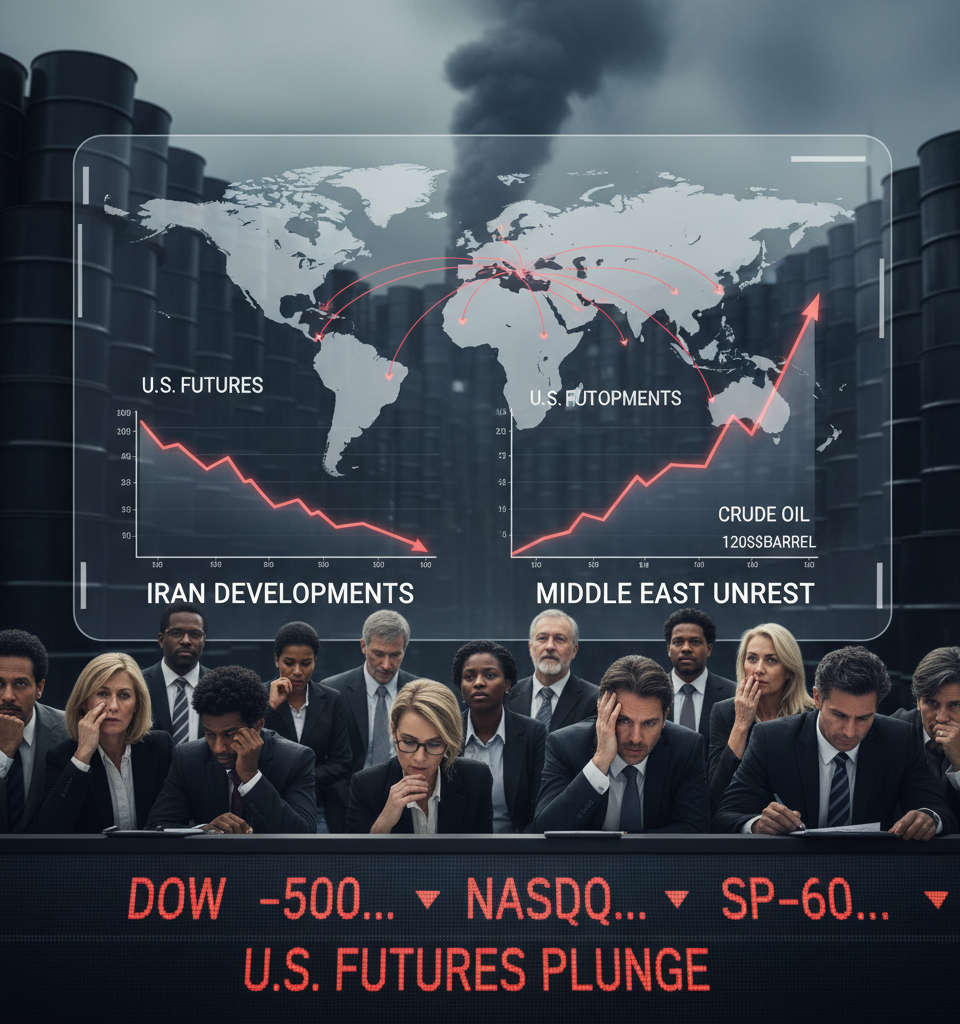
Geopolitical Tensions Rock Markets: U.S. Futures Plunge, Oil Surges on Iran Developments
Mike Murphy•April 19, 2026•4 min read
Key Takeaways
Read this first — then go as deep as you need.
Geopolitical Tensions Reignite Market Volatility: U.S. Futures Plunge, Oil Surges After Iran Developments New York, NY – April 14, 2024 – U.S. stock futures experienced a dramatic downturn early Sunday evening, signaling significant unease as markets prepared to open for the week, following a weekend of escalating geopolitical developments in the Middle East centered around Iran. The sharp reversal comes on the heels of a robust three-week rally that saw the S&P 500 index achieve new record highs, underscoring the immediate impact of international instability on investor sentiment. Concurrently, global crude oil benchmarks surged, reflecting fears of potential supply disruptions in the oil-rich region and effectively ending a period of relative calm in energy markets. This renewed market volatility plunges investors back into a familiar cycle of apprehension, undoing the optimism that had propelled equities forward. The geopolitical risk premium, largely dormant in recent weeks, has resurfaced with potent force. Historical precedents suggest that such events, particularly those involving major oil producers, can trigger significant market corrections and inflationary pressures, setting a challenging tone for the coming trading days and potentially weeks. The current situation echoes past episodes where Middle Eastern conflicts have sent ripples through global finance, reminding market participants of the fragile interconnectedness of economic and political stability. The immediate trigger for the market's anxious reaction was a series of reports detailing a direct missile and drone attack launched by Iran against Israel, in retaliation for an earlier strike on its consulate in Damascus. This unprecedented direct engagement has significantly escalated the regional conflict, raising fears of a broader war. As of 6:00 PM ET Sunday, S&P 500 futures were down over 1.2%, indicating a potential correction for Monday's open. Dow Jones Industrial Average futures saw a decline of approximately 1.0%, while Nasdaq 100 futures, often more sensitive to risk, tumbled by 1.5%. Simultaneously, Brent crude futures jumped over 3% to trade above $92 per barrel, and WTI crude futures mirrored this increase, surpassing $87 per barrel, the highest levels seen in over six months. Gold, a traditional safe-haven asset, also saw a notable uptick. The repercussions of these developments are poised to ripple across multiple sectors. Energy companies, particularly those involved in oil and gas exploration and production, may see temporary gains from higher crude prices, though sustained geopolitical instability could also disrupt operations. Conversely, sectors sensitive to consumer spending and inflationary pressures, such as retail and aviation, could face headwinds due to increased fuel costs and dampened economic confidence. Technology and growth stocks, which thrive in stable low-interest-rate environments, are particularly vulnerable to a flight to safety and potential rate hike expectations if inflation re-accelerates. The shipping and logistics industries are also closely monitoring the situation, given potential disruptions to crucial trade routes, particularly through the Strait of Hormuz. Market strategists and economists are quickly recalibrating their outlooks. "This incident throws a significant wrench into what was a relatively sanguine market narrative focused on corporate earnings and potential Fed rate cuts," noted Michael Jenkins, Chief Market Strategist at Global Investment Advisors. "Investors are now forced to price in a substantial geopolitical risk premium, which could translate into higher energy costs, supply chain bottlenecks, and a general tightening of financial conditions. The crucial question now is the extent of any retaliatory measures and whether the conflict can be contained, or if it spirals into a wider regional confrontation." Other experts highlight that central banks might face renewed pressure regarding their monetary policy decisions, with inflation concerns making rate cuts less likely in the short term. Looking ahead, market participants will be closely monitoring diplomatic efforts to de-escalate the conflict, as well as any official statements from the involved nations and global powers. The trajectory of oil prices will be a key indicator, with any further significant surges potentially signaling a more prolonged and severe disruption. Investors will also scrutinize corporate earnings reports, due in the coming weeks, for any revised guidance reflecting higher energy costs or supply chain challenges. Additionally, any intervention or coordinated action from major oil-producing nations, such as Saudi Arabia or the UAE, to stabilize supply could mitigate the upward pressure on crude benchmarks. The immediate financial landscape appears to be one of increased caution. The previous three-week rally, which saw the S&P 500 gain nearly 5%, was largely driven by robust corporate earnings and continued optimism about a soft economic landing. However, the events of the past weekend serve as a stark reminder that exogenous shocks, particularly geopolitical ones, can swiftly alter market trajectories. The coming days will test the resilience of the global financial system and investors' willingness to navigate what promises to be a challenging period of heightened uncertainty and potential volatility.
Discussion
Join the discussion
Sign in to leave a comment on this article.
Loading comments...
Enjoying this article?
Get more like it delivered to your inbox — free.
This article was compiled by GlobalSell News from publicly available reporting and has been edited for clarity and length. For full details, read the original source.