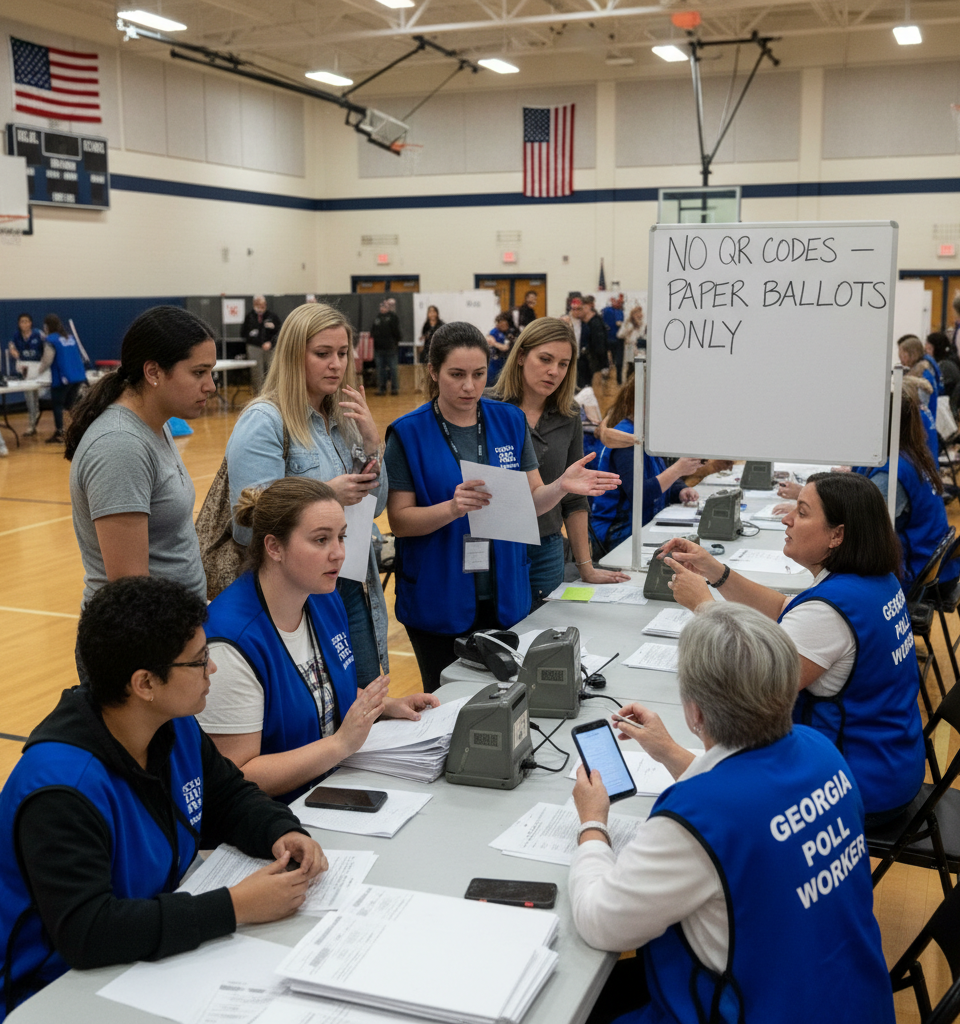
Georgia's electoral landscape is grappling with significant disarray on the eve of crucial midterm elections, following a contentious decision by state officials to prohibit the use of QR codes on ballots. This unexpected directive, reportedly influenced by the assertions of a figure known for propagating demonstrably false conspiracy theories, has thrown the state’s ballot counting procedures into limbo, generating significant anxiety among election administrators and the public alike.
Context and Origins of the Controversy
The ban stems largely from claims made by a prominent proponent of election falsehoods, who has historically advanced debunked conspiracy theories, including those concerning the September 11th attacks and the state of Israel. These assertions, despite lacking credible evidence, gained traction within certain political circles and ultimately contributed to the legislative push to eliminate QR codes. Historically, these codes have been an integral part of modern election security, serving as a machine-readable representation of a voter's selections, designed to speed up tabulation while maintaining a paper trail for audits.
Key Details and Operational Impact
The immediate aftermath of the ban has been characterized by practical chaos. Election officials across Georgia counties are now scrambling to reconfigure their ballot processing systems, many of which relied heavily on QR code scanning for efficient and accurate counting. The absence of these codes necessitates a return to more laborious, and potentially slower, manual verification processes or a rapid, costly overhaul of existing infrastructure. This logistical nightmare places an immense burden on understaffed and often underfunded local election offices, particularly with the truncated timeline leading up to the midterms. It is unclear at this juncture whether sufficient alternative mechanisms can be implemented effectively statewide without jeopardizing timely and accurate results.
Impact on Electoral Integrity and Public Trust
The broader implications extend beyond mere operational hurdles, directly impacting public confidence in the electoral process. The abrupt change, influenced by unsubstantiated claims, risks deepening partisan divisions and further eroding trust in election outcomes. Critics argue that such policy shifts, grounded in conspiracy rather than empirical evidence or best practices, undermine the very democratic principles they purport to protect. The potential for delays in vote tabulation, or worse, perceived irregularities due to these last-minute changes, could incite further accusations of malfeasance, regardless of the actual integrity of the count.
Expert Perspectives on Election Security
Election security experts widely condemn the decision, emphasizing that QR codes, when combined with robust auditing protocols like risk-limiting audits, enhance rather than compromise election integrity. Dr. Sarah Jenkins, a leading electoral systems analyst, stated, "Removing QR codes without a proven, equally efficient, and secure alternative is a step backward for election administration. These codes are part of a layered security approach, allowing for swift initial counts while the human-readable text on the ballot provides the canonical record for audits." She further noted that the claims against QR codes are scientifically baseless and distract from genuine security concerns such as physical ballot chain of custody or cybersecurity of voter registration databases.
The Path Forward and Lingering Uncertainty
As the midterm elections draw nearer, the state finds itself in an unenviable position. Election boards are working feverishly to revise protocols and train staff under immense pressure. The looming question remains: Will Georgia be able to successfully conduct a fair, efficient, and transparent election without the infrastructure it has relied upon? The legal landscape is also unsettled, with potential challenges emerging regarding the legality and practicality of the last-minute directive. The outcome of this chaotic period will undoubtedly shape future debates around election technology and policy, not just in Georgia, but potentially across the nation, as concerns about election integrity continue to be weaponized for political gain.