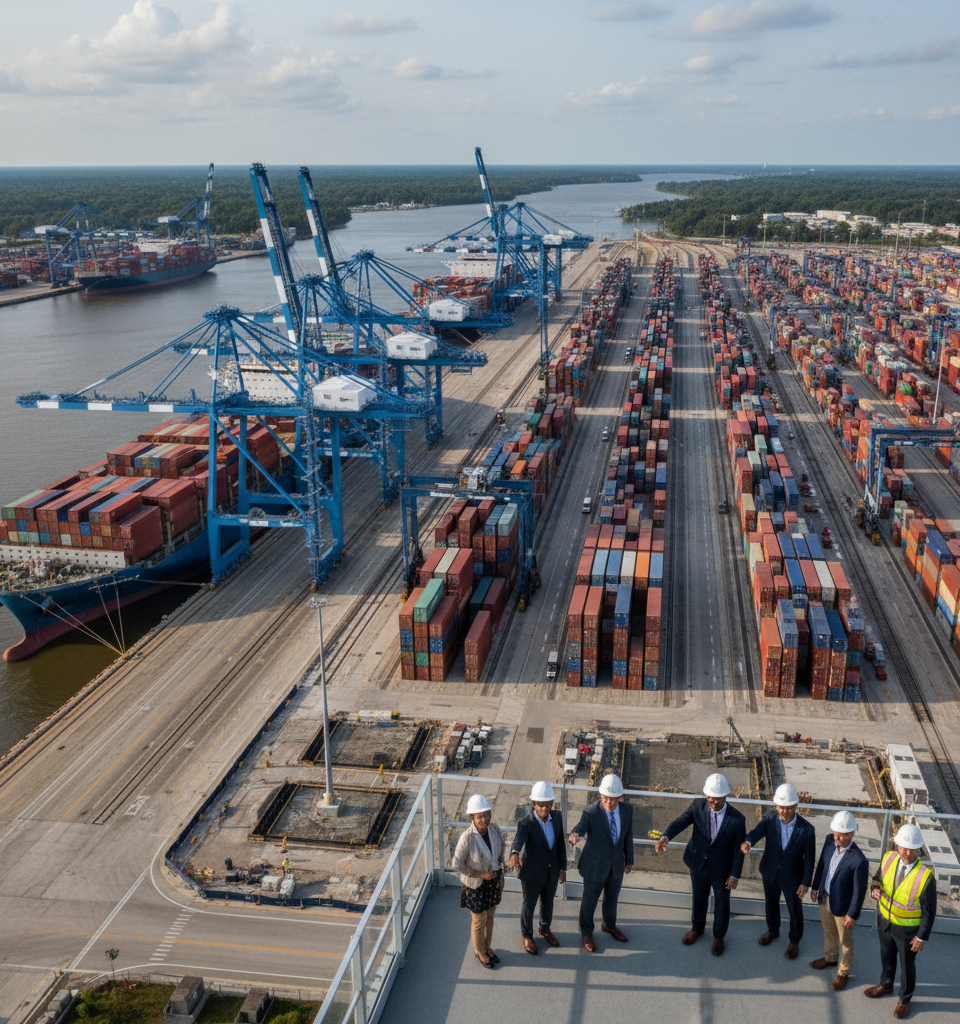
SAVANNAH, GA – The Georgia Ports Authority (GPA) recently unveiled an ambitious, multi-billion dollar investment strategy at its annual conference, outlining a comprehensive plan to significantly expand its infrastructure and operational capabilities. This bold initiative, encompassing projects totaling approximately $5 billion, signals a profound commitment to enhancing supply chain resilience and cementing Georgia’s role as a pivotal gateway for global commerce, directly responding to the persistent logistical challenges that have plagued international trade in recent years.
Context and Strategic Significance
The global supply chain has been under unprecedented stress, a consequence of geopolitical tensions, pandemic-induced disruptions, and changing consumer demands. The GPA's proactive investment comes at a crucial juncture, aiming to not only accommodate growth but also to build a more robust, efficient, and shock-resistant logistics network. Historically, ports have been economic engines, and this latest endeavor positions Georgia to capitalize on and lead a new era of trade, moving beyond reactive adaptations to proactive, long-term strategic enhancements. The scale of the investment underscores the recognition that current infrastructure is often insufficient to meet the dynamic needs of modern trade.
Key Investments and Operational Enhancements
Central to the GPA’s strategy are substantial upgrades to both its deepwater ports and inland rail facilities. S. Key projects involve increasing berth capacity, adding new ship-to-shore cranes capable of servicing ultra-large container vessels, and expanding on-dock rail capabilities.
Specifically, the Mason Mega Rail Terminal, already the largest on-dock intermodal rail facility in North America, is slated for further enhancements to improve fluidity and reach. There will also be a pronounced focus on increasing warehousing and distribution space within the port’s immediate vicinity, with plans to add more than two million square feet of space over the next several years. These investments are projected to increase the port's annual container capacity from 6 million to 10 million TEUs (Twenty-foot Equivalent Units) per year.
Broader Industry and Economic Impact
This colossal investment is poised to have far-reaching implications for the logistics and transportation industries globally. By enhancing capacity and efficiency, the GPA aims to reduce vessel wait times, accelerate cargo movement, and offer more reliable service to shippers and carriers. This will not only attract more trade volume to Georgia but also alleviate pressure on other congested ports. Economically, the expansion is expected to generate tens of thousands of direct and indirect jobs across the state, from construction and port operations to warehousing and trucking. The improved logistical flow will also benefit manufacturers and retailers by reducing transportation costs and lead times, contributing to a more stable and predictable supply chain environment crucial for business planning and consumer satisfaction.
Expert Perspectives on Future Logistics
Industry analysts view the GPA’s strategic outlay as a necessary and forward-thinking response to evolving market demands. Dr. S.
” Supply chain experts highlight that the shift towards larger vessels and the increasing complexity of international trade necessitate integrated landside and waterside improvements. They emphasize that such investments are not just about handling more cargo, but about creating resilient systems that can withstand future shocks, whether from economic downturns, natural disasters, or geopolitical shifts. The emphasis on intermodal rail, in particular, is lauded as a crucial step towards reducing truck dependence and achieving greater environmental sustainability in freight transport.
The Road Ahead: Future Developments and Challenges
Looking ahead, the GPA's multi-year investment plan will unfold in phases, with significant projects scheduled for completion over the next five to eight years. While the vision is clear, challenges remain, including securing consistent funding, managing environmental impact, and adapting to technological advancements such as automation and artificial intelligence in port operations. The Authority is actively collaborating with federal, state, and local partners to navigate these complexities. The long-term goal is to establish Georgia as the preeminent logistics hub on the U.S. East Coast, capable of handling surges in demand, diversifying trade partners, and offering unparalleled efficiency and reliability to a global clientele. This ambitious undertaking signifies a clear blueprint for how major port authorities are adapting to and shaping the future of global supply chain logistics.