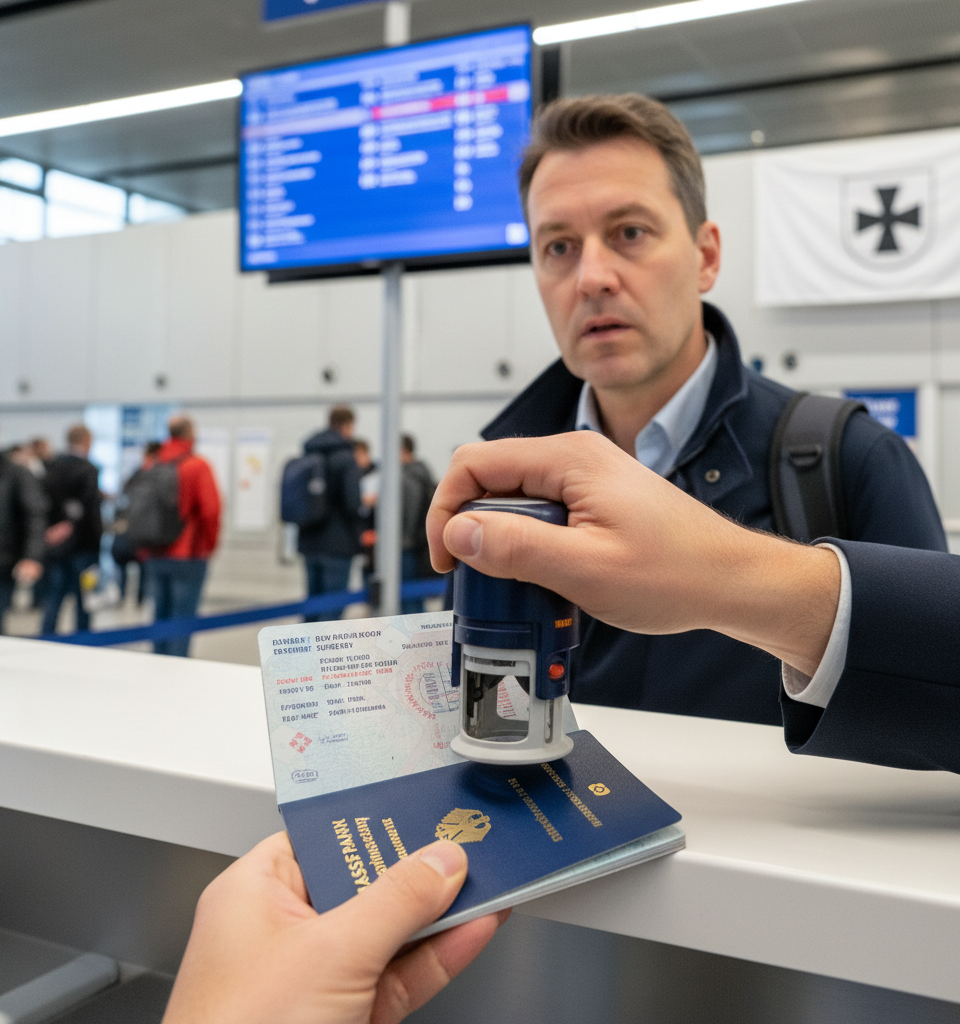
Berlin, Germany – German men under the age of 45 embarking on extended stays abroad may soon find themselves navigating a little-known legal requirement: obtaining explicit approval from the nation's military authorities. This regulatory provision, quietly existing within German law, mandates that individuals subject to military service notify and potentially seek permission from the Bundeswehr for travels exceeding a certain duration, raising questions about individual freedoms, state oversight, and the practicalities of its enforcement. The revelation comes amidst ongoing discussions about Germany's defense posture and citizen responsibilities in a period of heightened geopolitical instability across Europe.
Historical Context and Modern-Day Relevance
The roots of this regulation stem from Germany's foundational principles of national defense, particularly post-World War II, where a robust system of conscription was established. Although compulsory military service was officially suspended in 2011, the legal framework governing male citizens' obligations to the Bundeswehr, particularly in crisis scenarios, largely remains intact. This includes provisions relating to their availability for service, even if only in a theoretical capacity. The current spotlight on this clause underscores Germany's re-evaluation of its defense capabilities following Russia's invasion of Ukraine, prompting renewed discussions about civilian defense and the potential for reintroducing some form of national service.
Ambiguity and Enforcement Challenges
The central challenge surrounding this regulation lies in its enforcement. While the law clearly states that travel approvals "must generally be granted," it offers little clarity on how breaches would be identified or penalized. Unlike countries with strict exit controls linked to military service, Germany does not have a customs apparatus actively screening for such approvals. Critics argue that without a clear mechanism for enforcement, the rule risks becoming either largely ignored or selectively applied, creating an uneven playing field. Legal experts point to the difficulty of proving intent to evade service through long-term travel, further complicating potential prosecutions. The average length of time triggering this approval requirement is typically understood to be three months or more, though precise official guidelines on this specific travel clause remain somewhat opaque to the general public.
Impact on International Mobility and Business
Should this provision be more rigorously enforced, its implications for a globally integrated German economy and its highly mobile workforce could be significant. Industries reliant on international assignments, such as technology, finance, and engineering, could face administrative hurdles when deploying male employees under 45 for extended periods. Start-ups and young professionals increasingly seeking international experience or establishing businesses abroad could also encounter unexpected bureaucratic obstacles. While the explicit intention is not to impede legitimate international engagement, the added layer of approval could introduce delays and disincentives, potentially impacting Germany's competitiveness in attracting and retaining talent.
Expert Perspectives on Legality and Practicality
Legal scholars and defense analysts offer mixed views on the efficacy and future of this regulation. Dr. Hans-Georg Vester, a constitutional law expert at the University of Bonn, suggests, "While the legal basis for such a requirement is rooted in established military service laws, its practical implementation in a modern, open society poses considerable challenges. The state must balance national security interests with individual freedoms without creating an overly burdensome bureaucracy." Conversely, some defense strategists argue that even symbolic measures indicating citizen availability for national service are crucial in fostering a robust defense posture, particularly in times of heightened uncertainty. They contend that the mere existence of such laws serves as a reminder of civic duty, even if direct enforcement is rare.
Future Implications and Potential Policy Shifts
The renewed attention to this clause could precipitate several outcomes. It might lead to a formal clarification or update of the military service law, potentially detailing specific exemptions or outlining a more transparent approval process. Alternatively, the debate could fuel calls for a broader overhaul of Germany's national service framework, potentially exploring alternative models or even a partial reintroduction of compulsory service for both men and women, albeit in a reformed capacity. The federal government, under significant pressure to bolster its defense capabilities and personnel, will likely need to address the ambiguities surrounding this law to avoid confusion and potential legal challenges, especially as discussions around the Zeitenwende (turning point) in German foreign and security policy deepen. Any significant change would require extensive parliamentary debate and public consultation, reflecting the deep-seated societal values attached to military service and individual liberty in Germany.
Public Reaction and Political Discourse
Initial public reaction to the spotlight on this regulation has been varied. Many younger Germans, accustomed to an era without compulsory military service, express surprise and concern, viewing it as an infringement on their freedom of movement. Older generations, who lived through periods of mandatory service, tend to view it with less alarm, often interpreting it as a vestige of necessary state preparedness. Political parties are also beginning to weigh in, with some left-leaning factions calling for clarity and safeguarding individual rights, while conservative groups emphasize the importance of national defense obligations. This discourse highlights the ongoing tension between individual liberties and collective security in contemporary Germany.