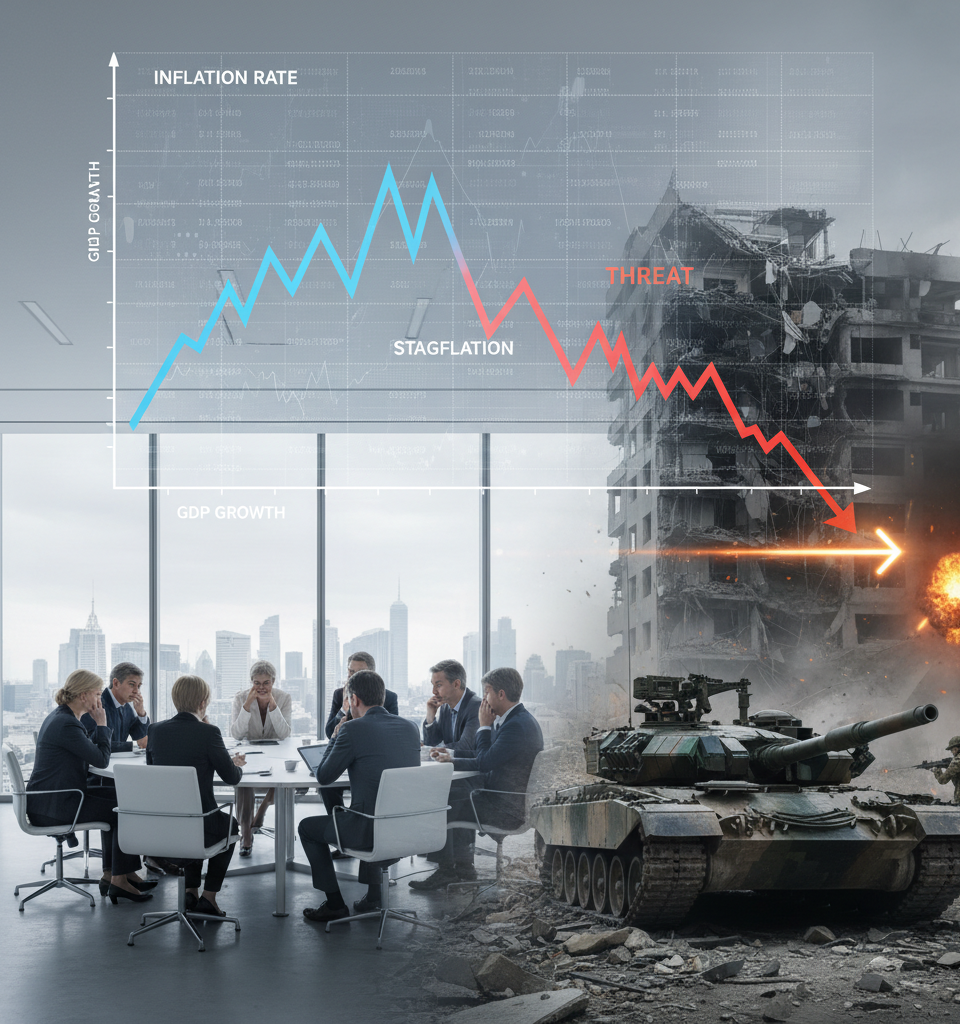
The ongoing geopolitical conflict in Eastern Europe has cast a dark shadow over the global economic outlook, prompting urgent warnings from international financial institutions about the re-emergence of stagflationary pressures. As of, economists and policymakers are grappling with the potent combination of soaring commodity prices, particularly energy and food, alongside disrupted supply chains and a deteriorating growth forecast. This perilous confluence threatens to usher in a period of high inflation coupled with subdued economic expansion, a scenario not seen with such severity since the oil crises of the 1970s.
The Echoes of the 1970s: A Historical Parallel
The specter of stagflation, characterized by slow economic growth, high unemployment, and rising prices, is a historical trauma for many economies. The 1970s witnessed a similar phenomenon, largely triggered by oil price shocks and expansive monetary policies. Today's crisis shares striking parallels, with the conflict in Ukraine directly impacting global energy markets, crude oil prices spiking by over 20% since the invasion, and natural gas prices in Europe reaching record highs. Furthermore, both Russia and Ukraine are major exporters of critical agricultural commodities, including wheat and sunflower oil, whose supply disruptions are fueling food price inflation globally and threatening food security in vulnerable nations. The current landscape is further complicated by pre-existing inflationary pressures stemming from pandemic-related supply chain bottlenecks and significant fiscal stimulus measures by various governments.
Key Indicators and Expert Projections
Recent data underscores the escalating threat. The International Monetary Fund (IMF) revised down its global growth forecast for 2022 by nearly a full percentage point to 3.6%, citing the war's impact. Simultaneously, the IMF projected global inflation to remain elevated, reaching 7.7% in advanced economies and 8.7% in emerging markets and developing countries this year. The European Central Bank (ECB) has also adjusted its inflation outlook upwards, with some analysts now predicting Eurozone inflation could surpass 8% in the coming months. "We are in uncharted territory," remarked Kristalina Georgieva, Managing Director of the IMF, during a recent press briefing, emphasizing the unprecedented nature of current shocks layered over existing vulnerabilities. "The longer the war continues, the greater the risks of fragmentation for the global economy."
Broad-Based Industry and Market Impact
The ripple effects of this renewed stagflation concern are being felt across virtually all sectors. Energy-intensive industries, from manufacturing to transportation, are facing significantly higher operational costs, squeezing profit margins and potentially leading to reduced investment. Consumers are bearing the brunt of rising costs through higher prices at the pump and grocery stores, impacting discretionary spending and overall demand. Financial markets are exhibiting heightened volatility, with equity markets experiencing significant corrections and investors flocking to safe-haven assets. Emerging markets, already burdened by debt and reliant on commodity imports, are particularly vulnerable to capital outflows and currency depreciation.
Diverging Expert Opinions on Policy Response
Economists and central bankers are divided on the optimal policy response. Some argue for aggressive monetary tightening to tame inflation, even at the risk of further slowing growth. Federal Reserve Chair Jerome Powell recently indicated a willingness to raise interest rates more forcefully if necessary. Others caution against over-tightening, fearing it could tip already fragile economies into recession. "Central banks face a cruel dilemma," stated Dr. Carmen Reinhart, former Chief Economist at the World Bank. "Curbing inflation requires hiking rates, but that exacerbates the growth slowdown. There's no easy way out." Fiscal policy also plays a critical role, with governments pressured to implement measures that cushion the blow for consumers without exacerbating inflationary pressures or debt burdens.
The Unfolding Future: Geopolitical Stability and Strategic Shifts
The future trajectory of the global economy hinges significantly on the duration and intensity of the conflict in Ukraine, alongside the effectiveness of international policy responses. Potential implications include a fundamental reorientation of global energy supplies, with Europe accelerating its transition away from Russian hydrocarbons and investing heavily in renewable energy. Food security will remain a critical global concern, potentially spurring greater investment in agricultural resilience and diversified sourcing. Geopolitical realignments may lead to regionalized supply chains, unwinding some aspects of globalization. For businesses, strategies focusing on supply chain diversification, energy efficiency, and hedging against commodity price volatility will become paramount to navigating this complex and uncertain economic landscape. The coming months will be crucial in determining whether the world can avert a full-blown stagflationary crisis or if economies are plunged into a prolonged period of economic malaise.