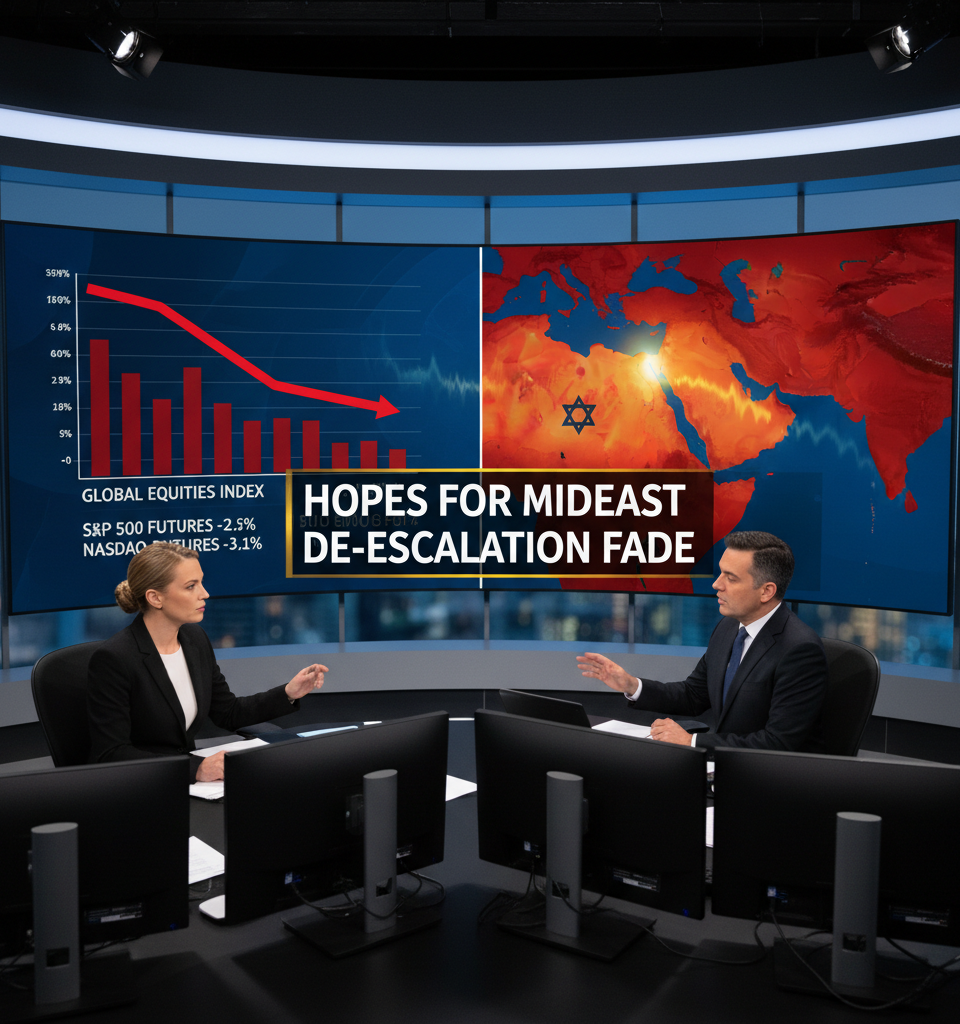
Geopolitical Undercurrents Shape Market Sentiment
This latest market reaction follows a week of heightened anxiety in the Middle East, primarily stemming from reported Israeli retaliatory actions against Iran after an unprecedented Iranian drone and missile attack on April 13. While initial reports hinted at a measured response designed to avoid widespread conflict, subsequent analyses and a lack of clear communication from involved parties have led many investors to conclude that the path to de-escalation is far more precarious than initially hoped. Volatility has become the defining characteristic of capital markets, as traders grapple with the unpredictability of geopolitical events that could significantly disrupt global supply chains, particularly oil.
Key Indicators Reflect Investor Apprehension As of 7:00 AM ET, S&P 500 futures were down 1.2%, suggesting a potential open below the critical 5,000-point psychological benchmark. Nasdaq 100 futures, often more sensitive to geopolitical shocks due to its growth-oriented constituents, saw a steeper decline of 1.5%. Dow Jones Industrial
Average futures were also in the red, dipping by approximately 0.9%. This widespread selling pressure was not confined to the U.S.; Asian markets closed sharply lower, with Japan's Nikkei 225 down over 3% and Hong Kong's Hang Seng Index declining by more than 2%. European bourses also opened with significant losses, underscoring the global nature of the current risk aversion.
Broader Market Implications: Energy and Safe Havens
The immediate impact of these rising tensions is most acutely felt in the energy sector. Crude oil prices, a bellwether for geopolitical strife in the Middle East, surged significantly, with Brent Crude futures briefly topping $90 per barrel before paring some gains. This spike poses a renewed threat of inflationary pressures on global economies already grappling with persistent price increases. Concurrently, traditional safe-haven assets benefited from the flight to safety. Gold prices continued their ascent, trading above $2,380 an ounce, while the U.S. dollar strengthened against a basket of major currencies. U.S. Treasury yields, however, saw a slight dip as bond prices rose, reflecting increased demand for government debt as a sanctuary for capital.
Expert Analysis: A Precarious Balance
Market analysts are largely in agreement that the current environment demands caution. "The market is effectively repricing the risk of a broader regional conflict," commented Dr. Evelyn Reed, Chief Global Strategist at Zenith Capital. "What we're seeing today is a realization that a swift return to a pre-escalation status quo is unlikely. The premium on geopolitical risk is now firmly embedded in asset prices, and until there's clear evidence of genuine de-escalation, volatility will remain elevated." She added that while the immediate focus is on the Middle East, investors are also wary of the potential for these tensions to exacerbate existing economic fragilities in other regions.
The Path Forward: Monitoring Geopolitical Developments Closely
Looking ahead, markets will be hypersensitive to any official communications or observable actions from key players in the Middle East. Any signs of de-escalation or, conversely, further escalation will likely trigger immediate and significant market responses. Beyond the geopolitical sphere, investors will also be closely watching upcoming economic data, particularly inflation reports and central bank commentary, to gauge how these external shocks might influence monetary policy decisions in major economies. Corporations preparing for earnings season will also face heightened scrutiny regarding their outlooks and potential sensitivities to rising energy costs and supply chain disruptions. The coming weeks are set to test the resilience of global financial markets amidst an increasingly complex geopolitical landscape.