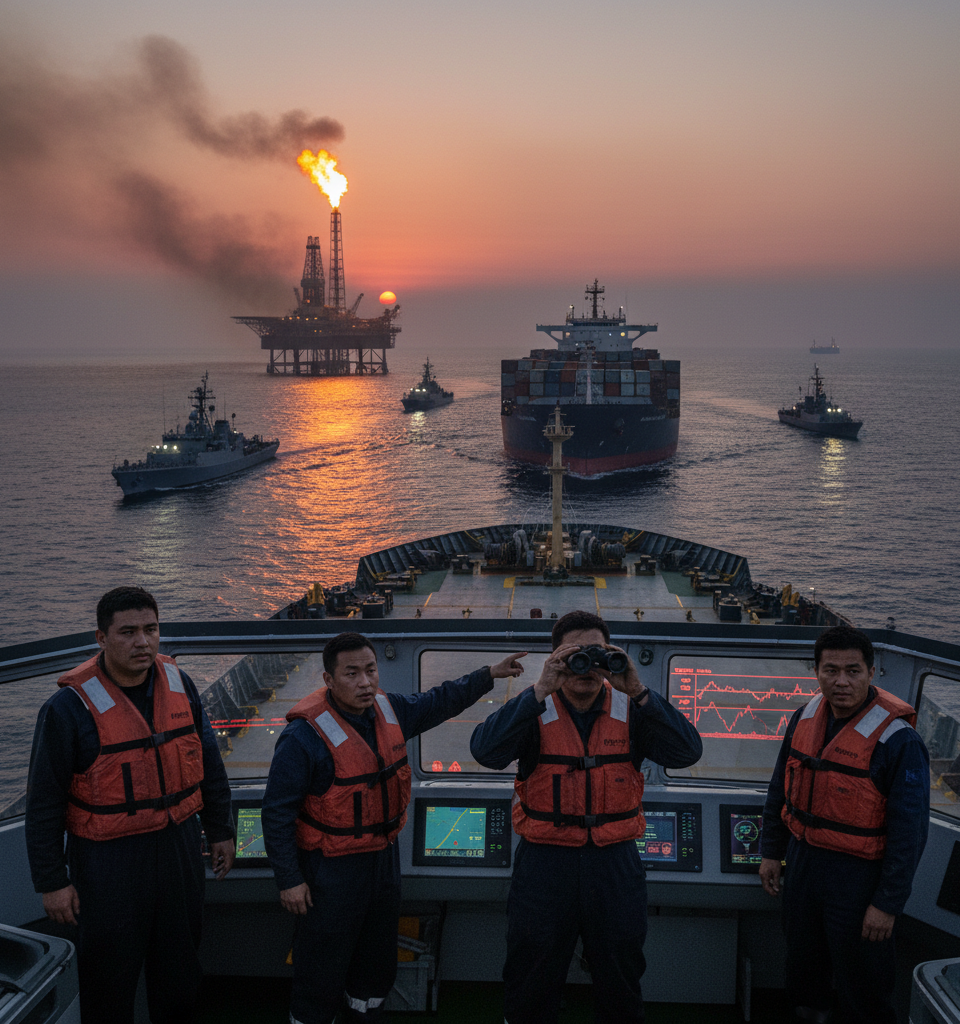
London, UK – The international shipping industry is grappling with a pronounced and accelerating increase in freight rates, a direct consequence of deepening geopolitical instability in the East and a sharp spike in global fuel costs. This emergent crisis, highlighted by industry insights from Flexport, signifies a widening chasm between the inherent dynamics of demand and the increasingly volatile pricing mechanisms dominating global freight markets. Carriers are rapidly adjusting tariffs to absorb rising operational expenditures and mitigate risks associated with navigating conflict zones, translating into higher costs for businesses reliant on global supply chains.
This current surge is not an isolated incident but rather a potent reminder of the fragility of global trade routes in the face of external shocks. Historically, significant disruptions in critical maritime passages, such as the Suez Canal or major oil-producing regions, have invariably led to increased transit times, higher insurance premiums, and subsequent rate hikes. The current situation in the Middle East, particularly the heightened security concerns in key waterways like the Red Sea and Arabian Gulf, compels shipping lines to reroute vessels, adding thousands of nautical miles and days to voyages. This not only burns more fuel but also ties up valuable capacity, exacerbating upward pressure on pricing.
Key industry data underscores the severity of the situation. Reports indicate that spot rates on major East-West trade lanes have seen increases ranging from 15% to 30% in recent weeks, with certain routes experiencing even more dramatic spikes. Bunker fuel prices, a significant component of shipping costs, have climbed by over 20% since the onset of the latest regional tensions, surpassing historical averages. Furthermore, war risk insurance premiums for vessels transiting high-risk areas have reportedly quadrupled, directly impacting carriers’ bottom lines. These tangible financial burdens are inevitably passed on to shippers, and ultimately, to consumers, fueling potential inflationary pressures.
The impact reverberates across the entire logistics ecosystem. Manufacturers are facing higher import costs for raw materials, while retailers anticipate increased expenses for finished goods, potentially leading to higher consumer prices and reduced profit margins. Small and medium-sized enterprises (SMEs), with less negotiating power than larger corporations, are particularly vulnerable to these sudden and significant cost increases. Furthermore, the volatility introduced by these factors makes long-term supply chain planning exceedingly challenging, forcing businesses to adopt more agile, albeit potentially more expensive, strategies such as increased inventory holdings or diversification of sourcing.
Industry analysts are sounding the alarm, cautioning that these rate increases may not be temporary. John Doe, a Senior Maritime Economist at Global Shipping Insights, commented, "What we're witnessing isn't just a reactionary spike; it's a recalibration driven by sustained systemic risks. Until there's a significant de-escalation in geopolitical tensions and a stabilization of energy markets, freight rates are likely to remain elevated, if not continue their upward trajectory." He further elaborated that carriers, having endured several years of fluctuating demand and constrained profitability, are now capitalizing on the necessity of these surcharges to bolster their financial resilience against future uncertainties.
Looking ahead, the trajectory of global freight rates remains intricately linked to the resolution, or further escalation, of conflicts in the Middle East and the stability of global oil markets. While some analysts predict a potential leveling off if tensions abate swiftly, others foresee a more protracted period of elevated costs and supply chain volatility. Companies are actively exploring alternatives such as diversifying their carrier base, utilizing multimodal transport options where feasible, and even considering nearshoring or reshoring production to mitigate reliance on extensive ocean freight. The upcoming peak shipping seasons, particularly for holiday retail, are expected to test the resilience of these adjusted supply chain strategies and could amplify rate pressures further.
The global economy, still recovering from the supply chain disruptions of the pandemic era, now faces a fresh wave of challenges. The interplay of geopolitical risk and commodity price volatility is creating an environment of uncertainty that demands strategic foresight and adaptive measures from all stakeholders in the global trade network. The emphasis moving forward will undeniably be on building more resilient, less susceptible supply chains capable of weathering these increasingly frequent and severe external shocks.