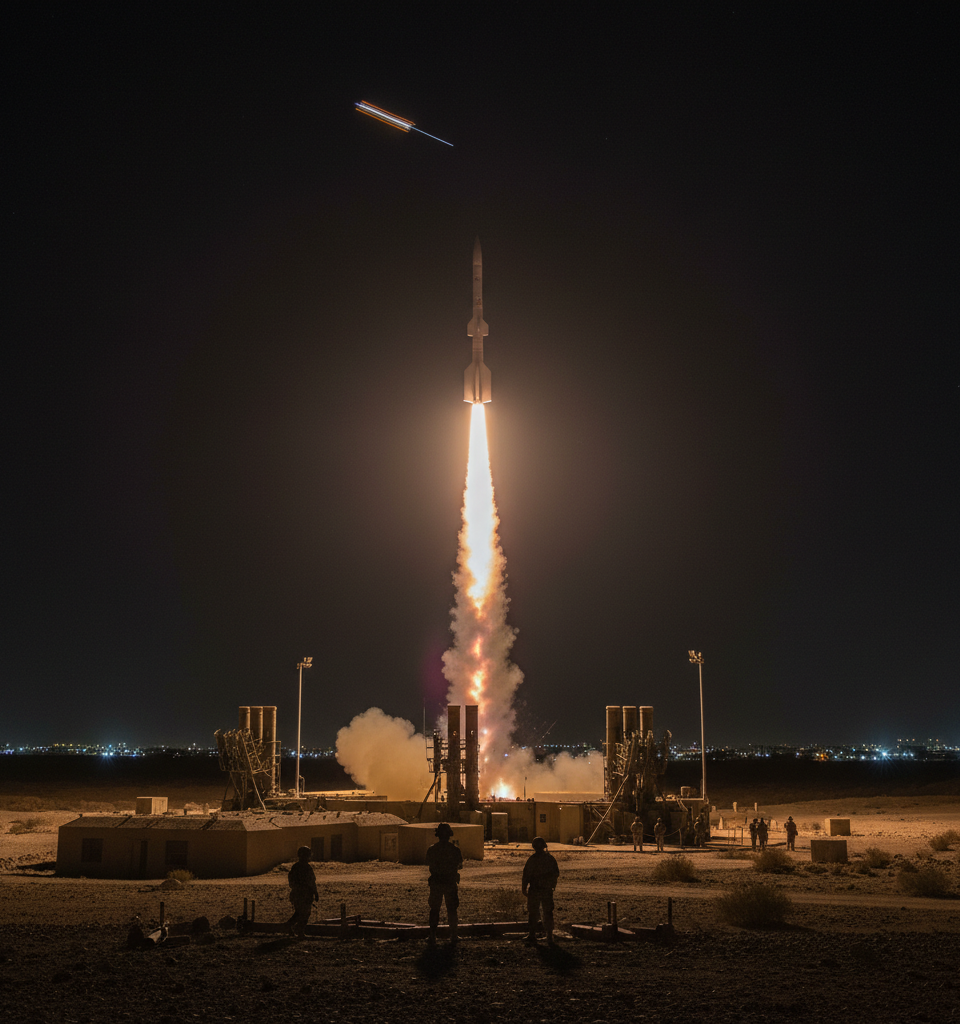
Around the globe, defense ministries and military strategists are confronting a stark reality: the indispensable interceptor missiles, cornerstone of modern air defense systems from the Iron Dome to Patriot batteries, are in dangerously diminishing supply. This critical shortage, spotlighted by their high consumption in recent conflicts across Ukraine, the Middle East, and other flashpoints, poses a severe challenge to national security and global stability. The escalating demand, coupled with slow production capacities, has created a strategic vulnerability that military leaders warn could have dire consequences, forcing difficult prioritization decisions regarding precious assets.
The Unprecedented Era of Air Warfare
The contemporary battlefield has redefined the role of air defense, elevating interceptor missiles from niche capabilities to frontline necessities. The proliferation of affordable drones, cruise missiles, and ballistic projectiles by state and non-state actors has necessitated an unprecedented expenditure of these advanced defensive armaments. Historically used sparingly, these systems are now engaged almost daily, demonstrating their effectiveness in protecting civilian populations and critical infrastructure but simultaneously exposing the finite nature of existing stockpiles. The cost-exchange ratio often favors the attacker, with a multi-million-dollar interceptor missile frequently utilized to down a far less expensive drone.
Mounting Pressure on a Strained Supply Chain
The scarcity is palpable across various alliances and nations. For instance, the United States has reportedly transferred hundreds of Patriot interceptor missiles, each costing approximately $3 million, to allies and partners, thereby reducing its own readiness levels. European nations, many of whom have also supplied weapons to Ukraine, are experiencing similar strains. Data from the Stockholm International Peace Research Institute (SIPRI) indicates a significant increase in orders for air defense systems, yet lead times for new interceptor production can extend to 24-36 months due to complex manufacturing processes, reliance on specialized components, and limited production lines. Raytheon Technologies, a major manufacturer of Patriot missiles, has acknowledged efforts to increase production but faces significant hurdles in scaling up rapidly.
Geopolitical Ramifications and Industry Impact
The dwindling supply has profound geopolitical implications, influencing strategic decisions and alliance commitments. Nations with robust air defense capabilities may be hesitant to share resources if their own security is perceived to be at risk. This exacerbates tensions in volatile regions, potentially emboldening adversaries. For the defense industry, while demand is soaring, the bottleneck lies in expanding manufacturing capacity. Companies like RTX (formerly Raytheon) and Lockheed Martin are investing in new facilities and workforce training, but these are long-term solutions. The current crisis highlights the need for a more resilient and adaptable defense industrial base capable of rapid surge production in times of crisis.
Expert Warnings on Strategic Vulnerability
Defense analysts and military experts are issuing stern warnings. Dr. Evelyn Farkas, a former Deputy Assistant Secretary of Defense for Russia, Ukraine, and Eurasia, has emphasized that “failing to replenish these critical defense assets leaves nations dangerously exposed.” General Mark Milley, former Chairman of the Joint Chiefs of Staff, has repeatedly stressed the importance of air defense in modern warfare, noting that “the skies are a battleground, and those who control them will dictate the pace and outcome of conflicts.” Experts advocate for a multi-pronged approach, including diversifying suppliers, investing in cheaper, more scalable interceptor technologies, and exploring non-kinetic air defense alternatives like directed energy weapons.
The Path Forward: Innovation and Industrial Mobilization
Looking ahead, the imperative is clear: a concerted international effort is required to address this deficit. This includes sustained, multi-year government contracts to provide predictability for manufacturers, investment in advanced manufacturing techniques like additive manufacturing, and fostering innovation in counter-drone and missile technologies that are more cost-effective. Research and development into alternative air defense solutions, such as high-energy lasers and electronic warfare systems, are gaining traction as potential supplements to conventional interceptors. While these technologies are still maturing, their integration into layered air defense architectures could offer a sustainable path to mitigating future shortages and maintaining a credible deterrent against increasingly sophisticated aerial threats.