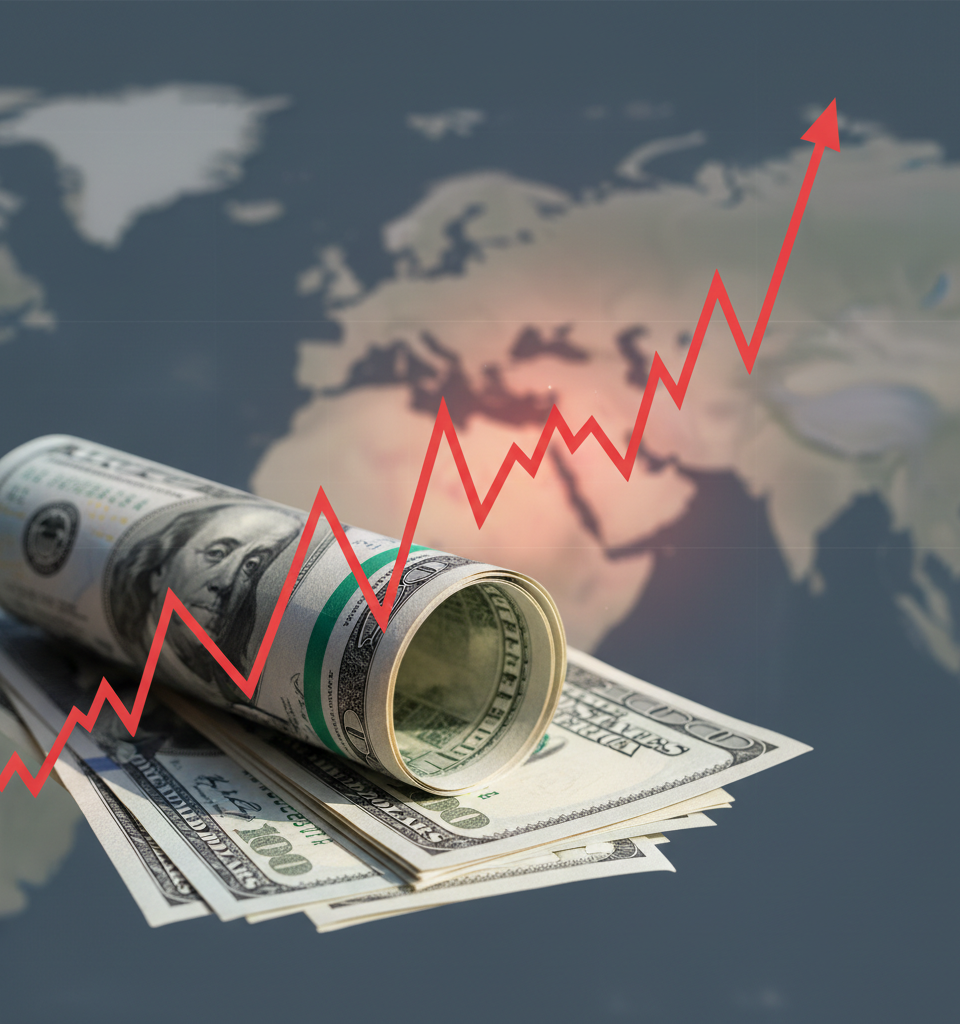
London, UK – April 16, 2024 – The United States Dollar held firm against a basket of leading currencies on Tuesday, its traditional safe-haven appeal reinforced by mounting anxieties over the deepening military confrontation between Iran and Israel. Global financial markets reacted cautiously to the weekend's events, which saw Iran launch an unprecedented drone and missile attack on Israel, prompting fears of a broader regional conflict and driving investors toward perceived stable assets like the dollar and US Treasuries.
This latest geopolitical tremor injects significant uncertainty into an already volatile global economic landscape. The Middle East, a crucial artery for global energy supplies, has been on high alert since the October 7th attacks. The direct engagement between Iran and Israel marks a perilous escalation, threatening to disrupt oil flows, trigger refugee crises, and potentially draw in other regional and international powers. Such instability historically prompts capital flight from riskier assets and emerging markets into the perceived safety of US-denominated instruments, bolstering the dollar's value.
Key indicators underscored the market's unease. The Dollar Index (DXY), which measures the greenback against six major peers, hovered near its highest levels in five months, trading around 106.2. Against the Japanese Yen, another traditional safe-haven, the dollar extended its gains, approaching the 154.50 mark, prompting renewed speculation of potential intervention from Japanese authorities. Oil futures also saw an uptick, with Brent crude briefly topping $90 a barrel in early trading, reflecting concerns over supply chain disruptions in the Strait of Hormuz, a critical chokepoint for global oil shipments. Gold, another safe-haven asset, also continued its ascent, pushing towards new record highs.
Beyond direct military implications, the escalating conflict carries significant economic ramifications. A sustained period of high oil prices, driven by geopolitical risk, could reignite inflationary pressures globally, complicating central banks' efforts to tame inflation and potentially pushing back anticipated interest rate cuts. Furthermore, increased uncertainty discourages foreign direct investment and could lead to a slowdown in global trade, impacting economies heavily reliant on exports. Emerging markets, burdened by dollar-denominated debt, face the dual challenge of a stronger dollar making their repayments more expensive and a potential outflow of capital.
Expert analysis largely aligns with the view that the dollar's strength is a direct function of risk aversion. "When geopolitical tensions rise to this degree, the dollar is often the first port of call for investors seeking security," commented Jane M. Atherton, Chief Global Strategist at Zenith Capital. "We're seeing a classic risk-off dynamic play out, compounded by the fact that the US economy itself is showing resilience, providing an additional layer of confidence for dollar holders." Other analysts point to the relatively higher interest rates offered by the Federal Reserve compared to other major central banks, making dollar assets more attractive in a flight-to-safety scenario.
The immediate future remains highly uncertain. The market's focus will now shift to Israel's response to Iran's attack and any potential counter-measures. Statements from international diplomats and leading global powers, particularly the United States, will be scrutinized for indications of de-escalation efforts or further rhetoric fanning the flames. Any signs of an expanded conflict could see the dollar strengthen further, potentially pushing the DXY towards 107 or higher. Conversely, a coordinated diplomatic effort leading to a de-escalation of hostilities might temper some of the dollar's gains, allowing for a modest resurgence of risk appetite in global markets.
Investors are advised to brace for continued volatility. The complex interplay of geopolitical events, commodity price fluctuations, and evolving monetary policy stances will continue to shape currency markets in the coming weeks. The dollar, for now, remains ascendant, a stark reminder of the fragile state of global stability in an interconnected world.