Contextualizing the Crisis: Geopolitics and Global Stability
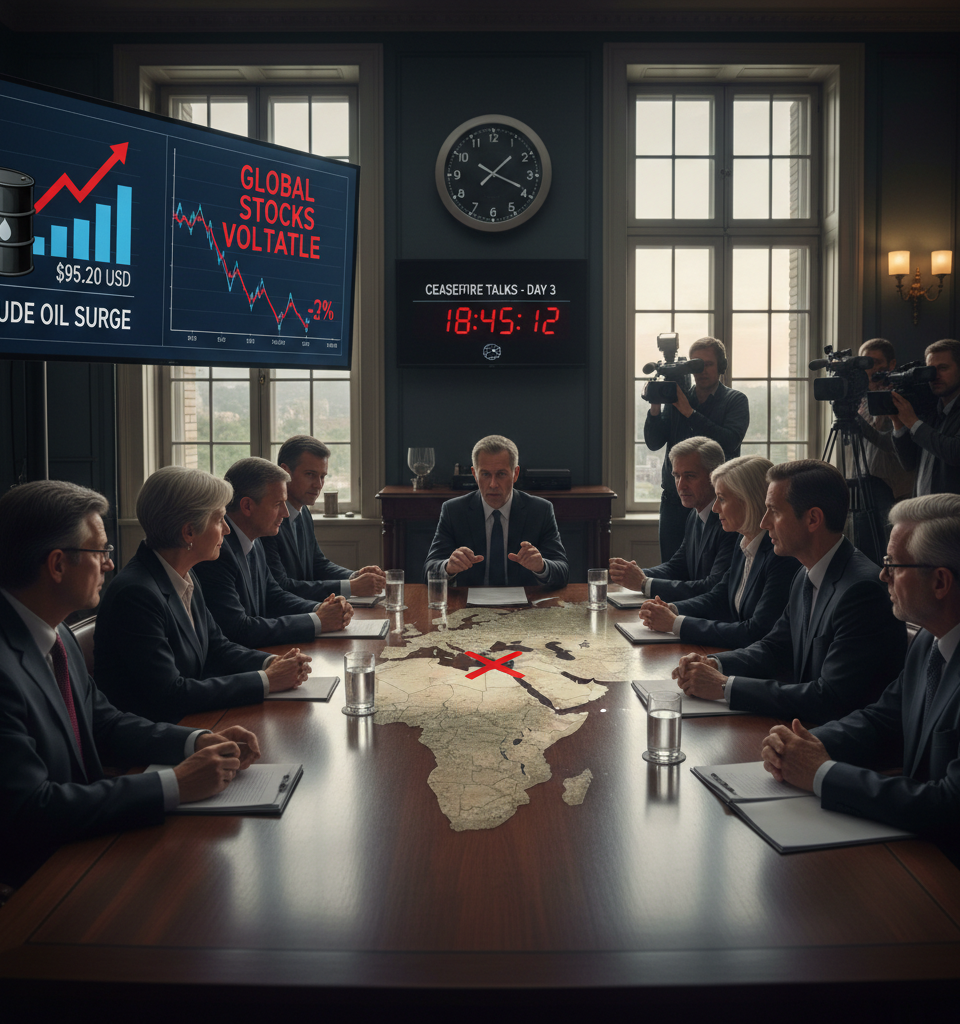
This latest market disruption underscores the profound interconnectivity between geopolitical stability and economic performance. The Middle East, a region pivotal to global energy security, has been a hotbed of conflict and tension for decades. Recent escalations, most notably beginning [mention original start of current conflict], have consistently tested the resilience of global supply chains and commodity markets. Previous instances of regional instability have historically led to significant energy price hikes, demonstrating the sensitivity of the global economy to events in this vital corridor. The current ceasefire talks, mediated by international powers, represent a critical juncture; their success could de-escalate tensions, while failure risks broadening the conflict and exacerbating economic headwinds.
Key Market Movers and Speculations
The immediate surge in oil prices reflects market participants pricing in an increased risk premium for potential supply disruptions. West Texas Intermediate (WTI) crude, the U.S. benchmark, mirrored Brent's gains, also rising by more than 3% to trade above $85 per barrel. Beyond crude oil, other commodities, including natural gas and certain agricultural products, also showed upward price movements, albeit less dramatically. Equity markets, conversely, reacted negatively. Technology stocks, often sensitive to interest rate expectations and economic uncertainty, were particularly hit, with the Nasdaq 100 futures declining over 1%. Investor sentiment is further complicated by the upcoming [mention any specific economic data or central bank meetings], which could amplify market reactions depending on the geopolitical trajectory.
Industry-Wide Ramifications and Economic Ripple Effects
The ripple effects of sustained high energy prices extend far beyond the commodity trading floors. Industries heavily reliant on fuel, such as aviation, shipping, and manufacturing, face increased operational costs, potentially squeezing profit margins and contributing to inflationary pressures. For consumers, this translates to higher prices at the pump and for goods transported globally. Central banks, already battling persistent inflation in many major economies, confront a renewed challenge, potentially complicating future monetary policy decisions. The prospect of an oil 'supercycle' driven by geopolitical unrest could derail economic recovery efforts in several nations still grappling with post-pandemic challenges.
Expert Analysis: A Volatile Path Ahead
Market analysts are largely in agreement that volatility will persist until a clearer resolution, or at least de-escalation, emerges. "The market is effectively pricing in a higher fear premium," stated Dr. Eleanor Vance, Chief Economist at Global Financial Insights. "The failure of ceasefire talks could signal a prolonged or even expanded conflict, directly threatening energy infrastructure and transit routes. We could see Brent crude test the $95-$100 range in the short term if diplomacy completely breaks down." Other experts point to the broader implications for global trade, warning that prolonged instability could encourage reshoring efforts and a greater focus on energy independence, leading to a fragmented global economy over the long run.
The Road Ahead: Ongoing Diplomacy and Strategic Reserves
All eyes remain on the evolving diplomatic efforts in the Middle East. Reports suggest that negotiations are ongoing behind closed doors, with a narrow window for a breakthrough. Should diplomacy fail, international bodies and major powers might consider strategic oil reserve releases to stabilize prices, though this is often a short-term measure. Investors will be closely watching for any statements from key political figures and any shifts in the military situation. The coming days and weeks will be crucial in determining whether the current market jitters evolve into a more sustained economic downturn or whether newfound stability can mitigate the present anxieties. The global economy stands at a critical juncture, held captive by the volatile dance between geopolitics and market forces.
Long-Term Outlook: Diversification and Resilience
Looking beyond the immediate crisis, the renewed emphasis on energy security and market diversification is likely to accelerate. Nations are increasingly scrutinizing their reliance on single-source energy supplies, pushing for investments in renewable energy and exploring alternative trade routes. The ongoing events serve as a stark reminder of the inherent vulnerabilities in a globally interconnected system and the imperative for both national and corporate strategies to build greater resilience against unforeseen geopolitical shocks. The path forward will undoubtedly involve a re-evaluation of risk, investment, and international cooperation in an increasingly turbulent world.